Unlocking Nature's Patterns: Reaction-Diffusion Models in Biological Pattern Formation 🌱
Discover how Alan Turing's reaction-diffusion models explain the mesmerizing patterns in nature. Dive into Lecture 2 of Oxford's Mathematical Biology series to explore the mathematics behind biological pattern formation.

Oxford Mathematics
4.0K views • May 10, 2025
About this video
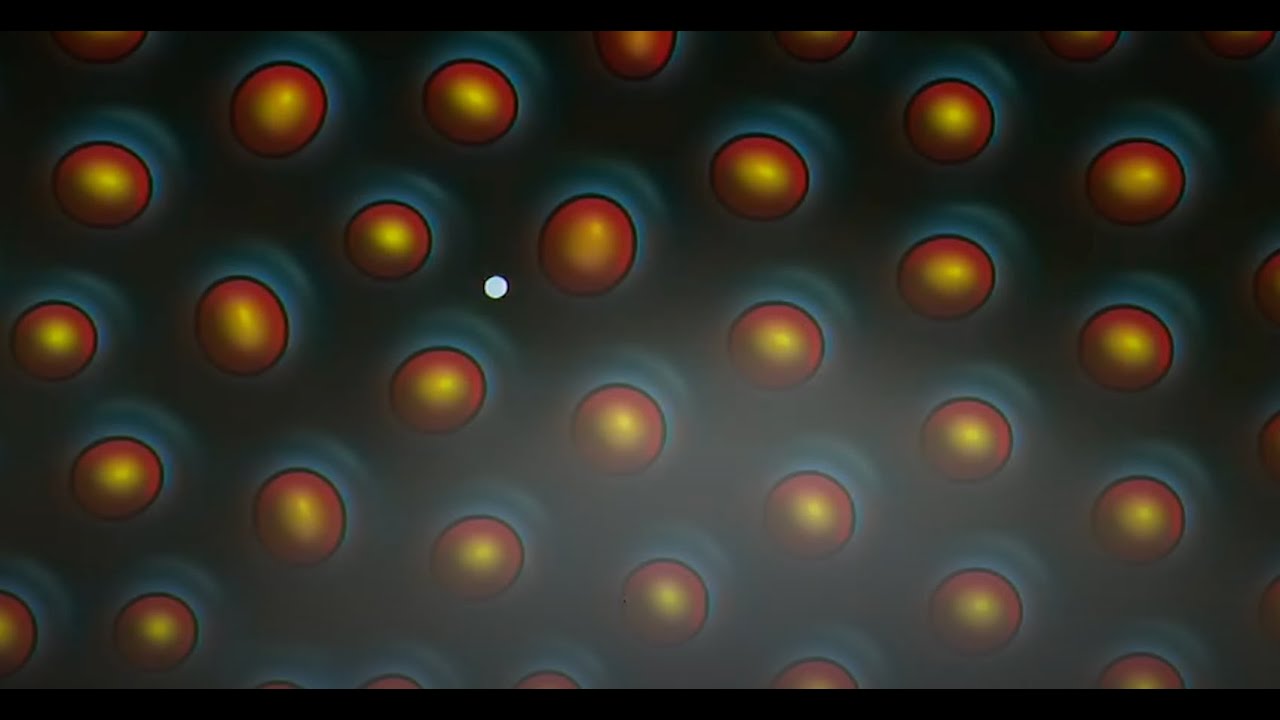
Reaction-diffusion models, pioneered by Alan Turing, are one of the most famous ways to mathematically describe pattern formation.
These models assume the existence of two or more interacting chemicals (often called morphogens) that diffuse through space and react with each other in such a way that patterns can emerge. In the three lectures we showing on the subject (this is the second), Ruth Baker will show how to analyse reaction-diffusion models to understand the conditions required for pattern formation, and the types of patterns that can emerge on differently sized and shaped domains.
You can watch the three lectures from the course as they appear on the playlist: https://www.youtube.com/playlist?list=PL4d5ZtfQonW1ahkcL3NuP6zOVa8DpqIBE
You can also watch many other student lectures via our main Student Lectures playlist (also check out specific student lectures playlists): https://www.youtube.com/playlist?list=PL4d5ZtfQonW0A4VHeiY0gSkX1QEraaacE
All first and second year lectures are followed by tutorials where students meet their tutor in pairs to go through the lecture and associated problem sheet and to talk and think more about the maths. Third and fourth year lectures are followed by classes.
These models assume the existence of two or more interacting chemicals (often called morphogens) that diffuse through space and react with each other in such a way that patterns can emerge. In the three lectures we showing on the subject (this is the second), Ruth Baker will show how to analyse reaction-diffusion models to understand the conditions required for pattern formation, and the types of patterns that can emerge on differently sized and shaped domains.
You can watch the three lectures from the course as they appear on the playlist: https://www.youtube.com/playlist?list=PL4d5ZtfQonW1ahkcL3NuP6zOVa8DpqIBE
You can also watch many other student lectures via our main Student Lectures playlist (also check out specific student lectures playlists): https://www.youtube.com/playlist?list=PL4d5ZtfQonW0A4VHeiY0gSkX1QEraaacE
All first and second year lectures are followed by tutorials where students meet their tutor in pairs to go through the lecture and associated problem sheet and to talk and think more about the maths. Third and fourth year lectures are followed by classes.
Video Information
Views
4.0K
Likes
140
Duration
50:23
Published
May 10, 2025
User Reviews
4.6
(4) Related Trending Topics
LIVE TRENDSRelated trending topics. Click any trend to explore more videos.
No specific trending topics match this video yet.
Explore All Trends