Unlocking Nature's Art: How Math Reveals Animal Patterns 🦓
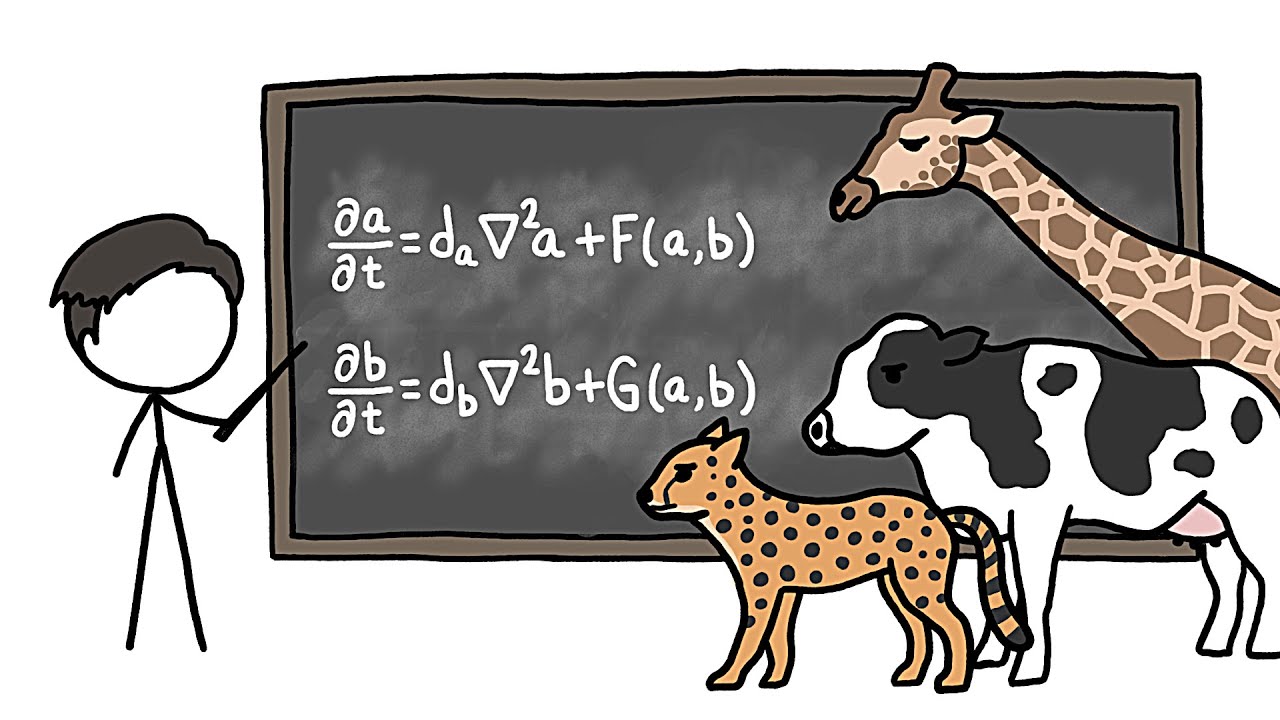
Discover how Alan Turing's Reaction-Diffusion Model uses mathematics to explain the stunning patterns found on animals and in nature. Learn the science behind nature's intricate designs!
MinuteEarth
798.0K views • Aug 11, 2016
About this video
How Alan Turing's Reaction-Diffusion Model Simulates Patterns in Nature
Thanks to http://www.audible.com/minuteearth for sponsoring this video.
Asparagus Pee Survey Results: https://goo.gl/8x7abL
___________________________________________
If you liked this video, we think you might also like this:
Reaction Diffusion Simulation (Gray-Scott model)
https://pmneila.github.io/jsexp/grayscott/
___________________________________________
Credits (and Twitter handles):
Script Writer: Rachel Becker (@RA_Becks)
Script Editor: Emily Elert (@eelert)
Video Illustrator: Ever Salazar (@eversalazar)
Video Director: Emily Elert (@eelert)
Video Narrator: Emily Elert (@eelert)
With Contributions From: Henry Reich, Alex Reich, Kate Yoshida, Omkar Bhagat, Peter Reich, David Goldenberg
Music by: Nathaniel Schroeder: http://www.soundcloud.com/drschroeder
Also, special thanks to the following scientists:
Greg Barsh: Investigator, HudsonAlpha Institute for Biotechnology (http://goo.gl/RMD8o9)
Jeremy Green: Professor of developmental biology, King’s College London (https://goo.gl/Qcn8Ay)
Thomas Hiscock: Graduate student in systems biology, Harvard University (http://goo.gl/RbAWIy)
Shigeru Kondo: Professor, Osaka University (http://goo.gl/uQ2wYO)
James Sharpe: Coordinator of EMBL-CRG Systems Biology Unit and ICREA research professor (http://goo.gl/QCGul8)
Ian Stewart: Emeritus professor of mathematics, University of Warwick and author of The Mathematics of Life (http://goo.gl/rGR1R0)
Thomas Woolley: Postdoctoral scientist, St John's College Oxford (http://goo.gl/B4FZNn)
Image Credits:
- Mouse palate images provided courtesy of Jeremy Green, King’s College London.
- Digit patterns image provided courtesy of Luciano Marcon and Jelena Raspopovic.
- Angelfish and zebrafish images provided courtesy of Shigeru Kondo.
_________________________________________
Subscribe to MinuteEarth on YouTube: http://goo.gl/EpIDGd
Support us on Patreon: https://goo.gl/ZVgLQZ
Facebook: http://goo.gl/FpAvo6
Twitter: http://goo.gl/Y1aWVC
itunes: https://goo.gl/sfwS6n
___________________________________________
Here are some handy keywords to get your googling started:
Reaction-diffusion system: A hypothetical system in which multiple chemical substances diffuse through a defined space at different rates and react with one another, thereby generating a pattern.
Turing pattern: A periodic pattern that forms in a space where the initial distribution of ‘activator’ and ‘inhibitor’ is the same.
Morphogenesis: The processes during development that give rise to the form or shape of the organism or a structure
Alan Turing: Alan Turing was a British mathematician and the father of modern computer science. During World War II, he broke Germany’s Enigma code used to encrypt communications.
____________________
References:
Economou, A. D., Ohazama, A., Porntaveetus, T., Sharpe, P. T., Kondo, S., Basson, M. A., … Green, J. B. A. (2012). Periodic stripe formation by a Turing-mechanism operating at growth zones in the mammalian palate. Nature Genetics, 44(3), 348–351. http://doi.org/10.1038/ng.1090
Economou, A. D., & Green, J. B. (2014). Modelling from the experimental developmental biologists viewpoint. Seminars in Cell & Developmental Biology, 35, 58-65. doi:10.1016/j.semcdb.2014.07.006
Green, J. B., & Sharpe, J. (2015). Positional information and reaction-diffusion: Two big ideas in developmental biology combine.Development, 142(7), 1203-1211. doi:10.1242/dev.114991
Kimura, Y. T. (2016, May 24). The mathematics of patterns. Retrieved from http://www.theshapeofmath.com/princeton/dynsys
Kimura, Y. T. (2014). The Mathematics of Patterns: The modeling and analysis of reaction-diffusion equations (Thesis, Princeton University). Http://www.pacm.princeton.edu/documents/Kimura.pdf.
Kondo, S., & Asai, R. (1995). A reaction-diffusion wave on the skin of the marine angelfish Pomacanthus. Nature, 376(6543), 765-768. doi:10.1038/376765a0
Kondo, S., & Miura, T. (2010). Reaction-Diffusion Model as a Framework for Understanding Biological Pattern Formation. Science, 329(5999), 1616-1620. doi:10.1126/science.1179047
Marcon, L., & Sharpe, J. (2012). Turing patterns in development: What about the horse part? Current Opinion in Genetics & Development, 22(6), 578-584. doi:10.1016/j.gde.2012.11.013
Raspopovic, J., Marcon, L., Russo, L., & Sharpe, J. (2014). Digit patterning is controlled by a Bmp-Sox9-Wnt Turing network modulated by morphogen gradients. Science, 345(6196), 566-570. doi:10.1126/science.1252960
Stewart, I. (2012). The mathematics of life. Philadelphia, PA: Basic Books. (https://goo.gl/IOagrs)
Turing, A. M. (1952). The Chemical Basis of Morphogenesis. Philosophical Transactions of the Royal Society of London. Series B, Biological Sciences, 237(641), 37-72. Retrieved from http://www.dna.caltech.edu/courses/cs191/paperscs191/turing.pdf
Thanks to http://www.audible.com/minuteearth for sponsoring this video.
Asparagus Pee Survey Results: https://goo.gl/8x7abL
___________________________________________
If you liked this video, we think you might also like this:
Reaction Diffusion Simulation (Gray-Scott model)
https://pmneila.github.io/jsexp/grayscott/
___________________________________________
Credits (and Twitter handles):
Script Writer: Rachel Becker (@RA_Becks)
Script Editor: Emily Elert (@eelert)
Video Illustrator: Ever Salazar (@eversalazar)
Video Director: Emily Elert (@eelert)
Video Narrator: Emily Elert (@eelert)
With Contributions From: Henry Reich, Alex Reich, Kate Yoshida, Omkar Bhagat, Peter Reich, David Goldenberg
Music by: Nathaniel Schroeder: http://www.soundcloud.com/drschroeder
Also, special thanks to the following scientists:
Greg Barsh: Investigator, HudsonAlpha Institute for Biotechnology (http://goo.gl/RMD8o9)
Jeremy Green: Professor of developmental biology, King’s College London (https://goo.gl/Qcn8Ay)
Thomas Hiscock: Graduate student in systems biology, Harvard University (http://goo.gl/RbAWIy)
Shigeru Kondo: Professor, Osaka University (http://goo.gl/uQ2wYO)
James Sharpe: Coordinator of EMBL-CRG Systems Biology Unit and ICREA research professor (http://goo.gl/QCGul8)
Ian Stewart: Emeritus professor of mathematics, University of Warwick and author of The Mathematics of Life (http://goo.gl/rGR1R0)
Thomas Woolley: Postdoctoral scientist, St John's College Oxford (http://goo.gl/B4FZNn)
Image Credits:
- Mouse palate images provided courtesy of Jeremy Green, King’s College London.
- Digit patterns image provided courtesy of Luciano Marcon and Jelena Raspopovic.
- Angelfish and zebrafish images provided courtesy of Shigeru Kondo.
_________________________________________
Subscribe to MinuteEarth on YouTube: http://goo.gl/EpIDGd
Support us on Patreon: https://goo.gl/ZVgLQZ
Facebook: http://goo.gl/FpAvo6
Twitter: http://goo.gl/Y1aWVC
itunes: https://goo.gl/sfwS6n
___________________________________________
Here are some handy keywords to get your googling started:
Reaction-diffusion system: A hypothetical system in which multiple chemical substances diffuse through a defined space at different rates and react with one another, thereby generating a pattern.
Turing pattern: A periodic pattern that forms in a space where the initial distribution of ‘activator’ and ‘inhibitor’ is the same.
Morphogenesis: The processes during development that give rise to the form or shape of the organism or a structure
Alan Turing: Alan Turing was a British mathematician and the father of modern computer science. During World War II, he broke Germany’s Enigma code used to encrypt communications.
____________________
References:
Economou, A. D., Ohazama, A., Porntaveetus, T., Sharpe, P. T., Kondo, S., Basson, M. A., … Green, J. B. A. (2012). Periodic stripe formation by a Turing-mechanism operating at growth zones in the mammalian palate. Nature Genetics, 44(3), 348–351. http://doi.org/10.1038/ng.1090
Economou, A. D., & Green, J. B. (2014). Modelling from the experimental developmental biologists viewpoint. Seminars in Cell & Developmental Biology, 35, 58-65. doi:10.1016/j.semcdb.2014.07.006
Green, J. B., & Sharpe, J. (2015). Positional information and reaction-diffusion: Two big ideas in developmental biology combine.Development, 142(7), 1203-1211. doi:10.1242/dev.114991
Kimura, Y. T. (2016, May 24). The mathematics of patterns. Retrieved from http://www.theshapeofmath.com/princeton/dynsys
Kimura, Y. T. (2014). The Mathematics of Patterns: The modeling and analysis of reaction-diffusion equations (Thesis, Princeton University). Http://www.pacm.princeton.edu/documents/Kimura.pdf.
Kondo, S., & Asai, R. (1995). A reaction-diffusion wave on the skin of the marine angelfish Pomacanthus. Nature, 376(6543), 765-768. doi:10.1038/376765a0
Kondo, S., & Miura, T. (2010). Reaction-Diffusion Model as a Framework for Understanding Biological Pattern Formation. Science, 329(5999), 1616-1620. doi:10.1126/science.1179047
Marcon, L., & Sharpe, J. (2012). Turing patterns in development: What about the horse part? Current Opinion in Genetics & Development, 22(6), 578-584. doi:10.1016/j.gde.2012.11.013
Raspopovic, J., Marcon, L., Russo, L., & Sharpe, J. (2014). Digit patterning is controlled by a Bmp-Sox9-Wnt Turing network modulated by morphogen gradients. Science, 345(6196), 566-570. doi:10.1126/science.1252960
Stewart, I. (2012). The mathematics of life. Philadelphia, PA: Basic Books. (https://goo.gl/IOagrs)
Turing, A. M. (1952). The Chemical Basis of Morphogenesis. Philosophical Transactions of the Royal Society of London. Series B, Biological Sciences, 237(641), 37-72. Retrieved from http://www.dna.caltech.edu/courses/cs191/paperscs191/turing.pdf
Tags and Topics
Browse our collection to discover more content in these categories.
Video Information
Views
798.0K
Likes
18.0K
Duration
4:04
Published
Aug 11, 2016
User Reviews
4.8
(159) Related Trending Topics
LIVE TRENDSRelated trending topics. Click any trend to explore more videos.
No specific trending topics match this video yet.
Explore All Trends