OSI and TCP/IP Models - Comprehensive Explanation
An in-depth overview of the Internet protocol suite, including the conceptual frameworks of the OSI and TCP/IP models, and their roles in computer networking.

_Drunk Engineer_
832.5K views • Jan 25, 2017
About this video
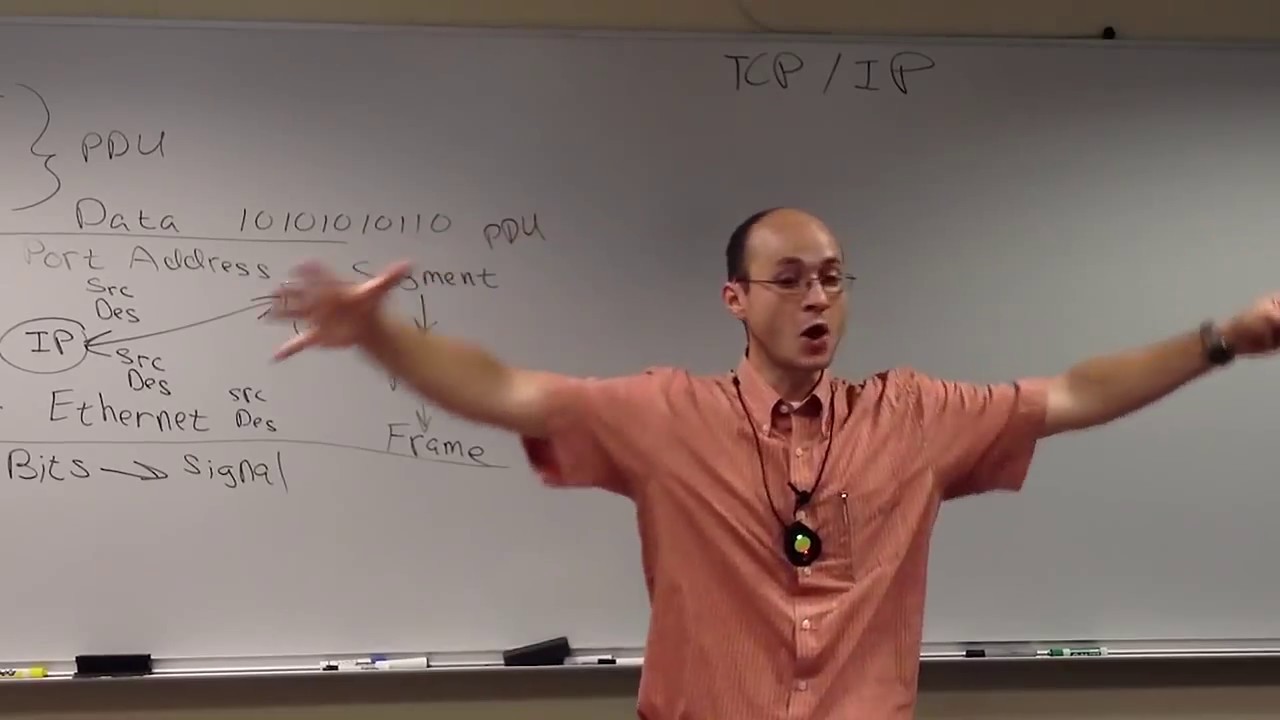
The Internet protocol suite is the conceptual model and set of communications protocols used on the Internet and similar computer networks. It is commonly known as TCP/IP because the original protocols in the suite are the Transmission Control Protocol (TCP) and the Internet Protocol (IP). It is occasionally known as the Department of Defense (DoD) model, because the development of the networking model was funded by DARPA, an agency of the United States Department of Defense.
The Internet protocol suite provides end-to-end data communication specifying how data should be packetized, addressed, transmitted, routed and received. This functionality is organized into four abstraction layers which are used to sort all related protocols according to the scope of networking involved.[1][2] From lowest to highest, the layers are the link layer, containing communication methods for data that remains within a single network segment (link); the internet layer, connecting independent networks, thus providing internetworking; the transport layer handling host-to-host communication; and the application layer, which provides process-to-process data exchange for applications.
Technical standards specifying the Internet protocol suite and many of its constituent protocols are maintained by the Internet Engineering Task Force (IETF). The Internet protocol suite model is a simpler model developed prior to the OSI model.
The Internet protocol suite provides end-to-end data communication specifying how data should be packetized, addressed, transmitted, routed and received. This functionality is organized into four abstraction layers which are used to sort all related protocols according to the scope of networking involved.[1][2] From lowest to highest, the layers are the link layer, containing communication methods for data that remains within a single network segment (link); the internet layer, connecting independent networks, thus providing internetworking; the transport layer handling host-to-host communication; and the application layer, which provides process-to-process data exchange for applications.
Technical standards specifying the Internet protocol suite and many of its constituent protocols are maintained by the Internet Engineering Task Force (IETF). The Internet protocol suite model is a simpler model developed prior to the OSI model.
Tags and Topics
Browse our collection to discover more content in these categories.
Video Information
Views
832.5K
Likes
30.4K
Duration
19:20
Published
Jan 25, 2017
User Reviews
4.8
(166) Related Trending Topics
LIVE TRENDSRelated trending topics. Click any trend to explore more videos.
No specific trending topics match this video yet.
Explore All Trends