Locking Wood Together: How a Simple Joint Outlasts Nails and Glue
Wood That Hugs Itself: The Mortise & Tenon Secret Long before power tools and synthetic glues, carpenters discovered that wood could hold itself together — ...
Farming Hours
158.0K views • Jun 1, 2026
About this video
Wood That Hugs Itself: The Mortise & Tenon Secret
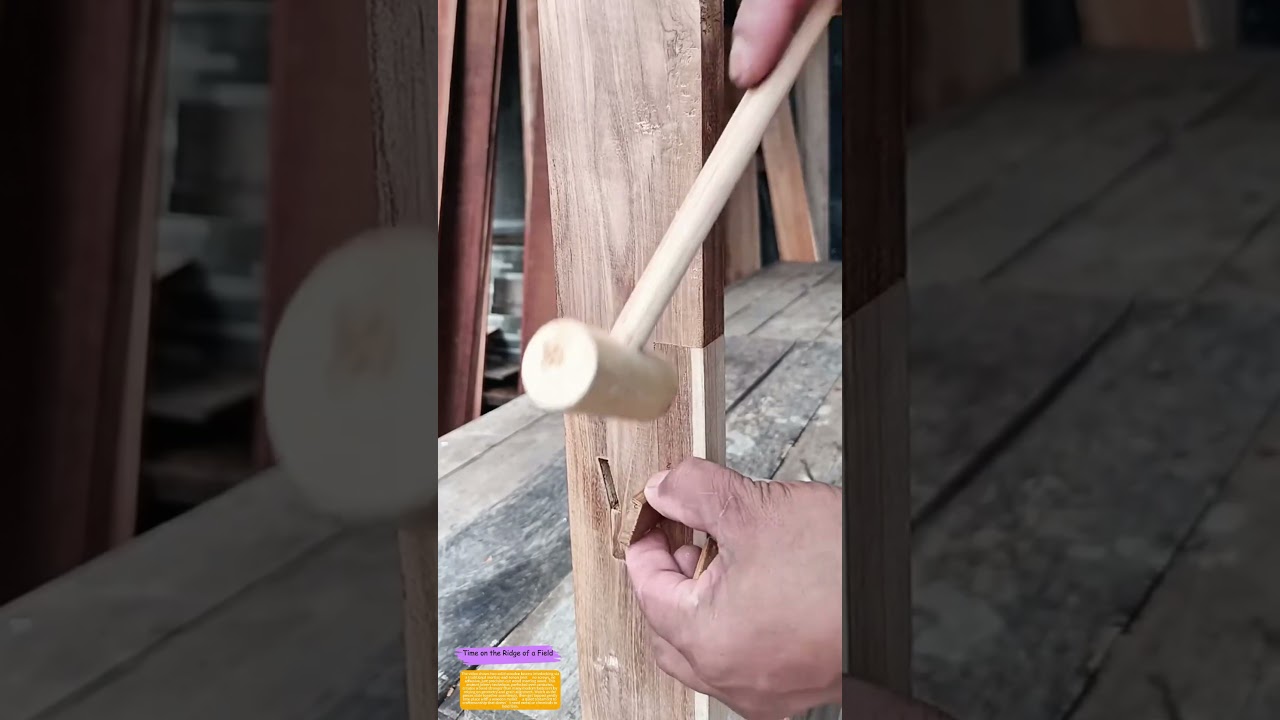
Long before power tools and synthetic glues, carpenters discovered that wood could hold itself together — if shaped just right. The mortise-and-tenon joint, visible here, is one of the oldest and most reliable joinery methods in human history. Used in everything from temple pillars to farmhouse tables, it’s still favored today by furniture makers and timber framers who value durability over convenience.
This joint works by carving a “mortise” (a rectangular hole) into one piece of wood, and a matching “tenon” (a protruding tongue) into the other. When fitted together, the tenon locks into the mortise like a handshake — snug, self-aligning, and shock-resistant. The magic isn’t in the force applied, but in the tolerance. A gap of even 0.5mm can compromise strength; a master craftsman aims for near-zero clearance.
Why This Matters Beyond Aesthetics
• Structural Integrity — Unlike nails that pull out or glue that degrades, this joint gains strength over time as wood swells and contracts with humidity. The grain interlocks, creating friction that resists shear forces.
• Sustainability — No metal, no resin, no waste. Just wood, skill, and patience. In an age of disposable furniture, this method whispers: “Build it once. Build it right.”
• Cultural Continuity — From Ming Dynasty chairs to Shaker cabinets, this joint carries the DNA of civilizations. It’s not just engineering — it’s heritage stitched into every groove.
The Assembly Process (As Seen in the Video)
Alignment First — The tenon is carefully guided into the mortise. No hammering yet — just gentle pressure to ensure perfect fit.
Tapping to Settle — A wooden mallet (never metal!) applies even force. The goal? Seat the joint without crushing the fibers.
Final Check — Hands rotate and wiggle the assembly. If it moves, it’s not done. If it doesn’t, you’ve got a joint that’ll outlive the roof over it.
The Philosophy Behind the Joint
This isn’t about stubbornness or tradition for tradition’s sake. It’s about respect — for the material, for the maker, and for the user. When you build with mortise and tenon, you’re not just assembling parts. You’re declaring: This will last. Not because it’s expensive, but because it’s thoughtful.
In a world obsessed with speed and shortcuts, this joint is a quiet rebellion. It says: Slow down. Measure twice. Carve once. Let wood be wood.
Long before power tools and synthetic glues, carpenters discovered that wood could hold itself together — if shaped just right. The mortise-and-tenon joint, visible here, is one of the oldest and most reliable joinery methods in human history. Used in everything from temple pillars to farmhouse tables, it’s still favored today by furniture makers and timber framers who value durability over convenience.
This joint works by carving a “mortise” (a rectangular hole) into one piece of wood, and a matching “tenon” (a protruding tongue) into the other. When fitted together, the tenon locks into the mortise like a handshake — snug, self-aligning, and shock-resistant. The magic isn’t in the force applied, but in the tolerance. A gap of even 0.5mm can compromise strength; a master craftsman aims for near-zero clearance.
Why This Matters Beyond Aesthetics
• Structural Integrity — Unlike nails that pull out or glue that degrades, this joint gains strength over time as wood swells and contracts with humidity. The grain interlocks, creating friction that resists shear forces.
• Sustainability — No metal, no resin, no waste. Just wood, skill, and patience. In an age of disposable furniture, this method whispers: “Build it once. Build it right.”
• Cultural Continuity — From Ming Dynasty chairs to Shaker cabinets, this joint carries the DNA of civilizations. It’s not just engineering — it’s heritage stitched into every groove.
The Assembly Process (As Seen in the Video)
Alignment First — The tenon is carefully guided into the mortise. No hammering yet — just gentle pressure to ensure perfect fit.
Tapping to Settle — A wooden mallet (never metal!) applies even force. The goal? Seat the joint without crushing the fibers.
Final Check — Hands rotate and wiggle the assembly. If it moves, it’s not done. If it doesn’t, you’ve got a joint that’ll outlive the roof over it.
The Philosophy Behind the Joint
This isn’t about stubbornness or tradition for tradition’s sake. It’s about respect — for the material, for the maker, and for the user. When you build with mortise and tenon, you’re not just assembling parts. You’re declaring: This will last. Not because it’s expensive, but because it’s thoughtful.
In a world obsessed with speed and shortcuts, this joint is a quiet rebellion. It says: Slow down. Measure twice. Carve once. Let wood be wood.
Video Information
Views
158.0K
Likes
287
Duration
0:08
Published
Jun 1, 2026
User Reviews
4.0
(31) Related Trending Topics
LIVE TRENDSRelated trending topics. Click any trend to explore more videos.
No specific trending topics match this video yet.
Explore All Trends