Deconstructing Political Activism | Big Think
Deconstructing Political Activism New videos DAILY: https://bigth.ink/youtube Join Big Think Edge for exclusive videos: https://bigth.ink/Edge --------------...

Big Think
2.2K views • Apr 24, 2012
About this video
Deconstructing Political Activism
New videos DAILY: https://bigth.ink/youtube
Join Big Think Edge for exclusive videos: https://bigth.ink/Edge
----------------------------------------------------------------------------------
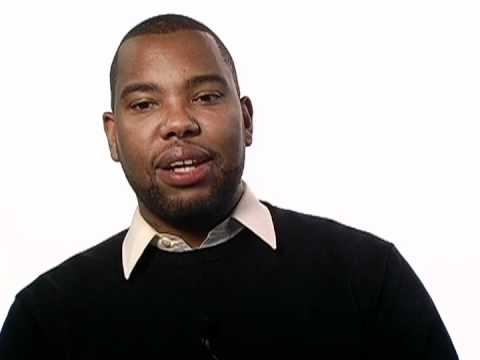
Ta-Nehisi Coates on the power of the pen/typewriter/keyboard.
----------------------------------------------------------------------------------
Ta-Nehisi Coates:
Ta-Nehisi Coates (born 1975, Baltimore, Maryland) is a senior editor for The Atlantic and blogs on its website. Coates has worked for The Village Voice, Washington City Paper, and Time. He has contributed to The New York Times Magazine, The Washington Post, The Washington Monthly, O, and other publications. In 2008 he published a memoir, The Beautiful Struggle: A Father, Two Sons, and an Unlikely Road to Manhood. Coates attended Howard University and currently resides in Harlem with his partner and son.
----------------------------------------------------------------------------------
TRANSCRIPT:
Topic: Political Activism
Ta-Nehisi Coates: I came from a kind of quasi-black nationalist background.
Writers have to be exposed to the world, okay? You cannot limit yourself to just black folks. Because you’re only be as good as what you’re around. It’s like a businessman who says, I’m only going to go into a certain market and ignores all other markets, much to his peril.
So there were two strains of thoughts going in my house. So there’s a sort of quasi-black nationalist thing. I say quasi because I don’t want to take away my dad’s own original alley. We didn’t feast to celebrate [quanta] but I hated [quanta]. It’s just weird for people who came up like us.
But the same time, my dad was always kind of iconoclast. Never objected to us playing Dungeons and Dragons and anything like that, encourage the imagination, encourage exploration. That was probably the primary value, even more than whatever particularly cultural, ethnic outlook I took out of my house.
The idea of exploration and imagination was huge. And it probably was the biggest thing that I took out of my house.
So when I went out into the world that gelled and meshed really well with the idea of being a writer. And it quickly became apparent. That if you’re going to be a writer, you have to not really have limits. You can’t be afraid to go anywhere. And that’s really what it is at the end of the day when we restrict ourselves -- it’s fear. I’m not going over with the white folks. Like, we talk about it in a bad way. But really is… you’re scared. You’re afraid. That really is what the deal in terms of what’s going on. You can’t be afraid if you’re going to go out here and compete in any sort of real way.
So I had to separate whatever political ambitions I had, and commit to something. And once I decided I really, really wanted to be a writer, there wasn’t much room.
I have my political sensibilities but when I’m writing a story, I don’t think about it from that perspective. I want to tell a beautiful story. I want people to read it and love the narrative. I’m not necessarily interested in making people into left liberals like me. Even though that’s what I am. I don’t like to convert people. I write to tell stories. That’s the first thing. That’s the primary thing for me. If you convert to my side of politics, great. Beautiful.
But all the great works of art that I’ve ever seen that had any sort of political import were always great stories first. They were great stories before anything. I think ideology kills art. I think it kills writing all the time. It completely, completely destroy it.
So I’ve really had to make a choice and my choice was to tell stories. And once I decided it out that was what I was going to do, the whole idea of being an activist was pretty much shunted aside. Anything, like, that that was going to happen was going to be because somebody was inspired by something.
I think back to Zora Neale Hurston, who, in the ‘20s and into the ‘30s, wanted to write stories about how African-Americans were as they actually lived. Scorn was heaped upon her because she wasn’t interested in writing about lynching, for instance. She wasn’t interested in writing about how segregation warped black people.
That was what Richard Wright was trying to do. His idea was to write in such a way as to effect political change. I read “Native Son” in college and I hated “Native Son.” Terrible, it’s an awful story. Like, the story isn’t good. I’m not interested in how he was trying to show the effects of racism. If I don’t enjoy the book, I don’t care.
Read the full transcript at https://bigthink.com/videos/deconstructing-political-activism/
New videos DAILY: https://bigth.ink/youtube
Join Big Think Edge for exclusive videos: https://bigth.ink/Edge
----------------------------------------------------------------------------------
Ta-Nehisi Coates on the power of the pen/typewriter/keyboard.
----------------------------------------------------------------------------------
Ta-Nehisi Coates:
Ta-Nehisi Coates (born 1975, Baltimore, Maryland) is a senior editor for The Atlantic and blogs on its website. Coates has worked for The Village Voice, Washington City Paper, and Time. He has contributed to The New York Times Magazine, The Washington Post, The Washington Monthly, O, and other publications. In 2008 he published a memoir, The Beautiful Struggle: A Father, Two Sons, and an Unlikely Road to Manhood. Coates attended Howard University and currently resides in Harlem with his partner and son.
----------------------------------------------------------------------------------
TRANSCRIPT:
Topic: Political Activism
Ta-Nehisi Coates: I came from a kind of quasi-black nationalist background.
Writers have to be exposed to the world, okay? You cannot limit yourself to just black folks. Because you’re only be as good as what you’re around. It’s like a businessman who says, I’m only going to go into a certain market and ignores all other markets, much to his peril.
So there were two strains of thoughts going in my house. So there’s a sort of quasi-black nationalist thing. I say quasi because I don’t want to take away my dad’s own original alley. We didn’t feast to celebrate [quanta] but I hated [quanta]. It’s just weird for people who came up like us.
But the same time, my dad was always kind of iconoclast. Never objected to us playing Dungeons and Dragons and anything like that, encourage the imagination, encourage exploration. That was probably the primary value, even more than whatever particularly cultural, ethnic outlook I took out of my house.
The idea of exploration and imagination was huge. And it probably was the biggest thing that I took out of my house.
So when I went out into the world that gelled and meshed really well with the idea of being a writer. And it quickly became apparent. That if you’re going to be a writer, you have to not really have limits. You can’t be afraid to go anywhere. And that’s really what it is at the end of the day when we restrict ourselves -- it’s fear. I’m not going over with the white folks. Like, we talk about it in a bad way. But really is… you’re scared. You’re afraid. That really is what the deal in terms of what’s going on. You can’t be afraid if you’re going to go out here and compete in any sort of real way.
So I had to separate whatever political ambitions I had, and commit to something. And once I decided I really, really wanted to be a writer, there wasn’t much room.
I have my political sensibilities but when I’m writing a story, I don’t think about it from that perspective. I want to tell a beautiful story. I want people to read it and love the narrative. I’m not necessarily interested in making people into left liberals like me. Even though that’s what I am. I don’t like to convert people. I write to tell stories. That’s the first thing. That’s the primary thing for me. If you convert to my side of politics, great. Beautiful.
But all the great works of art that I’ve ever seen that had any sort of political import were always great stories first. They were great stories before anything. I think ideology kills art. I think it kills writing all the time. It completely, completely destroy it.
So I’ve really had to make a choice and my choice was to tell stories. And once I decided it out that was what I was going to do, the whole idea of being an activist was pretty much shunted aside. Anything, like, that that was going to happen was going to be because somebody was inspired by something.
I think back to Zora Neale Hurston, who, in the ‘20s and into the ‘30s, wanted to write stories about how African-Americans were as they actually lived. Scorn was heaped upon her because she wasn’t interested in writing about lynching, for instance. She wasn’t interested in writing about how segregation warped black people.
That was what Richard Wright was trying to do. His idea was to write in such a way as to effect political change. I read “Native Son” in college and I hated “Native Son.” Terrible, it’s an awful story. Like, the story isn’t good. I’m not interested in how he was trying to show the effects of racism. If I don’t enjoy the book, I don’t care.
Read the full transcript at https://bigthink.com/videos/deconstructing-political-activism/
Video Information
Views
2.2K
Likes
27
Duration
4:50
Published
Apr 24, 2012
User Reviews
4.3
(2) Related Trending Topics
LIVE TRENDSRelated trending topics. Click any trend to explore more videos.
No specific trending topics match this video yet.
Explore All Trends