Capacitance Level Transmitter & Sensor Types 🧪
Learn about capacitance level transmitters, their operation, and different sensor types for measuring liquid or solid levels in tanks.

Raj Kanabar
27.1K views • Feb 4, 2024
About this video
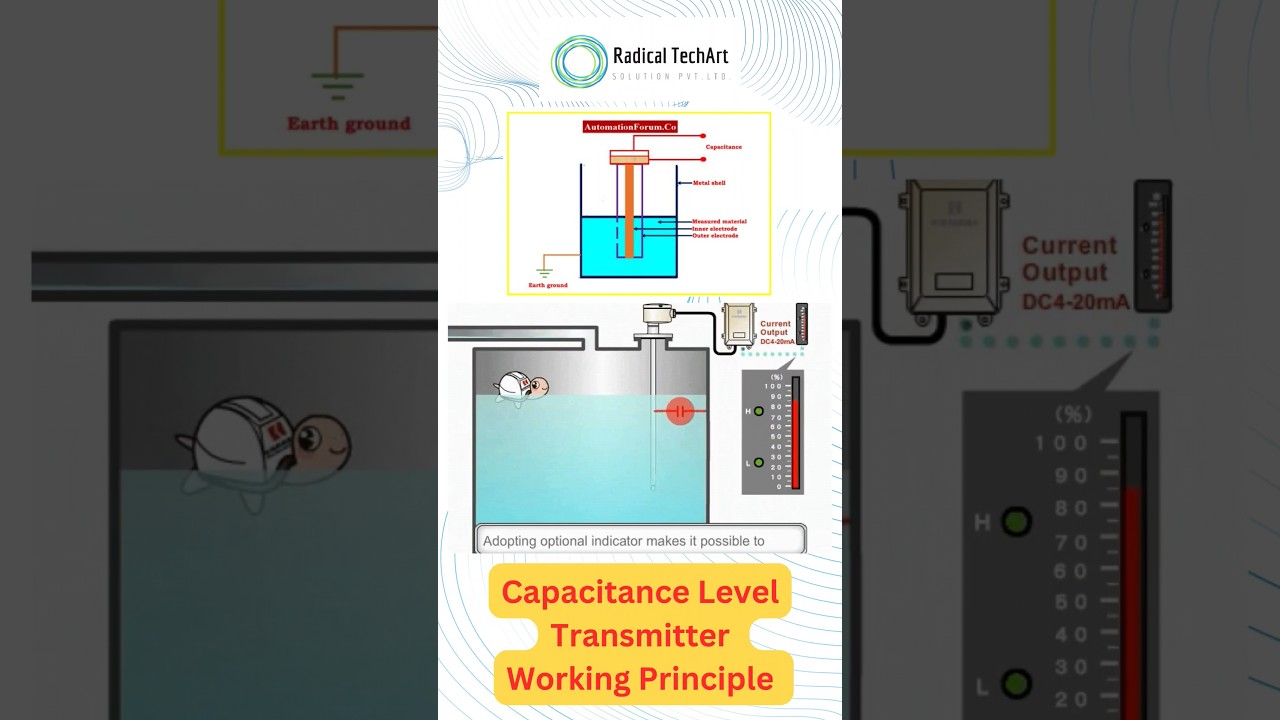
A capacitance level transmitter is a type of level sensor used to measure the level of liquid or solid materials in a tank or vessel. It operates based on the principle of changes in capacitance due to variations in the material level. Here's an overview of the working principle and components of a capacitance level transmitter:
### Working Principle:
1. **Capacitance Measurement:**
- The capacitance between two electrodes is a measure of the amount of electrical energy that can be stored in a system. In the context of a capacitance level transmitter, the electrodes are usually plates or rods.
2. **Probe Installation:**
- The capacitance level transmitter consists of a probe or sensor that is inserted into the tank or vessel where the level is to be measured.
3. **Electrode Configuration:**
- The probe typically has two electrodes: one active and one reference. The active electrode is in direct contact with the material whose level is being measured, while the reference electrode is isolated from the material.
4. **Capacitance Variation with Level:**
- The capacitance between the active and reference electrodes changes as the level of the material changes.
- When the level is high, the capacitance is larger due to the presence of more material around the active electrode.
- When the level is low, the capacitance decreases because less material is around the active electrode.
5. **Electronics and Signal Processing:**
- The capacitance measurement is converted into an electrical signal by the electronics within the transmitter.
- The electronics may include signal conditioning circuits to enhance the accuracy and reliability of the measurement.
6. **Output Signal:**
- The transmitter generates an output signal, often in the form of a 4-20 mA current loop or a digital signal, proportional to the material level.
7. **Communication and Integration:**
- Capacitance level transmitters may have communication capabilities, allowing them to interface with control systems, distributed control systems (DCS), or other monitoring devices.
### Advantages:
- **Versatility:** Suitable for measuring the level of liquids, powders, and granular materials.
- **Accuracy:** Capacitance level transmitters can provide high accuracy in level measurements.
- **Insensitive to Coating:** Some models are designed to be less affected by the buildup of coatings or deposits on the probe.
- **Applicable to Various Industries:** Used in industries such as chemical processing, water treatment, food and beverage, and more.
### Considerations:
- **Material Properties:** The dielectric properties of the material being measured can impact the performance of the capacitance level transmitter.
- **Probe Design:** The design of the probe and the choice of materials should be suitable for the specific application and the characteristics of the material being measured.
Capacitance level transmitters offer a reliable and accurate solution for level measurement in various industrial processes, contributing to efficient control and monitoring of material levels in tanks and vessels.
👍 If you found this video helpful, don't forget to give it a thumbs up, subscribe to our channel, and hit the notification bell to stay updated on our latest industrial solutions.
Connect with us:
🌐 Website: https://www.radicaltechmart.com/
📧 Email: radicaltechart2@gmail.com
### Working Principle:
1. **Capacitance Measurement:**
- The capacitance between two electrodes is a measure of the amount of electrical energy that can be stored in a system. In the context of a capacitance level transmitter, the electrodes are usually plates or rods.
2. **Probe Installation:**
- The capacitance level transmitter consists of a probe or sensor that is inserted into the tank or vessel where the level is to be measured.
3. **Electrode Configuration:**
- The probe typically has two electrodes: one active and one reference. The active electrode is in direct contact with the material whose level is being measured, while the reference electrode is isolated from the material.
4. **Capacitance Variation with Level:**
- The capacitance between the active and reference electrodes changes as the level of the material changes.
- When the level is high, the capacitance is larger due to the presence of more material around the active electrode.
- When the level is low, the capacitance decreases because less material is around the active electrode.
5. **Electronics and Signal Processing:**
- The capacitance measurement is converted into an electrical signal by the electronics within the transmitter.
- The electronics may include signal conditioning circuits to enhance the accuracy and reliability of the measurement.
6. **Output Signal:**
- The transmitter generates an output signal, often in the form of a 4-20 mA current loop or a digital signal, proportional to the material level.
7. **Communication and Integration:**
- Capacitance level transmitters may have communication capabilities, allowing them to interface with control systems, distributed control systems (DCS), or other monitoring devices.
### Advantages:
- **Versatility:** Suitable for measuring the level of liquids, powders, and granular materials.
- **Accuracy:** Capacitance level transmitters can provide high accuracy in level measurements.
- **Insensitive to Coating:** Some models are designed to be less affected by the buildup of coatings or deposits on the probe.
- **Applicable to Various Industries:** Used in industries such as chemical processing, water treatment, food and beverage, and more.
### Considerations:
- **Material Properties:** The dielectric properties of the material being measured can impact the performance of the capacitance level transmitter.
- **Probe Design:** The design of the probe and the choice of materials should be suitable for the specific application and the characteristics of the material being measured.
Capacitance level transmitters offer a reliable and accurate solution for level measurement in various industrial processes, contributing to efficient control and monitoring of material levels in tanks and vessels.
👍 If you found this video helpful, don't forget to give it a thumbs up, subscribe to our channel, and hit the notification bell to stay updated on our latest industrial solutions.
Connect with us:
🌐 Website: https://www.radicaltechmart.com/
📧 Email: radicaltechart2@gmail.com
Tags and Topics
Browse our collection to discover more content in these categories.
Video Information
Views
27.1K
Likes
171
Duration
0:08
Published
Feb 4, 2024
User Reviews
4.2
(5) Related Trending Topics
LIVE TRENDSRelated trending topics. Click any trend to explore more videos.
No specific trending topics match this video yet.
Explore All Trends