Bacterial Transformation Steps | Animated Guide 🦠
Learn the process of bacterial transformation, including natural and artificial methods, with clear step-by-step animation.
Hussain Biology
2.8K views • Sep 24, 2025
About this video
Previous Video : https://youtu.be/lqQtSLY0hwk?si=FPUi9M885swkchZI
There are two major forms:
A. Natural Transformation
Some bacteria naturally develop competence—the ability to take up DNA.
Steps:
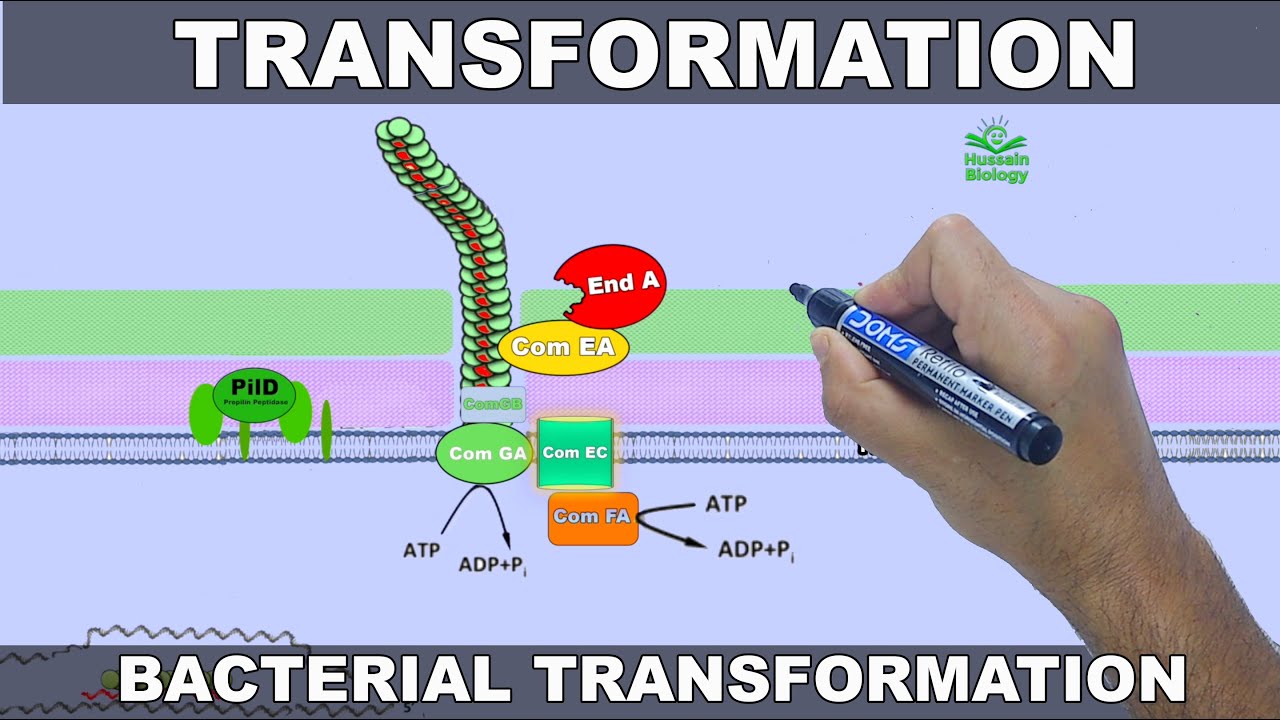
Competence development → special proteins (competence factors) prepare the cell.
DNA binding → extracellular DNA binds to receptors on the bacterial surface.
DNA uptake → one strand of the DNA enters, the other is degraded.
Integration → the incoming DNA integrates into the host genome by homologous recombination.
Examples: Streptococcus pneumoniae, Bacillus subtilis, Neisseria gonorrhoeae, Haemophilus influenzae.
B. Artificial (Induced) Transformation
In labs, bacteria like E. coli are made competent artificially to insert plasmids:
Chemical method → CaCl₂ treatment followed by heat-shock makes membranes permeable.
Electroporation → high-voltage pulses create temporary pores for DNA entry.
This is the basis of genetic engineering and recombinant DNA technology.
🔹 4. Significance of Transformation
Genetic diversity → helps bacteria adapt and survive in changing environments.
Antibiotic resistance → resistant genes can spread among bacterial populations.
Virulence → pathogenic bacteria may acquire new traits.
Biotechnology → transformation is used for cloning, recombinant protein production (e.g., insulin), and gene manipulation.
🔹 5. Applications in Science & Medicine
Production of genetically engineered bacteria.
Creation of insulin, growth hormones, and vaccines.
Study of gene function by inserting reporter genes.
Development of GM crops in agriculture.
There are two major forms:
A. Natural Transformation
Some bacteria naturally develop competence—the ability to take up DNA.
Steps:
Competence development → special proteins (competence factors) prepare the cell.
DNA binding → extracellular DNA binds to receptors on the bacterial surface.
DNA uptake → one strand of the DNA enters, the other is degraded.
Integration → the incoming DNA integrates into the host genome by homologous recombination.
Examples: Streptococcus pneumoniae, Bacillus subtilis, Neisseria gonorrhoeae, Haemophilus influenzae.
B. Artificial (Induced) Transformation
In labs, bacteria like E. coli are made competent artificially to insert plasmids:
Chemical method → CaCl₂ treatment followed by heat-shock makes membranes permeable.
Electroporation → high-voltage pulses create temporary pores for DNA entry.
This is the basis of genetic engineering and recombinant DNA technology.
🔹 4. Significance of Transformation
Genetic diversity → helps bacteria adapt and survive in changing environments.
Antibiotic resistance → resistant genes can spread among bacterial populations.
Virulence → pathogenic bacteria may acquire new traits.
Biotechnology → transformation is used for cloning, recombinant protein production (e.g., insulin), and gene manipulation.
🔹 5. Applications in Science & Medicine
Production of genetically engineered bacteria.
Creation of insulin, growth hormones, and vaccines.
Study of gene function by inserting reporter genes.
Development of GM crops in agriculture.
Tags and Topics
Browse our collection to discover more content in these categories.
Video Information
Views
2.8K
Likes
62
Duration
5:18
Published
Sep 24, 2025
User Reviews
4.5
(2) Related Trending Topics
LIVE TRENDSRelated trending topics. Click any trend to explore more videos.
No specific trending topics match this video yet.
Explore All Trends