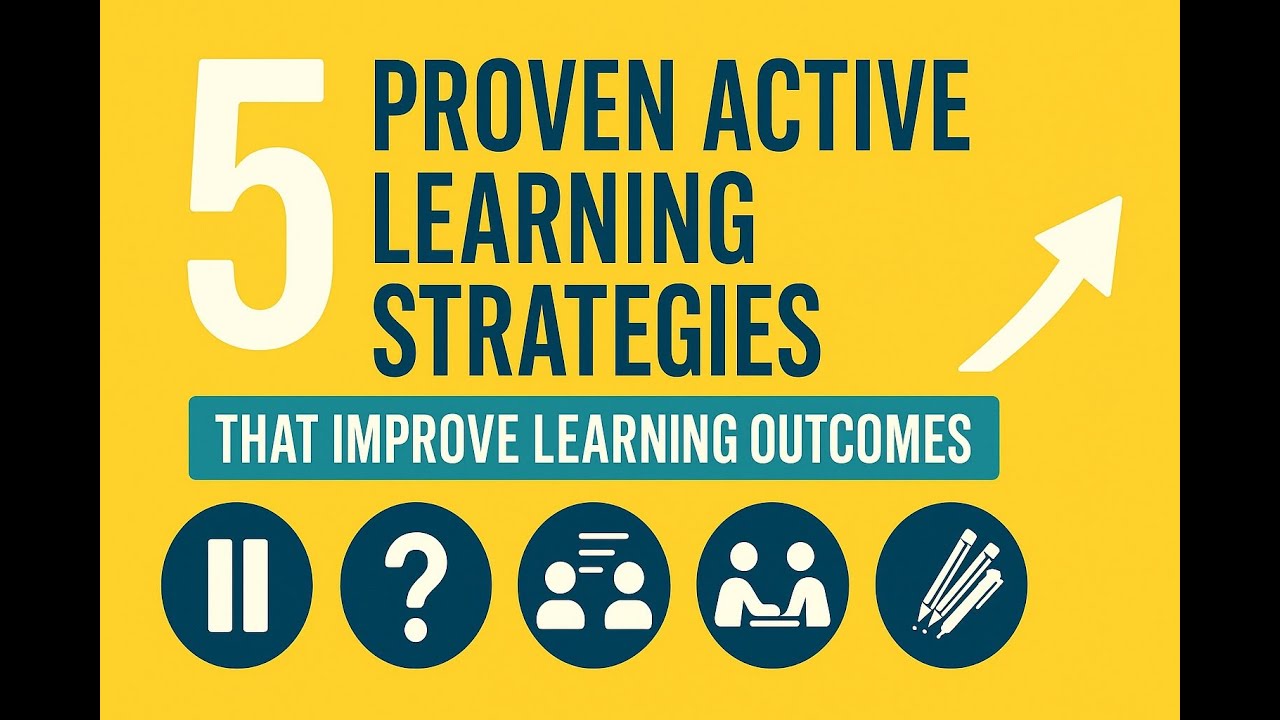
5 Proven Active Learning Strategies That Improve Learning Outcomes
Also see: https://youtu.be/kWGS-G1VCSc Do you want to boost student engagement and improve learning outcomes? These 5 active learning strategies are research...

Challenge Innovate Grow: Teacher & Learner Centre
4.9K views • Jul 11, 2025
About this video
Also see: https://youtu.be/kWGS-G1VCSc
Do you want to boost student engagement and improve learning outcomes? These 5 active learning strategies are research-backed, easy to use, and proven to work in real classrooms.
In this 9-minute video, you’ll discover:
The Pause – improves recall through reflection (Ruhl et al., 1987)
Questioning – deepens thinking and gives feedback (Hattie & Timperley, 2007)
Classroom Discussion – enhances peer learning and understanding (Smith et al., 2009)
Think–Pair–Share – boosts participation and response quality (Lyman, 1981)
The Third Pen – ensures equal group contribution (Johnson & Johnson, 1994)
Backed by real research and cognitive science, these strategies help students think more, talk more, and remember more — in any subject or age group.
Examples include:
Freeman et al. (2014) – Meta-analysis: active learning increases performance and reduces failure
Hattie (2009) – Visible Learning meta-analysis: top influences on achievement (feedback, discussion, peer teaching)
Black & Wiliam (1998) – Formative assessment improves student progress
Perfect for teachers, CPD leads, and school leaders wanting practical, high-impact strategies that really work.
#ActiveLearning #TeachingTips #StudentSuccess #LearnBetter #BetterTeaching #ClassroomWins #engagestudents
Key Research References
1. Freeman, S. et al. (2014)
Title: Active learning increases student performance in science, engineering, and mathematics
Journal: Proceedings of the National Academy of Sciences, 111(23), 8410–8415.
DOI: 10.1073/pnas.1319030111
Meta-analysis of 225 studies; found active learning improves performance and reduces failure rates.
2. Hattie, J. (2009)
Title: Visible Learning: A Synthesis of Over 800 Meta-Analyses Relating to Achievement
Publisher: Routledge
Hattie's effect sizes:
Classroom discussion = 0.82
Feedback = 0.73
Peer tutoring = 0.55
Metacognitive strategies = 0.69
Also see: Hattie, J. & Zierer, K. (2017) 10 Mindframes for Visible Learning
3. Black, P., & Wiliam, D. (1998)
Title: Inside the Black Box: Raising Standards Through Classroom Assessment
Journal: Phi Delta Kappan, 80(2), 139–148.
Found that formative assessment, including questioning and peer discussion, has a powerful effect on achievement.
4. Prince, M. (2004)
Title: Does Active Learning Work? A Review of the Research
Journal: Journal of Engineering Education, 93(3), 223–231.
DOI: 10.1002/j.2168-9830.2004.tb00809.x
Review concluded that active learning improves understanding and long-term retention.
5. Ruhl, K. L., Hughes, C. A., & Schloss, P. J. (1987)
Title: Using the Pause Procedure to Enhance Lecture Recall
Journal: Teacher Education and Special Education, 10(1), 14–18.
DOI: 10.1177/088840648701000103
Demonstrated that pausing during lectures improves recall and comprehension.
6. Smith, M. K., et al. (2009)
Title: Why Peer Discussion Improves Student Performance on In-Class Concept Questions
Journal: Science, 323(5910), 122–124.
DOI: 10.1126/science.1165919
Peer discussion improves conceptual understanding, even when initial answers are wrong.
7. Lyman, F. T. (1981)
Title: The Responsive Classroom Discussion: The Inclusion of All Students
In: Anderson, A. S. (Ed.), Mainstreaming Digest. University of Maryland, College of Education.
Original introduction of Think–Pair–Share as a tool for inclusive participation.
8. Johnson, D. W., & Johnson, R. T. (1994)
Title: Learning Together and Alone: Cooperative, Competitive, and Individualistic Learning (4th ed.)
Publisher: Allyn & Bacon
Found that structured group work improves academic achievement, social skills, and self-esteem.
Do you want to boost student engagement and improve learning outcomes? These 5 active learning strategies are research-backed, easy to use, and proven to work in real classrooms.
In this 9-minute video, you’ll discover:
The Pause – improves recall through reflection (Ruhl et al., 1987)
Questioning – deepens thinking and gives feedback (Hattie & Timperley, 2007)
Classroom Discussion – enhances peer learning and understanding (Smith et al., 2009)
Think–Pair–Share – boosts participation and response quality (Lyman, 1981)
The Third Pen – ensures equal group contribution (Johnson & Johnson, 1994)
Backed by real research and cognitive science, these strategies help students think more, talk more, and remember more — in any subject or age group.
Examples include:
Freeman et al. (2014) – Meta-analysis: active learning increases performance and reduces failure
Hattie (2009) – Visible Learning meta-analysis: top influences on achievement (feedback, discussion, peer teaching)
Black & Wiliam (1998) – Formative assessment improves student progress
Perfect for teachers, CPD leads, and school leaders wanting practical, high-impact strategies that really work.
#ActiveLearning #TeachingTips #StudentSuccess #LearnBetter #BetterTeaching #ClassroomWins #engagestudents
Key Research References
1. Freeman, S. et al. (2014)
Title: Active learning increases student performance in science, engineering, and mathematics
Journal: Proceedings of the National Academy of Sciences, 111(23), 8410–8415.
DOI: 10.1073/pnas.1319030111
Meta-analysis of 225 studies; found active learning improves performance and reduces failure rates.
2. Hattie, J. (2009)
Title: Visible Learning: A Synthesis of Over 800 Meta-Analyses Relating to Achievement
Publisher: Routledge
Hattie's effect sizes:
Classroom discussion = 0.82
Feedback = 0.73
Peer tutoring = 0.55
Metacognitive strategies = 0.69
Also see: Hattie, J. & Zierer, K. (2017) 10 Mindframes for Visible Learning
3. Black, P., & Wiliam, D. (1998)
Title: Inside the Black Box: Raising Standards Through Classroom Assessment
Journal: Phi Delta Kappan, 80(2), 139–148.
Found that formative assessment, including questioning and peer discussion, has a powerful effect on achievement.
4. Prince, M. (2004)
Title: Does Active Learning Work? A Review of the Research
Journal: Journal of Engineering Education, 93(3), 223–231.
DOI: 10.1002/j.2168-9830.2004.tb00809.x
Review concluded that active learning improves understanding and long-term retention.
5. Ruhl, K. L., Hughes, C. A., & Schloss, P. J. (1987)
Title: Using the Pause Procedure to Enhance Lecture Recall
Journal: Teacher Education and Special Education, 10(1), 14–18.
DOI: 10.1177/088840648701000103
Demonstrated that pausing during lectures improves recall and comprehension.
6. Smith, M. K., et al. (2009)
Title: Why Peer Discussion Improves Student Performance on In-Class Concept Questions
Journal: Science, 323(5910), 122–124.
DOI: 10.1126/science.1165919
Peer discussion improves conceptual understanding, even when initial answers are wrong.
7. Lyman, F. T. (1981)
Title: The Responsive Classroom Discussion: The Inclusion of All Students
In: Anderson, A. S. (Ed.), Mainstreaming Digest. University of Maryland, College of Education.
Original introduction of Think–Pair–Share as a tool for inclusive participation.
8. Johnson, D. W., & Johnson, R. T. (1994)
Title: Learning Together and Alone: Cooperative, Competitive, and Individualistic Learning (4th ed.)
Publisher: Allyn & Bacon
Found that structured group work improves academic achievement, social skills, and self-esteem.
Video Information
Views
4.9K
Likes
71
Duration
9:06
Published
Jul 11, 2025
User Reviews
4.5
(4) Related Trending Topics
LIVE TRENDSRelated trending topics. Click any trend to explore more videos.
No specific trending topics match this video yet.
Explore All Trends