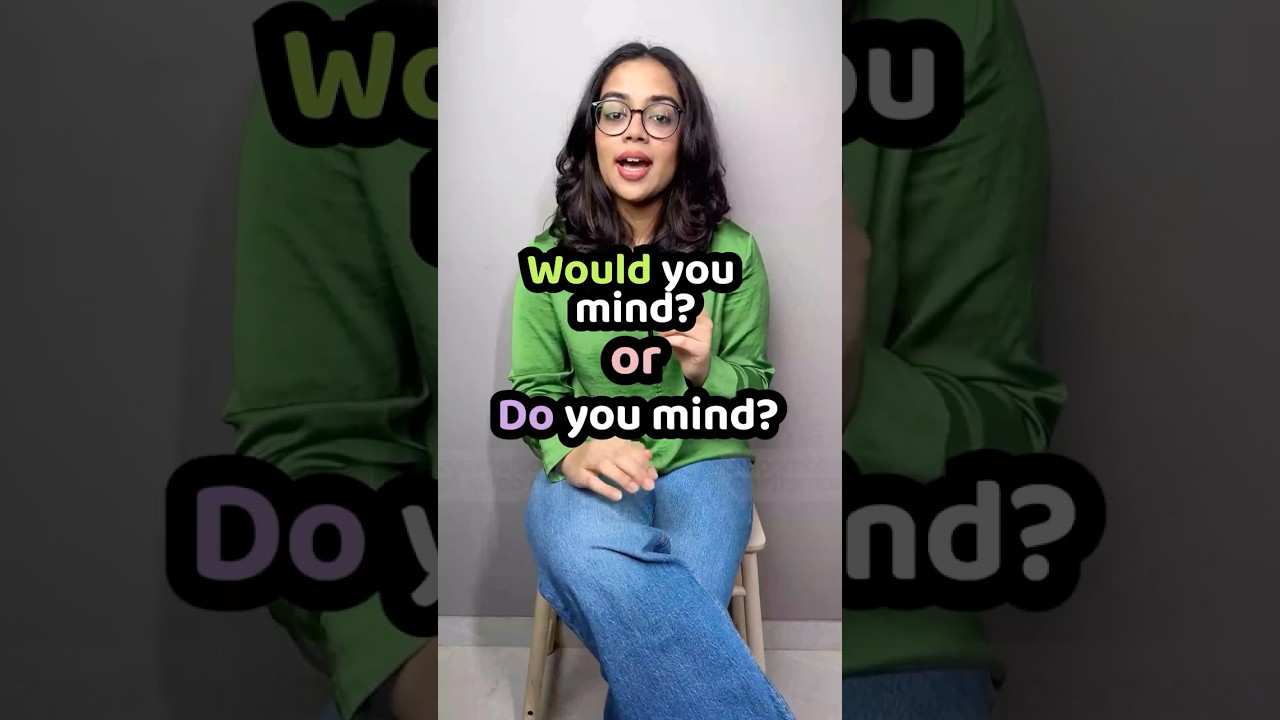
Would You Mind vs. Do You Mind? | Clear Differences & Polite English Tips 😊
Confused between 'Would you mind' and 'Do you mind'? Learn the key differences and how to use these polite requests correctly in English. Avoid common mistakes with expert tips!

Learn English | Let's Talk - Free English Lessons
115.0K views • Oct 26, 2025
About this video
Would You Mind vs Do You Mind - Master Polite English Requests | Stop Making This Common Mistake!Confused about "Would you mind" vs "Do you mind"? Making mistakes with these polite English phrases? This comprehensive lesson teaches you the EXACT difference, when to use each one, how to respond correctly, and common mistakes to avoid! Perfect for English learners, job interviews, business communication, and daily conversations!
👉All Online English Course Details -
https://www.letstalk.academy/s/store
OR
👉Send 'HI' on WhatsApp no - +919324246223
What You'll Learn in This Essential Speaking Lesson:
✅ Complete explanation of "Would you mind"
✅ Complete explanation of "Do you mind"
✅ The exact difference between both phrases
✅ When to use "Would you mind" (more polite, hypothetical)
✅ When to use "Do you mind" (direct, present situation)
✅ How to respond correctly to each question
✅ Why "Yes" and "No" answers can be confusing
✅ Grammar structure: Mind + verb-ing (gerund)
✅ Common mistakes even advanced learners make
✅ Polite alternatives and variations
✅ Real conversation examples
✅ Business English applications
✅ Cultural context and politeness levels
✅ Practice exercises with answers
Quick Rules:
📍 Would you mind = More polite, hypothetical, softer request
📍 Do you mind = Direct, about current situation, slightly less formal
📍 Both use MIND + VERB-ING (gerund form)
📍 Confusing responses: "No, I don't mind" = YES, I'll do it!
📍 "Yes, I mind" = NO, I won't do it (you're refusing)
Perfect Examples:
✨ "Would you mind opening the window?" (Polite request, hypothetical)
✨ "Do you mind if I sit here?" (Direct question about current situation)
✨ "Would you mind helping me with this?" (Very polite, formal)
✨ "Do you mind turning down the music?" (Direct request, less formal)
✨ Response: "No, not at all!" (Meaning: Yes, I'll help!)
✨ Response: "Actually, I do mind." (Meaning: No, I won't help - refusing)
The Key Difference:
🔹 WOULD YOU MIND = Hypothetical, more polite, softer, formal situations
🔹 DO YOU MIND = Present/real situation, direct, slightly less formal
🔹 WOULD = More polite (like "could you" vs "can you")
🔹 DO = More direct (asking about current feeling/situation)
🔹 Both are polite, but WOULD is MORE polite
Perfect For:
🎯 English learners confused about prepositions
🎯 IELTS & TOEFL exam preparation
🎯 Students preparing for English proficiency tests
🎯 Anyone wanting to speak grammatically correct English
🎯 Intermediate to Advanced English learners
🎯 Business professionals improving English communication
🎯 ESL/EFL students mastering grammar
#politeenglish #wouldyoumind #doyoumind #wouldyouminddoyoumind #politeenglish #englishspeaking #learnenglish #englishspeakingtips #politerequests #businessenglish #learnenglishonline #speakenglish #englishlearning #englishconversation #politeenglishphrases #professionalenglish #englishcommunication #advancedenglish #spokenenglish #learnenglishspeaking #englishteacher #esl #ielts #englishlanguage #conversationalenglish #fluentenglish #workplaceenglish #customerservice #businesscommunication #englishetiquette #formalenglish #politeexpressions #englishgrammar #naturalenglish #improveyourenglish #dailyenglish #englishphrases #speakconfidently #englishfluency #correctenglish #englishtips #studyenglish #masterenglish #englishcourse #communicationskills #professionaldevelopment #carerenglish #interviewenglish #politenessinenglish #speakpolitely #languagelearning #englishspeakingcourse #englishpractice
New Course - Speak English Naturally!
👉 Course Link - http://bit.ly/4094jfk
✔️Take your English to the Advanced C1 Level
✔️Speak Confidently, Just Like Your Native Language.
✔️Never feel short for words and phrases in a conversation.
👉Pronunciation & Accent Course
https://bit.ly/3JwtHG1
👉Watch more Short English Lessons
https://www.youtube.com/playlist?list=PL4BuO6UgthvhC0D7_cyHJ8EmmzKyRib0_
👉 https://bit.ly/31qSV34
📗 Learn English Online With Let's Talk Academy
✔️ Beginner To Advanced Level English Courses
✔️ Beautifully Crafted English courses to improve your English fluency, Clarity in speech, Pronunciation in the shortest possible time.
✔️ Activity-based learning methodology to learn English naturally.
Group classes consisting of 10-12 students. 🙋♀️🙋♂️
👉All Online English Course Details -
https://www.letstalk.academy/s/store
OR
👉Send 'HI' on WhatsApp no - +919324246223
What You'll Learn in This Essential Speaking Lesson:
✅ Complete explanation of "Would you mind"
✅ Complete explanation of "Do you mind"
✅ The exact difference between both phrases
✅ When to use "Would you mind" (more polite, hypothetical)
✅ When to use "Do you mind" (direct, present situation)
✅ How to respond correctly to each question
✅ Why "Yes" and "No" answers can be confusing
✅ Grammar structure: Mind + verb-ing (gerund)
✅ Common mistakes even advanced learners make
✅ Polite alternatives and variations
✅ Real conversation examples
✅ Business English applications
✅ Cultural context and politeness levels
✅ Practice exercises with answers
Quick Rules:
📍 Would you mind = More polite, hypothetical, softer request
📍 Do you mind = Direct, about current situation, slightly less formal
📍 Both use MIND + VERB-ING (gerund form)
📍 Confusing responses: "No, I don't mind" = YES, I'll do it!
📍 "Yes, I mind" = NO, I won't do it (you're refusing)
Perfect Examples:
✨ "Would you mind opening the window?" (Polite request, hypothetical)
✨ "Do you mind if I sit here?" (Direct question about current situation)
✨ "Would you mind helping me with this?" (Very polite, formal)
✨ "Do you mind turning down the music?" (Direct request, less formal)
✨ Response: "No, not at all!" (Meaning: Yes, I'll help!)
✨ Response: "Actually, I do mind." (Meaning: No, I won't help - refusing)
The Key Difference:
🔹 WOULD YOU MIND = Hypothetical, more polite, softer, formal situations
🔹 DO YOU MIND = Present/real situation, direct, slightly less formal
🔹 WOULD = More polite (like "could you" vs "can you")
🔹 DO = More direct (asking about current feeling/situation)
🔹 Both are polite, but WOULD is MORE polite
Perfect For:
🎯 English learners confused about prepositions
🎯 IELTS & TOEFL exam preparation
🎯 Students preparing for English proficiency tests
🎯 Anyone wanting to speak grammatically correct English
🎯 Intermediate to Advanced English learners
🎯 Business professionals improving English communication
🎯 ESL/EFL students mastering grammar
#politeenglish #wouldyoumind #doyoumind #wouldyouminddoyoumind #politeenglish #englishspeaking #learnenglish #englishspeakingtips #politerequests #businessenglish #learnenglishonline #speakenglish #englishlearning #englishconversation #politeenglishphrases #professionalenglish #englishcommunication #advancedenglish #spokenenglish #learnenglishspeaking #englishteacher #esl #ielts #englishlanguage #conversationalenglish #fluentenglish #workplaceenglish #customerservice #businesscommunication #englishetiquette #formalenglish #politeexpressions #englishgrammar #naturalenglish #improveyourenglish #dailyenglish #englishphrases #speakconfidently #englishfluency #correctenglish #englishtips #studyenglish #masterenglish #englishcourse #communicationskills #professionaldevelopment #carerenglish #interviewenglish #politenessinenglish #speakpolitely #languagelearning #englishspeakingcourse #englishpractice
New Course - Speak English Naturally!
👉 Course Link - http://bit.ly/4094jfk
✔️Take your English to the Advanced C1 Level
✔️Speak Confidently, Just Like Your Native Language.
✔️Never feel short for words and phrases in a conversation.
👉Pronunciation & Accent Course
https://bit.ly/3JwtHG1
👉Watch more Short English Lessons
https://www.youtube.com/playlist?list=PL4BuO6UgthvhC0D7_cyHJ8EmmzKyRib0_
👉 https://bit.ly/31qSV34
📗 Learn English Online With Let's Talk Academy
✔️ Beginner To Advanced Level English Courses
✔️ Beautifully Crafted English courses to improve your English fluency, Clarity in speech, Pronunciation in the shortest possible time.
✔️ Activity-based learning methodology to learn English naturally.
Group classes consisting of 10-12 students. 🙋♀️🙋♂️
Tags and Topics
Browse our collection to discover more content in these categories.
Video Information
Views
115.0K
Likes
4.5K
Duration
1:17
Published
Oct 26, 2025
User Reviews
4.7
(23) Related Trending Topics
LIVE TRENDSRelated trending topics. Click any trend to explore more videos.