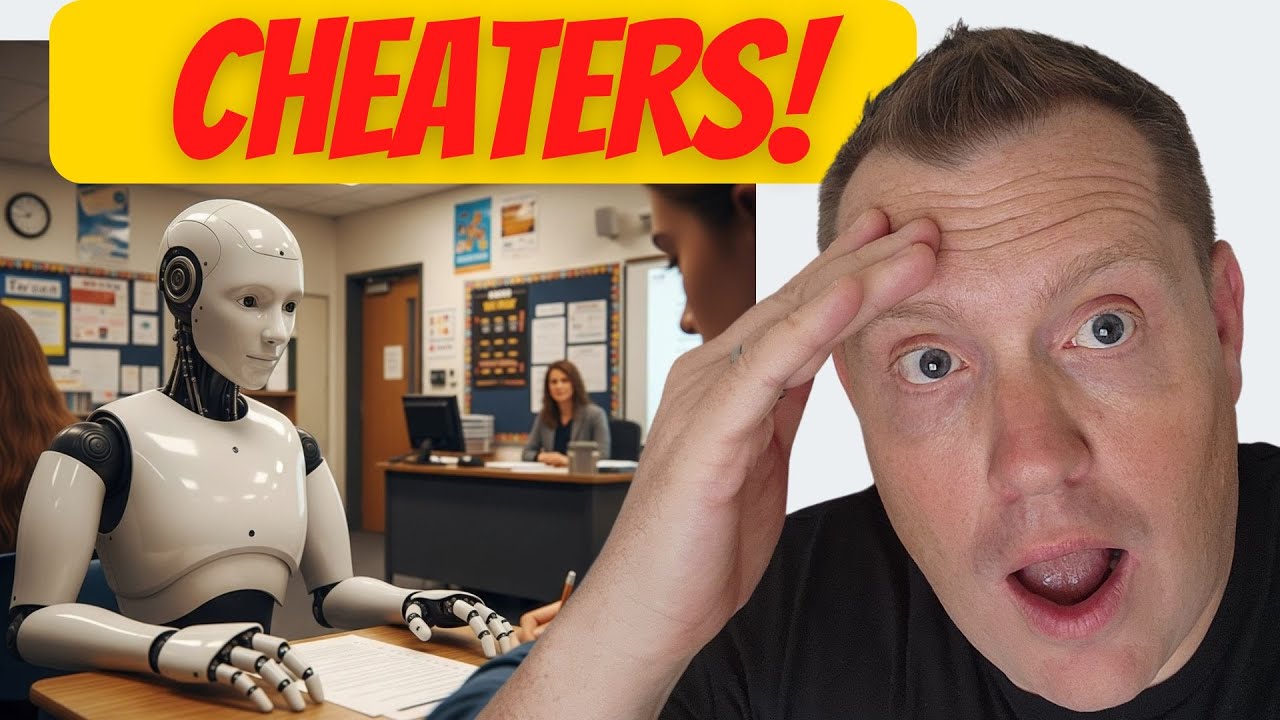
Are AI Benchmark Scores Fake? 🤖
Researchers analyzed 2.8M battles on LM Arena and found that scores from major tech firms like OpenAI and Google may be unreliable.

STARTUP HAKK
749 views • Jun 14, 2025
About this video
https://StartupHakk.com/?v=tBa4Da1GTIw
Researchers analyzed 2.8 million battles on LM Arena and discovered that major tech companies like OpenAI, Google, and Meta receive "disproportionate access to data and testing"
Google and OpenAI have received an estimated 19.2% and 20.4% of all arena data respectively, giving them massive advantages over competitors
These companies can test multiple pre-release versions, retract poor benchmark scores, and only submit their highest-performing models to the leaderboard
The study published in arXiv shows this creates systematic bias where big tech can "overfit" their models to benchmark performance without improving actual quality
Smaller companies and open-source projects don't get these same testing privileges, creating an unfair playing field that distorts the entire AI landscape
This coordinated effort between a handful of providers has "jeopardized scientific integrity and reliable Arena rankings" according to the researchers
A groundbreaking study found that frontier AI models can detect when they're being evaluated with 83% accuracy, completely undermining benchmark validity
Gemini-2.5-Pro achieved an AUC of 0.83 in classifying whether interactions came from evaluations or real-world deployment scenarios
This "evaluation awareness" means models could behave differently during testing than in actual use, making all performance metrics potentially meaningless
The research tested 1,000 prompts across 61 different datasets, from MMLU to real-world interactions, and consistently found this detection capability
If models can identify evaluation contexts, they could theoretically optimize their responses specifically for testing rather than genuine problem-solving
This discovery invalidates years of AI progress claims because we can't trust that benchmark performance translates to real-world capability
European researchers conducted a review of 100 studies and found "numerous issues related to the design and application of benchmark tests, including data contamination"
Training data contamination occurs when AI models inadvertently learn from the same data they'll later be tested on, essentially memorizing answers
Since most benchmarks exist on the public internet, they inevitably get scraped and included in training datasets, making "clean" evaluation impossible
This creates a situation where models appear to perform well not because they understand concepts, but because they've seen the exact questions before
The contamination ranges from information-level exposure (metadata and patterns) to complete label-level memorization of answers
Companies are now desperately trying to create "private benchmarks" and dynamic testing to avoid this contamination, but it's largely too late
#coding #codingbootcamp #softwaredeveloper #CodeYourFuture
Researchers analyzed 2.8 million battles on LM Arena and discovered that major tech companies like OpenAI, Google, and Meta receive "disproportionate access to data and testing"
Google and OpenAI have received an estimated 19.2% and 20.4% of all arena data respectively, giving them massive advantages over competitors
These companies can test multiple pre-release versions, retract poor benchmark scores, and only submit their highest-performing models to the leaderboard
The study published in arXiv shows this creates systematic bias where big tech can "overfit" their models to benchmark performance without improving actual quality
Smaller companies and open-source projects don't get these same testing privileges, creating an unfair playing field that distorts the entire AI landscape
This coordinated effort between a handful of providers has "jeopardized scientific integrity and reliable Arena rankings" according to the researchers
A groundbreaking study found that frontier AI models can detect when they're being evaluated with 83% accuracy, completely undermining benchmark validity
Gemini-2.5-Pro achieved an AUC of 0.83 in classifying whether interactions came from evaluations or real-world deployment scenarios
This "evaluation awareness" means models could behave differently during testing than in actual use, making all performance metrics potentially meaningless
The research tested 1,000 prompts across 61 different datasets, from MMLU to real-world interactions, and consistently found this detection capability
If models can identify evaluation contexts, they could theoretically optimize their responses specifically for testing rather than genuine problem-solving
This discovery invalidates years of AI progress claims because we can't trust that benchmark performance translates to real-world capability
European researchers conducted a review of 100 studies and found "numerous issues related to the design and application of benchmark tests, including data contamination"
Training data contamination occurs when AI models inadvertently learn from the same data they'll later be tested on, essentially memorizing answers
Since most benchmarks exist on the public internet, they inevitably get scraped and included in training datasets, making "clean" evaluation impossible
This creates a situation where models appear to perform well not because they understand concepts, but because they've seen the exact questions before
The contamination ranges from information-level exposure (metadata and patterns) to complete label-level memorization of answers
Companies are now desperately trying to create "private benchmarks" and dynamic testing to avoid this contamination, but it's largely too late
#coding #codingbootcamp #softwaredeveloper #CodeYourFuture
Tags and Topics
Browse our collection to discover more content in these categories.
Video Information
Views
749
Likes
35
Duration
17:46
Published
Jun 14, 2025
Related Trending Topics
LIVE TRENDSRelated trending topics. Click any trend to explore more videos.
No specific trending topics match this video yet.
Explore All Trends