UAE Leaves OPEC: Impact on Global Oil Markets 🌍
UAE's decision to exit OPEC and OPEC+ is reshaping global energy markets and influencing oil production dynamics worldwide.

𝙀𝙈𝙈𝙔𝙎𝘾𝙊𝙋𝙀 𝙉𝙀𝙒𝙎
1.3K views • May 16, 2026
About this video
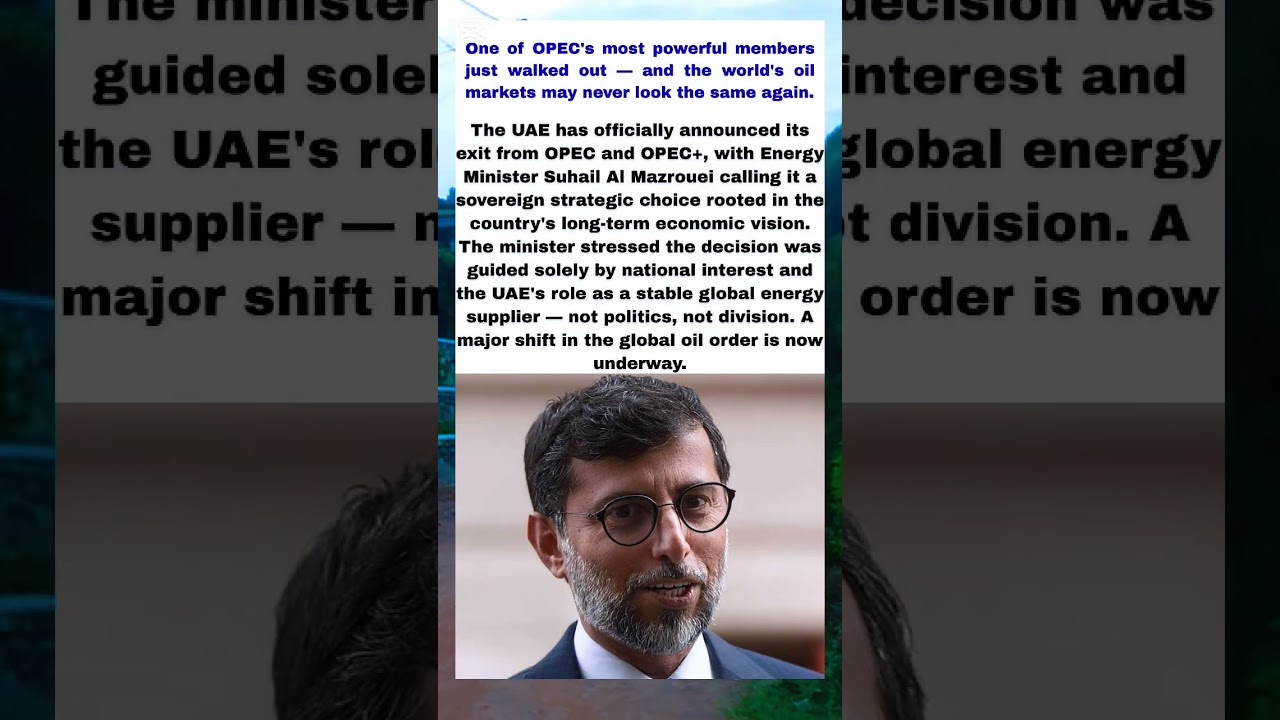
In a major development shaking the global energy landscape, the United Arab Emirates has announced its withdrawal from OPEC and OPEC+, the powerful oil producer alliance that has shaped global crude prices for decades.
UAE Energy Minister Suhail Al Mazrouei made the announcement via a post on X, describing the exit as a sovereign strategic choice — one based entirely on the UAE's long-term economic vision and growing energy production capabilities.
According to the minister, the decision followed a thorough assessment of the country's national production policy and its future capacity to supply global markets. He was clear in his messaging: this move is not politically motivated, nor does it signal any breakdown in relations between the UAE and its fellow OPEC partners.
"It is guided exclusively by the UAE's national interest, its role as a reliable energy supplier, and its commitment to market stability," Al Mazrouei stated.
This development carries significant weight for global oil markets. The UAE is one of the world's top ten crude oil producers, consistently pumping over three million barrels per day. Its exit raises immediate questions about OPEC's cohesion, its ability to manage global oil supply, and how oil prices could respond in the coming weeks and months.
For years, the UAE had shown signs of tension within OPEC+ over production quotas it felt were too restrictive for its expanding capacity. This exit may now signal a new era in which major Gulf producers prioritize national growth strategies over collective cartel coordination.
The story continues to develop, and energy analysts worldwide are closely watching how markets, oil prices, and rival producers will respond to this landmark decision.
Source: Al Jazeera
Stay informed. More global news updates coming daily.
UAE Energy Minister Suhail Al Mazrouei made the announcement via a post on X, describing the exit as a sovereign strategic choice — one based entirely on the UAE's long-term economic vision and growing energy production capabilities.
According to the minister, the decision followed a thorough assessment of the country's national production policy and its future capacity to supply global markets. He was clear in his messaging: this move is not politically motivated, nor does it signal any breakdown in relations between the UAE and its fellow OPEC partners.
"It is guided exclusively by the UAE's national interest, its role as a reliable energy supplier, and its commitment to market stability," Al Mazrouei stated.
This development carries significant weight for global oil markets. The UAE is one of the world's top ten crude oil producers, consistently pumping over three million barrels per day. Its exit raises immediate questions about OPEC's cohesion, its ability to manage global oil supply, and how oil prices could respond in the coming weeks and months.
For years, the UAE had shown signs of tension within OPEC+ over production quotas it felt were too restrictive for its expanding capacity. This exit may now signal a new era in which major Gulf producers prioritize national growth strategies over collective cartel coordination.
The story continues to develop, and energy analysts worldwide are closely watching how markets, oil prices, and rival producers will respond to this landmark decision.
Source: Al Jazeera
Stay informed. More global news updates coming daily.
Video Information
Views
1.3K
Likes
7
Duration
0:06
Published
May 16, 2026
User Reviews
4.0
(1) Related Trending Topics
LIVE TRENDSRelated trending topics. Click any trend to explore more videos.