Quantum Security & Post-Quantum Cryptography 🔐
Learn how quantum computing threatens current encryption and the role of post-quantum cryptography in safeguarding data.
Cyberpedia by Palo Alto Networks
33 views • Feb 16, 2026
About this video
Quantum computing could eventually break widely used public-key encryption methods like RSA and ECC. Even if large-scale quantum systems are years away, preparation must begin now.
In this video, we explain what quantum security means, why current encryption methods are vulnerable, what post-quantum cryptography is, and how organizations are preparing for long-term quantum risk.
Key Details:
● Defines quantum security and post-quantum cryptography
● Explains RSA and ECC vulnerabilities
● Clarifies why AES remains viable with larger key sizes
● Introduces major PQC families
● Discusses migration challenges and crypto agility
● Explains “harvest now, decrypt later” risk
Links:
● Learn about post-quantum cryptography: https://www.paloaltonetworks.com/cyberpedia/what-is-post-quantum-cryptography-pqc
● Learn about quantum readiness: https://www.paloaltonetworks.com/cyberpedia/quantum-readiness
● Explore network security: https://www.paloaltonetworks.com/network-security
0:00 What Is Quantum Security?
0:34 Why Today’s Encryption Won’t Hold Up
0:54 Symmetric Encryption and AES Resilience
1:06 Post-Quantum Cryptography Explained
1:49 Migration Challenges and Crypto Agility
2:39 Final Summary: Preparing for a Quantum Future
#QuantumSecurity #PostQuantumCryptography #Cryptography #CyberSecurity #PQC #QuantumComputing
__
Transcript
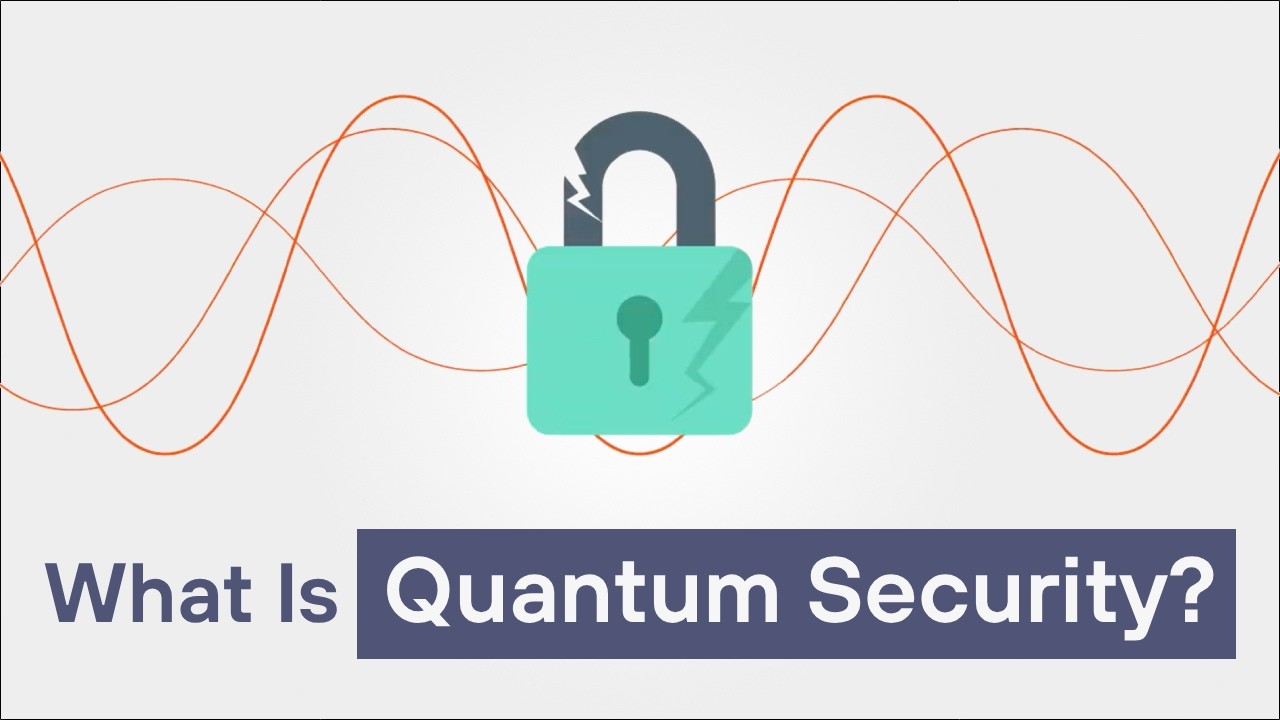
What is quantum security?
Quantum security is the practice of protecting information and communications from the risks created by quantum computing. It focuses on replacing encryption methods like RSA and elliptic curve cryptography, which quantum computers could eventually break.
In the security community, this often refers to post-quantum cryptography, or PQC. These are encryption methods designed to remain secure against both classical and quantum attacks.
Why won’t today’s encryption hold up?
Algorithms like RSA rely on math problems that classical computers cannot solve efficiently. But quantum computers can. Shor’s algorithm, for example, can factor large numbers and break RSA outright.
Symmetric encryption like AES is more resilient. Quantum algorithms can reduce its effective strength, but with larger key sizes, AES can still protect data.
The main solution is post-quantum cryptography. PQC uses different mathematical foundations, including lattice-based, hash-based, and multivariate approaches.
Migration, however, is complex. Encryption runs through nearly every system. Organizations must inventory cryptographic dependencies, update code, coordinate with vendors, and ensure interoperability.
There’s also the “harvest now, decrypt later” risk. Data stolen today could be decrypted in the future when quantum computers become powerful enough.
To wrap up, quantum security is about preparing encryption systems for a future where quantum computers can break today’s methods. Organizations that begin planning now will be ready when that shift happens.
In this video, we explain what quantum security means, why current encryption methods are vulnerable, what post-quantum cryptography is, and how organizations are preparing for long-term quantum risk.
Key Details:
● Defines quantum security and post-quantum cryptography
● Explains RSA and ECC vulnerabilities
● Clarifies why AES remains viable with larger key sizes
● Introduces major PQC families
● Discusses migration challenges and crypto agility
● Explains “harvest now, decrypt later” risk
Links:
● Learn about post-quantum cryptography: https://www.paloaltonetworks.com/cyberpedia/what-is-post-quantum-cryptography-pqc
● Learn about quantum readiness: https://www.paloaltonetworks.com/cyberpedia/quantum-readiness
● Explore network security: https://www.paloaltonetworks.com/network-security
0:00 What Is Quantum Security?
0:34 Why Today’s Encryption Won’t Hold Up
0:54 Symmetric Encryption and AES Resilience
1:06 Post-Quantum Cryptography Explained
1:49 Migration Challenges and Crypto Agility
2:39 Final Summary: Preparing for a Quantum Future
#QuantumSecurity #PostQuantumCryptography #Cryptography #CyberSecurity #PQC #QuantumComputing
__
Transcript
What is quantum security?
Quantum security is the practice of protecting information and communications from the risks created by quantum computing. It focuses on replacing encryption methods like RSA and elliptic curve cryptography, which quantum computers could eventually break.
In the security community, this often refers to post-quantum cryptography, or PQC. These are encryption methods designed to remain secure against both classical and quantum attacks.
Why won’t today’s encryption hold up?
Algorithms like RSA rely on math problems that classical computers cannot solve efficiently. But quantum computers can. Shor’s algorithm, for example, can factor large numbers and break RSA outright.
Symmetric encryption like AES is more resilient. Quantum algorithms can reduce its effective strength, but with larger key sizes, AES can still protect data.
The main solution is post-quantum cryptography. PQC uses different mathematical foundations, including lattice-based, hash-based, and multivariate approaches.
Migration, however, is complex. Encryption runs through nearly every system. Organizations must inventory cryptographic dependencies, update code, coordinate with vendors, and ensure interoperability.
There’s also the “harvest now, decrypt later” risk. Data stolen today could be decrypted in the future when quantum computers become powerful enough.
To wrap up, quantum security is about preparing encryption systems for a future where quantum computers can break today’s methods. Organizations that begin planning now will be ready when that shift happens.
Tags and Topics
Browse our collection to discover more content in these categories.
Video Information
Views
33
Duration
3:01
Published
Feb 16, 2026
Related Trending Topics
LIVE TRENDSRelated trending topics. Click any trend to explore more videos.
No specific trending topics match this video yet.
Explore All Trends