Hybrid Cryptography: Classical & Post-Quantum Security
Hybrid cryptography merges classical and post-quantum algorithms for enhanced security, bridging traditional and future-proof protection. 🔐

Cyberpedia by Palo Alto Networks
47 views • Feb 17, 2026
About this video
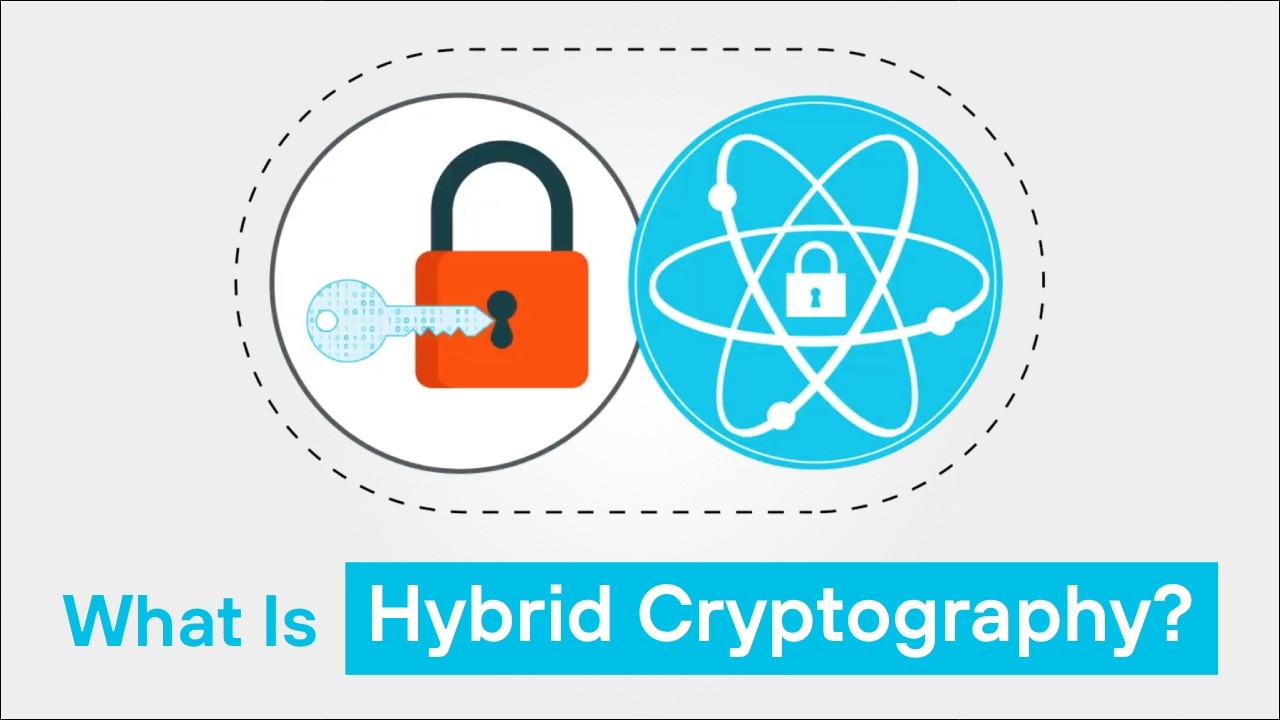
Hybrid cryptography combines two or more cryptographic algorithms — typically one classical and one post-quantum — to create a secure result. Each algorithm operates independently, and their outputs are combined so that if one is broken, the other continues protecting the data.
As organizations prepare for quantum-era threats, hybrid cryptography provides a practical bridge between today’s infrastructure and tomorrow’s fully post-quantum systems.
Key Details:
● Defines hybrid cryptography and why it matters for quantum transition
● Explains hybrid key exchange and hybrid digital signatures
● Covers PQ/T, PQ/PQ, composite, and non-composite hybrid models
● Explores PQC + QKD hybrid approaches
● Highlights real-world testing in TLS, SSH, MACsec, and cloud platforms
Links:
● Learn about post-quantum cryptography: https://www.paloaltonetworks.com/cyberpedia/what-is-post-quantum-cryptography-pqc
● Explore quantum-safe security strategies: https://www.paloaltonetworks.com/cyberpedia/quantum-safe-iot-security
● Watch: What Is Q-Day? https://www.youtube.com/@paloaltonetworks
0:00 What Is Hybrid Cryptography?
0:30 Why Organizations Are Adopting Hybrid Models
0:52 How Hybrid Key Exchange Works
1:06 Hybrid Digital Signatures Explained
1:17 Types of Hybrid Cryptography
2:00 Are Hybrid Schemes Secure?
2:17 Where Hybrid Cryptography Is Used Today
2:42 The Future of Hybrid and Post-Quantum Systems
#HybridCryptography #PostQuantumCryptography #QuantumSafe #CyberSecurity #Encryption #QuantumComputing #TLS13 #CryptographyExplained #NetworkSecurity
__
Transcript
What is hybrid cryptography?
Hybrid cryptography combines two or more cryptographic algorithms — most often one classical algorithm and one post-quantum algorithm. Each algorithm generates its own cryptographic output, and those outputs are combined to create a single secure result.
The idea is simple: if one algorithm fails, the other continues protecting the data. This makes hybrid cryptography a bridge to post-quantum security, allowing organizations to prepare for quantum threats without abandoning existing infrastructure.
Why are organizations adopting hybrid cryptography now? Because it allows them to begin migration before Q-Day arrives. It maintains compatibility with systems that still rely on classical cryptography, while adding post-quantum protection. It also helps defend against harvest-now, decrypt-later attacks, where encrypted data is stored today and decrypted in the future.
Here’s how hybrid cryptography works.
In hybrid key exchange, two key encapsulation mechanisms are used — one classical and one post-quantum. Each generates a secret. A key derivation function then combines those secrets into a single shared session key. As long as one of the algorithms remains secure, the final key remains protected.
Hybrid digital signatures follow a similar pattern. A message may be signed using both a classical and a post-quantum algorithm. In some implementations, the signatures remain separate. In composite approaches, they are merged into a single cryptographic object.
There are several types of hybrid cryptography.
Post-quantum/traditional hybrids pair one classical and one post-quantum algorithm. Post-quantum/post-quantum hybrids combine two different post-quantum algorithms for added redundancy.
Composite hybrids merge algorithms into one unified signature or key structure. Non-composite hybrids keep algorithms separate and combine the outputs at the protocol layer.
Some architectures also combine post-quantum cryptography with quantum key distribution. These PQC + QKD hybrids blend mathematical and physics-based security approaches.
Are hybrid schemes secure in practice? They are designed so that breaking one algorithm does not compromise the overall system. However, implementation details matter. Algorithms must be combined using approved combiners and secure key derivation functions. Poor design can weaken the intended security guarantees.
Hybrid cryptography is already being tested and deployed. TLS 1.3 and SSH implementations have experimented with hybrid handshakes, pairing classical algorithms like X25519 with post-quantum mechanisms such as ML-KEM (formerly known as Kyber). Hybrid MACsec and Ethernet pilots are evaluating post-quantum and QKD combinations. Major cloud providers are testing hybrid key exchanges in controlled environments.
Hybrid cryptography is now moving from research into standardization. Organizations such as NIST and other standards bodies are defining how hybrid constructions should be implemented securely.
In the long term, systems may transition fully to post-quantum cryptography. But today, hybrid encryption is the practical path forward — enabling secure migration without disruption.
It’s not the final destination. It’s the bridge that gets us there.
As organizations prepare for quantum-era threats, hybrid cryptography provides a practical bridge between today’s infrastructure and tomorrow’s fully post-quantum systems.
Key Details:
● Defines hybrid cryptography and why it matters for quantum transition
● Explains hybrid key exchange and hybrid digital signatures
● Covers PQ/T, PQ/PQ, composite, and non-composite hybrid models
● Explores PQC + QKD hybrid approaches
● Highlights real-world testing in TLS, SSH, MACsec, and cloud platforms
Links:
● Learn about post-quantum cryptography: https://www.paloaltonetworks.com/cyberpedia/what-is-post-quantum-cryptography-pqc
● Explore quantum-safe security strategies: https://www.paloaltonetworks.com/cyberpedia/quantum-safe-iot-security
● Watch: What Is Q-Day? https://www.youtube.com/@paloaltonetworks
0:00 What Is Hybrid Cryptography?
0:30 Why Organizations Are Adopting Hybrid Models
0:52 How Hybrid Key Exchange Works
1:06 Hybrid Digital Signatures Explained
1:17 Types of Hybrid Cryptography
2:00 Are Hybrid Schemes Secure?
2:17 Where Hybrid Cryptography Is Used Today
2:42 The Future of Hybrid and Post-Quantum Systems
#HybridCryptography #PostQuantumCryptography #QuantumSafe #CyberSecurity #Encryption #QuantumComputing #TLS13 #CryptographyExplained #NetworkSecurity
__
Transcript
What is hybrid cryptography?
Hybrid cryptography combines two or more cryptographic algorithms — most often one classical algorithm and one post-quantum algorithm. Each algorithm generates its own cryptographic output, and those outputs are combined to create a single secure result.
The idea is simple: if one algorithm fails, the other continues protecting the data. This makes hybrid cryptography a bridge to post-quantum security, allowing organizations to prepare for quantum threats without abandoning existing infrastructure.
Why are organizations adopting hybrid cryptography now? Because it allows them to begin migration before Q-Day arrives. It maintains compatibility with systems that still rely on classical cryptography, while adding post-quantum protection. It also helps defend against harvest-now, decrypt-later attacks, where encrypted data is stored today and decrypted in the future.
Here’s how hybrid cryptography works.
In hybrid key exchange, two key encapsulation mechanisms are used — one classical and one post-quantum. Each generates a secret. A key derivation function then combines those secrets into a single shared session key. As long as one of the algorithms remains secure, the final key remains protected.
Hybrid digital signatures follow a similar pattern. A message may be signed using both a classical and a post-quantum algorithm. In some implementations, the signatures remain separate. In composite approaches, they are merged into a single cryptographic object.
There are several types of hybrid cryptography.
Post-quantum/traditional hybrids pair one classical and one post-quantum algorithm. Post-quantum/post-quantum hybrids combine two different post-quantum algorithms for added redundancy.
Composite hybrids merge algorithms into one unified signature or key structure. Non-composite hybrids keep algorithms separate and combine the outputs at the protocol layer.
Some architectures also combine post-quantum cryptography with quantum key distribution. These PQC + QKD hybrids blend mathematical and physics-based security approaches.
Are hybrid schemes secure in practice? They are designed so that breaking one algorithm does not compromise the overall system. However, implementation details matter. Algorithms must be combined using approved combiners and secure key derivation functions. Poor design can weaken the intended security guarantees.
Hybrid cryptography is already being tested and deployed. TLS 1.3 and SSH implementations have experimented with hybrid handshakes, pairing classical algorithms like X25519 with post-quantum mechanisms such as ML-KEM (formerly known as Kyber). Hybrid MACsec and Ethernet pilots are evaluating post-quantum and QKD combinations. Major cloud providers are testing hybrid key exchanges in controlled environments.
Hybrid cryptography is now moving from research into standardization. Organizations such as NIST and other standards bodies are defining how hybrid constructions should be implemented securely.
In the long term, systems may transition fully to post-quantum cryptography. But today, hybrid encryption is the practical path forward — enabling secure migration without disruption.
It’s not the final destination. It’s the bridge that gets us there.
Tags and Topics
Browse our collection to discover more content in these categories.
Video Information
Views
47
Likes
3
Duration
3:08
Published
Feb 17, 2026
Related Trending Topics
LIVE TRENDSRelated trending topics. Click any trend to explore more videos.
No specific trending topics match this video yet.
Explore All Trends