Understanding the Boundary of Computation in Machine Learning 🧠
Discover what happens at the edge of computational limits and how it impacts machine learning. Join our newsletter for insightful articles!

Mutual Information
93.1K views • Aug 21, 2023
About this video
The machine learning consultancy: https://truetheta.io
Join my email list to get educational and useful articles (and nothing else!): https://mailchi.mp/truetheta/true-theta-email-list
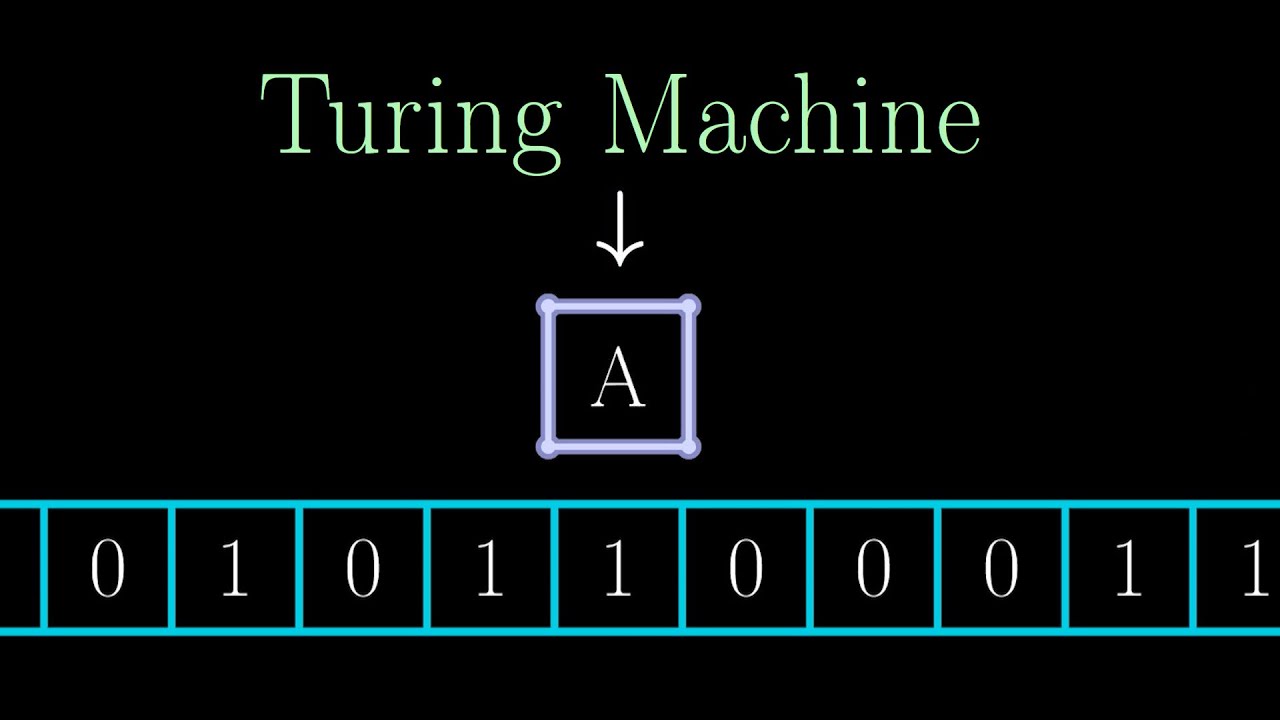
In this video, we look inside the bizarre busy beaver function.
SOCIAL MEDIA
LinkedIn : https://www.linkedin.com/in/dj-rich-90b91753/
Twitter : https://twitter.com/DuaneJRich
Github: https://github.com/Duane321
Enjoy learning this way? Want me to make more videos? Consider supporting me on Patreon: https://www.patreon.com/MutualInformation
REFERENCE NOTES
As mentioned, [1] was the primary source. The first video and this one were originally inspired by reading [1], so many of the ideas can be traced to that point. Anyone still interested should continue their search there. Sources [3]-[4] were essential for understanding the exact nature of the busy beaver and champion machines. In fact, I should have also thanks Pascal Michel in the video. He has maintained a detailed recorded of which machines were champions at which points and I found myself referencing it regularly. Sources [5]-[7] plus some conversations with the author were essential for my understanding of the Collatz-like behavior.
REFERENCES
[1] S. Aaronson, "The Busy Beaver Frontier", https://www.scottaaronson.com/papers/bb.pdf
[2] T. Radó. "On non-computable functions". Bell System Technical Journal. 41 (3): 877–884, 1962
[3] P. Michel. "The Busy Beaver competition: a historical survey". 2019. https://arxiv.org/abs/0906.3749
[4] P. Michel. "Problems in Number Theory from the Busy Beaver Competition". Logical Methods in Computer Science
Vol. 11(4:10), pp. 1–35, 2015
[5] S. Ligocki, "BB(6, 2) is greater than 10^10...^10", 2022, https://www.sligocki.com/2022/06/21/bb-6-2-t15.html
[6] S. Ligocki, "Collatz-like behavior of Busy Beavers", 2021, https://www.sligocki.com/2021/07/17/bb-collatz.html
[7] S. Ligocki, "BBB Complex Collatz-like Behavior", 2021, https://www.sligocki.com/2022/02/22/collatz-complex.html
TIME CODES
0:00 Introduction
0:42 Reviewing the Basics
2:11 How does it grow faster than anything computable?
2:58 Using Collatz for Absurd Growth
3:59 Collatz in the 5-state machine
7:31 Exponential Collatz in the 6-state machine
9:05 The Busy Beavers answer famous open problems
11:23 The Busy Beavers are unknowable by any mathematical system
14:10 The Conjectures
14:26 Thank You's
Join my email list to get educational and useful articles (and nothing else!): https://mailchi.mp/truetheta/true-theta-email-list
In this video, we look inside the bizarre busy beaver function.
SOCIAL MEDIA
LinkedIn : https://www.linkedin.com/in/dj-rich-90b91753/
Twitter : https://twitter.com/DuaneJRich
Github: https://github.com/Duane321
Enjoy learning this way? Want me to make more videos? Consider supporting me on Patreon: https://www.patreon.com/MutualInformation
REFERENCE NOTES
As mentioned, [1] was the primary source. The first video and this one were originally inspired by reading [1], so many of the ideas can be traced to that point. Anyone still interested should continue their search there. Sources [3]-[4] were essential for understanding the exact nature of the busy beaver and champion machines. In fact, I should have also thanks Pascal Michel in the video. He has maintained a detailed recorded of which machines were champions at which points and I found myself referencing it regularly. Sources [5]-[7] plus some conversations with the author were essential for my understanding of the Collatz-like behavior.
REFERENCES
[1] S. Aaronson, "The Busy Beaver Frontier", https://www.scottaaronson.com/papers/bb.pdf
[2] T. Radó. "On non-computable functions". Bell System Technical Journal. 41 (3): 877–884, 1962
[3] P. Michel. "The Busy Beaver competition: a historical survey". 2019. https://arxiv.org/abs/0906.3749
[4] P. Michel. "Problems in Number Theory from the Busy Beaver Competition". Logical Methods in Computer Science
Vol. 11(4:10), pp. 1–35, 2015
[5] S. Ligocki, "BB(6, 2) is greater than 10^10...^10", 2022, https://www.sligocki.com/2022/06/21/bb-6-2-t15.html
[6] S. Ligocki, "Collatz-like behavior of Busy Beavers", 2021, https://www.sligocki.com/2021/07/17/bb-collatz.html
[7] S. Ligocki, "BBB Complex Collatz-like Behavior", 2021, https://www.sligocki.com/2022/02/22/collatz-complex.html
TIME CODES
0:00 Introduction
0:42 Reviewing the Basics
2:11 How does it grow faster than anything computable?
2:58 Using Collatz for Absurd Growth
3:59 Collatz in the 5-state machine
7:31 Exponential Collatz in the 6-state machine
9:05 The Busy Beavers answer famous open problems
11:23 The Busy Beavers are unknowable by any mathematical system
14:10 The Conjectures
14:26 Thank You's
Video Information
Views
93.1K
Likes
4.6K
Duration
14:59
Published
Aug 21, 2023
User Reviews
4.7
(18) Related Trending Topics
LIVE TRENDSRelated trending topics. Click any trend to explore more videos.
No specific trending topics match this video yet.
Explore All Trends