Vagus Nerve Breathing Exercise with Pocket Breath Coach
Use the app to customize sounds and volume for vagus nerve stimulation through breathing exercises. Link on my channel!

Pocket Breath Coach - Luke Horton
615.8K views • Oct 6, 2024
About this video
Customize the sounds and volume with my app Pocket Breath Coach. Link on my channel page.
Your breath is closely connected to the vagus nerve, an important part in the parasympathetic nervous system that helps regulate rest and relaxation responses in the body.
The vagus nerve carries signals from the brain down to the body, as well as from the body up to the brain.
This means that how you breathe can influence your brain, and vice versa.
When the vagus nerve is stimulated through deep breathing exercises, one of the ways you can tell is by checking for a phenomenon called respiratory sinus arrhythmia (RSA). RSA is a natural variation in heart rate that occurs with each breath you take. When you inhale, your heart rate speeds up slightly, and when you exhale, it slows down.
During deep breathing exercises, this pattern of heart rate variability becomes more pronounced. You may notice that your heart rate becomes slower and more regular as you breathe deeply and evenly. You may also notice that you feel more relaxed and calm, as your body enters a state of rest and recovery.
Most deep breathing exercise can stimulate the vagus nerve, but I came across 2 studies where they had the patients breathe in a pattern that produce measurable vagus nerve stimulation.
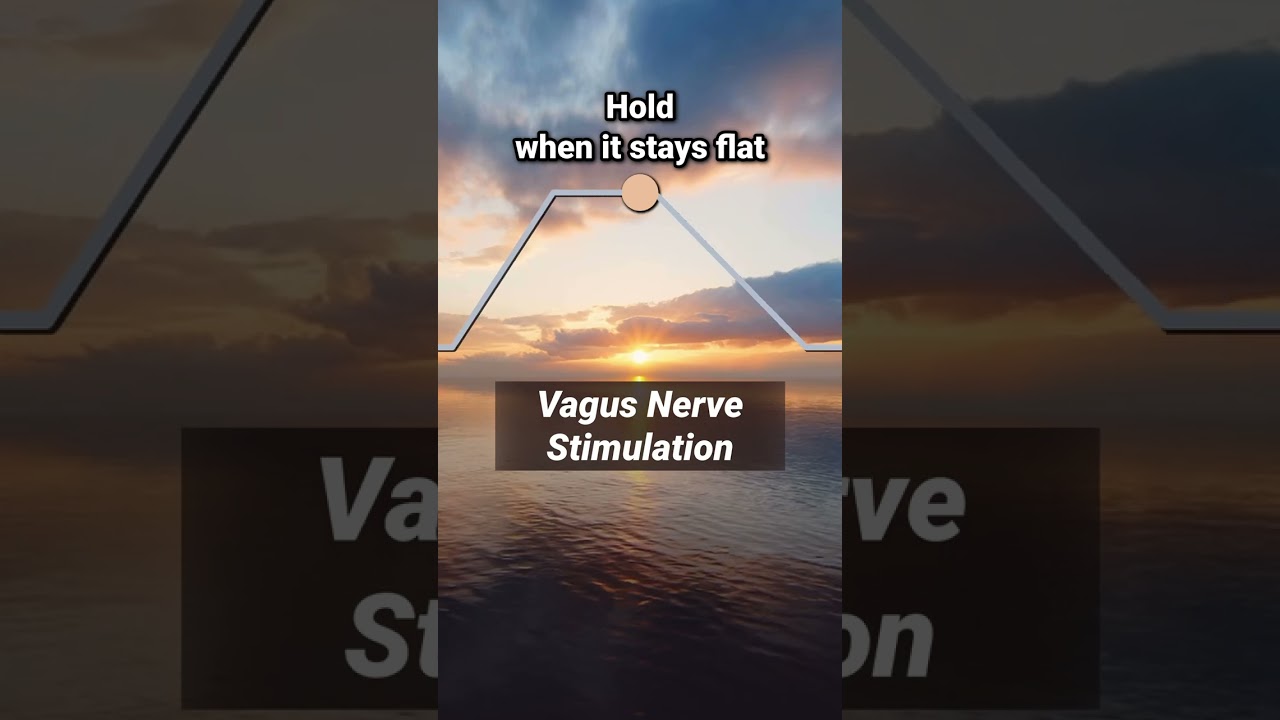
The breathing pattern they used in the studies is 4-4-6-2
- inhale 4 seconds
- hold 4 seconds
- exhale 6 seconds
- hold 2 seconds
References:
Vagal Mediation of Low-Frequency Heart Rate Variability During Slow Yogic Breathing
https://pubmed.ncbi.nlm.nih.gov/29771730/
Sudarshan Kriya yogic breathing in the treatment of stress, anxiety, and depression
https://www.researchgate.net/publication/7984597_Sudarshan_Kriya_Yogic_Breathing_in_the_Treatment_of_Stress_Anxiety_and_Depression_Part_I-Neurophysiologic_Model
Your breath is closely connected to the vagus nerve, an important part in the parasympathetic nervous system that helps regulate rest and relaxation responses in the body.
The vagus nerve carries signals from the brain down to the body, as well as from the body up to the brain.
This means that how you breathe can influence your brain, and vice versa.
When the vagus nerve is stimulated through deep breathing exercises, one of the ways you can tell is by checking for a phenomenon called respiratory sinus arrhythmia (RSA). RSA is a natural variation in heart rate that occurs with each breath you take. When you inhale, your heart rate speeds up slightly, and when you exhale, it slows down.
During deep breathing exercises, this pattern of heart rate variability becomes more pronounced. You may notice that your heart rate becomes slower and more regular as you breathe deeply and evenly. You may also notice that you feel more relaxed and calm, as your body enters a state of rest and recovery.
Most deep breathing exercise can stimulate the vagus nerve, but I came across 2 studies where they had the patients breathe in a pattern that produce measurable vagus nerve stimulation.
The breathing pattern they used in the studies is 4-4-6-2
- inhale 4 seconds
- hold 4 seconds
- exhale 6 seconds
- hold 2 seconds
References:
Vagal Mediation of Low-Frequency Heart Rate Variability During Slow Yogic Breathing
https://pubmed.ncbi.nlm.nih.gov/29771730/
Sudarshan Kriya yogic breathing in the treatment of stress, anxiety, and depression
https://www.researchgate.net/publication/7984597_Sudarshan_Kriya_Yogic_Breathing_in_the_Treatment_of_Stress_Anxiety_and_Depression_Part_I-Neurophysiologic_Model
Tags and Topics
Browse our collection to discover more content in these categories.
Video Information
Views
615.8K
Likes
17.9K
Duration
0:17
Published
Oct 6, 2024
User Reviews
4.8
(123) Related Trending Topics
LIVE TRENDSRelated trending topics. Click any trend to explore more videos.
No specific trending topics match this video yet.
Explore All Trends