Unraveling the Algorithm of Truth: From Hilbert to Turing 🧠
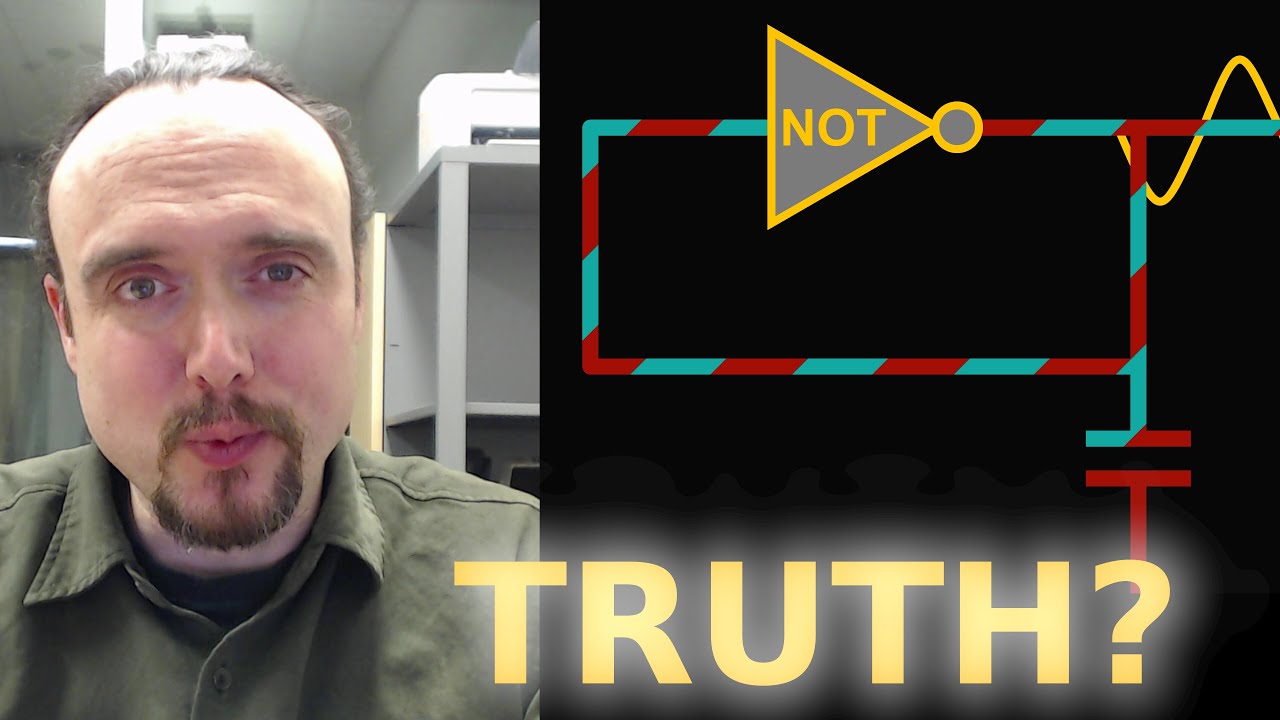
Explore the fascinating journey of self-referential logic, decision problems, and the quest for an algorithm to determine truth. Includes simple JavaScript examples and insights into foundational computational challenges.

Orion Lawlor
446 views • Jan 23, 2025
About this video
Self referential logic, from Hilbert's decision problem to Turing's halting problem. Tiny programming examples are given in JavaScript.
See also:
A slow and beautiful guided tour of Lambda calculus, in Python:
http://matt.might.net/articles/python-church-y-combinator/
A much faster tour of Lambda calculus and the Y combinator, in JavaScript:
https://raganwald.com/2018/09/10/why-y.html
Details on Turing Machines at computerphile:
https://www.youtube.com/watch?v=dNRDvLACg5Q
My slightly improved version of Morphett's Turing Machine simulator.
https://lawlorcode.com/2024/turing_pp.html
A very pretty graphical Turing Machine emulator:
http://turingmachine.io/
A tiny JavaScript emulator for a Turing Machine:
https://gist.github.com/azproduction/1400509
7-second clip taken from Rammstein's "Du Hast", available on Spotify here:
https://open.spotify.com/album/2w6Vy8qZLU4niyQAHyu0Ag
Hat tip to Tom Scott for the title's phrase "algorithm for truth":
https://www.youtube.com/watch?v=leX541Dr2rU
It's still hazy, but I feel like there are huge opportunties to exploit the beyond-binary logic of self-referential programs. For example, a "self aware" program sounds like clickbait or philosophy. But the halting problem suggests a precise defintion of "self awareness": "able to recognize you own source code when passed as an argument".
This is incredibly hard! You can be translated into a huge number of different programming languages, virtual machines, or obfuscators.
See also:
A slow and beautiful guided tour of Lambda calculus, in Python:
http://matt.might.net/articles/python-church-y-combinator/
A much faster tour of Lambda calculus and the Y combinator, in JavaScript:
https://raganwald.com/2018/09/10/why-y.html
Details on Turing Machines at computerphile:
https://www.youtube.com/watch?v=dNRDvLACg5Q
My slightly improved version of Morphett's Turing Machine simulator.
https://lawlorcode.com/2024/turing_pp.html
A very pretty graphical Turing Machine emulator:
http://turingmachine.io/
A tiny JavaScript emulator for a Turing Machine:
https://gist.github.com/azproduction/1400509
7-second clip taken from Rammstein's "Du Hast", available on Spotify here:
https://open.spotify.com/album/2w6Vy8qZLU4niyQAHyu0Ag
Hat tip to Tom Scott for the title's phrase "algorithm for truth":
https://www.youtube.com/watch?v=leX541Dr2rU
It's still hazy, but I feel like there are huge opportunties to exploit the beyond-binary logic of self-referential programs. For example, a "self aware" program sounds like clickbait or philosophy. But the halting problem suggests a precise defintion of "self awareness": "able to recognize you own source code when passed as an argument".
This is incredibly hard! You can be translated into a huge number of different programming languages, virtual machines, or obfuscators.
Video Information
Views
446
Likes
34
Duration
12:18
Published
Jan 23, 2025
Related Trending Topics
LIVE TRENDSRelated trending topics. Click any trend to explore more videos.
No specific trending topics match this video yet.
Explore All Trends