Understanding Cryptographic Attacks: Symmetric & Public-Key Algorithms 🛡️
Learn what cryptographic attacks are and how they target symmetric and public-key cryptography systems. Protect your data with these essential insights!
Cyber Technical knowledge
561 views • Dec 13, 2022
About this video
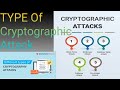
What is Cryptographic Attacks||Symmetric-Key Algorithm||Public-Key Cryptography
#cryptographicsystems #Cryptographicattacks #publickey #publickeycryptography
#Symmetrickeyalgorithm #cyberpunk #cybersecurity #cloudattacks
What is Cryptographic Attacks?
A cryptographic attack is a method used by hackers to target cryptographic solutions like ciphertext, encryption keys, etc. These attacks aim to retrieve the plaintext from the ciphertext or decode the encrypted data. Hackers may attempt to bypass the security of a cryptographic system by discovering weaknesses and flaws in cryptography techniques, cryptographic protocol, encryption algorithms, or key management strategy.
Passive and active attacks
A cryptography attack can be either passive or active.
Passive attacks:
Passive cryptography attacks intend to obtain unauthorized access to sensitive data or information by intercepting or eavesdropping on general communication. In this situation, the data and the communication remain intact and are not tampered with. The attacker only gains access to the data.
Active attacks: On the other hand, active cryptography attacks
involve some kind of modification of the data or communication. In this case, the attacker not only gains access to the data but also tampers with it.
Types of cryptography attacks
Depending on the type of cryptographic system in place and the information available to the attacker, these attacks can be broadly classified into six types:
Brute force attack
Public and private keys play a significant role in encrypting and decrypting the data in a cryptographic system. In a brute force attack, the cybercriminal tries various private keys to decipher an encrypted message or data. If the key size is 8-bit, the possible keys will be 256 (i.e., 28). The cybercriminal must know the algorithm (usually found as open-source programs) to try all the 256 possible keys in this attack technique.
Ciphertext-only attack
In this attack vector, the attacker gains access to a collection of ciphertext. Although the attacker cannot access the plaintext, they can successfully determine the ciphertext from the collection. Through this attack technique, the attacker can occasionally determine the key.
Chosen plaintext attack
In this attack model, the cybercriminal can choose arbitrary plaintext data to obtain the ciphertext. It simplifies the attacker's task of resolving the encryption key. One well-known example of this type of attack is the differential cryptanalysis performed on block ciphers.
Chosen ciphertext attack
In this attack model, the cybercriminal analyzes a chosen ciphertext corresponding to its plaintext. The attacker tries to obtain a secret key or the details about the system. By analyzing the chosen ciphertext and relating it to the plaintext, the attacker attempts to guess the key. Older versions of RSA encryption were prone to this attack.
Known plaintext attack
In this attack technique, the cybercriminal finds or knows the plaintext of some portions
of the ciphertext using information gathering techniques. Linear cryptanalysis in block cipher is one such example.
Key and algorithm attack
Here, the attacker tries to recover the key used to encrypt or decrypt the data by analyzing the cryptographic algorithm.
#cloudcomputing #cloudsecurity #cloudcomputingcourse #Cloudhacking #zerodayvulnerability #vulnerabilitymanagement #vulnerabilitymanagement #Serverpenetrationtesting #penetrationtesting #mobilehacking #hackingcourses #hacker #hack #howtohackcompanywebsit #howtoinstallkalilinux #Fullcourseofcloudsecurity #cloudsecurity #cloudcomputing #hackcloudservers
Disclaimer:
This video is made available for educational and informational purposes only. We believe that everyone must be aware of ethical hacking and cybersecurity to avoid different types of cyberattacks on computers, websites, apps, etc. Please regard the word hacking as ethical hacking every time we use it.
All our videos have been made using our own systems, servers, routers, and websites. It does not contain any illegal activities. Our sole purpose is to raise awareness related to cybersecurity and help our viewers learn ways to defend themselves from any hacking activities. Cyber Technical Knowledge is not responsible for any misuse of the provided information.
#cryptographicsystems #Cryptographicattacks #publickey #publickeycryptography
#Symmetrickeyalgorithm #cyberpunk #cybersecurity #cloudattacks
What is Cryptographic Attacks?
A cryptographic attack is a method used by hackers to target cryptographic solutions like ciphertext, encryption keys, etc. These attacks aim to retrieve the plaintext from the ciphertext or decode the encrypted data. Hackers may attempt to bypass the security of a cryptographic system by discovering weaknesses and flaws in cryptography techniques, cryptographic protocol, encryption algorithms, or key management strategy.
Passive and active attacks
A cryptography attack can be either passive or active.
Passive attacks:
Passive cryptography attacks intend to obtain unauthorized access to sensitive data or information by intercepting or eavesdropping on general communication. In this situation, the data and the communication remain intact and are not tampered with. The attacker only gains access to the data.
Active attacks: On the other hand, active cryptography attacks
involve some kind of modification of the data or communication. In this case, the attacker not only gains access to the data but also tampers with it.
Types of cryptography attacks
Depending on the type of cryptographic system in place and the information available to the attacker, these attacks can be broadly classified into six types:
Brute force attack
Public and private keys play a significant role in encrypting and decrypting the data in a cryptographic system. In a brute force attack, the cybercriminal tries various private keys to decipher an encrypted message or data. If the key size is 8-bit, the possible keys will be 256 (i.e., 28). The cybercriminal must know the algorithm (usually found as open-source programs) to try all the 256 possible keys in this attack technique.
Ciphertext-only attack
In this attack vector, the attacker gains access to a collection of ciphertext. Although the attacker cannot access the plaintext, they can successfully determine the ciphertext from the collection. Through this attack technique, the attacker can occasionally determine the key.
Chosen plaintext attack
In this attack model, the cybercriminal can choose arbitrary plaintext data to obtain the ciphertext. It simplifies the attacker's task of resolving the encryption key. One well-known example of this type of attack is the differential cryptanalysis performed on block ciphers.
Chosen ciphertext attack
In this attack model, the cybercriminal analyzes a chosen ciphertext corresponding to its plaintext. The attacker tries to obtain a secret key or the details about the system. By analyzing the chosen ciphertext and relating it to the plaintext, the attacker attempts to guess the key. Older versions of RSA encryption were prone to this attack.
Known plaintext attack
In this attack technique, the cybercriminal finds or knows the plaintext of some portions
of the ciphertext using information gathering techniques. Linear cryptanalysis in block cipher is one such example.
Key and algorithm attack
Here, the attacker tries to recover the key used to encrypt or decrypt the data by analyzing the cryptographic algorithm.
#cloudcomputing #cloudsecurity #cloudcomputingcourse #Cloudhacking #zerodayvulnerability #vulnerabilitymanagement #vulnerabilitymanagement #Serverpenetrationtesting #penetrationtesting #mobilehacking #hackingcourses #hacker #hack #howtohackcompanywebsit #howtoinstallkalilinux #Fullcourseofcloudsecurity #cloudsecurity #cloudcomputing #hackcloudservers
Disclaimer:
This video is made available for educational and informational purposes only. We believe that everyone must be aware of ethical hacking and cybersecurity to avoid different types of cyberattacks on computers, websites, apps, etc. Please regard the word hacking as ethical hacking every time we use it.
All our videos have been made using our own systems, servers, routers, and websites. It does not contain any illegal activities. Our sole purpose is to raise awareness related to cybersecurity and help our viewers learn ways to defend themselves from any hacking activities. Cyber Technical Knowledge is not responsible for any misuse of the provided information.
Tags and Topics
Browse our collection to discover more content in these categories.
Video Information
Views
561
Likes
10
Duration
12:18
Published
Dec 13, 2022
Related Trending Topics
LIVE TRENDSRelated trending topics. Click any trend to explore more videos.
No specific trending topics match this video yet.
Explore All Trends