Trimming Greens for Market Freshness 🌿
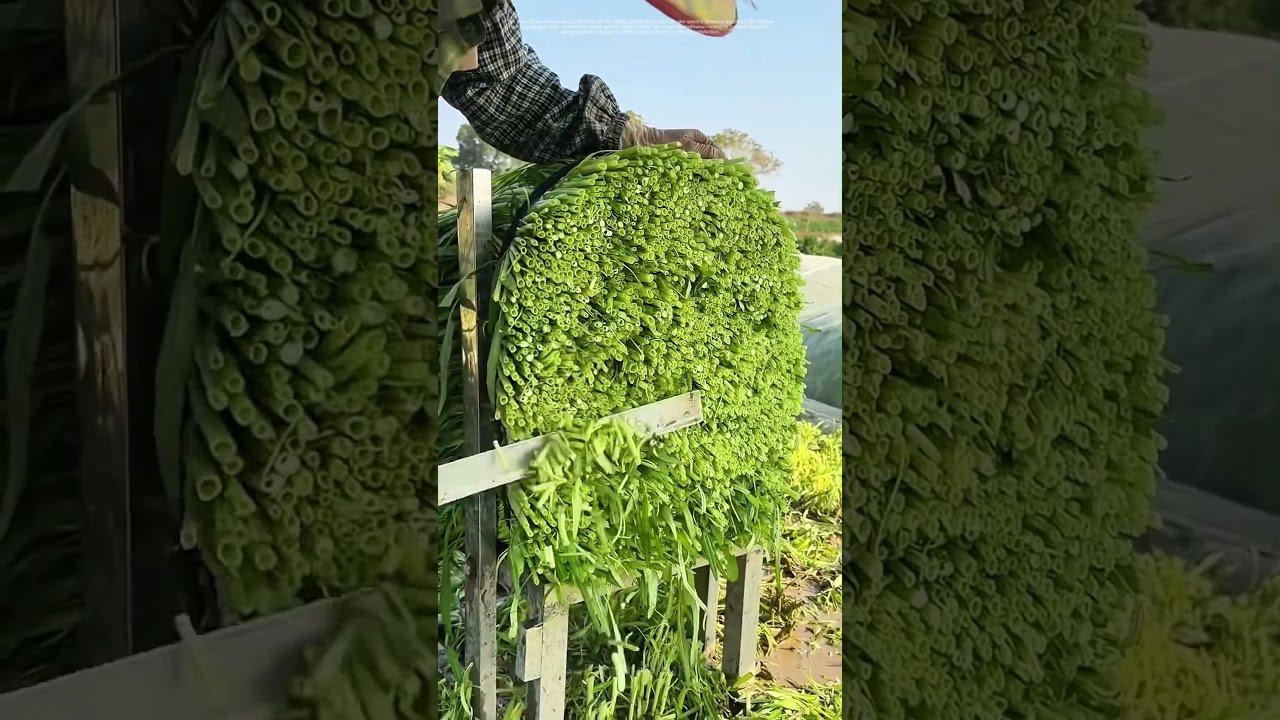
Learn how farmers trim water spinach to ensure freshness and quality for market sale.

Farming Hours
45.1K views • Jan 13, 2026
About this video
Precision Trimming: Preparing Water Spinach for Market
Water spinach (Ipomoea aquatica), known as “ong choy” in Cantonese, “kangkong” in Filipino, or “tumis” in Indonesian, has nourished Asian communities for over two millennia. Its cultivation traces back to ancient China, where Han Dynasty farmers (206 BCE–220 CE) first domesticated wild varieties along riverbanks. The plant’s rapid growth (harvestable in 3–4 weeks) and ability to thrive in shallow water made it a lifeline during droughts, earning it a revered place in agrarian cultures. Today, it’s a billion - dollar global commodity, grown in over 50 countries from Brazil to Nigeria. The trimming process in the video is a living link to this history, a technique refined by generations who understood that quality starts the moment the vegetable is harvested.
Traditional farmers used hand - forged carbon - steel blades, sharpened daily with whetstones to a razor - edge. These blades, like the one in the image, are designed to make clean cuts without crushing the delicate stems—a crucial detail, as bruised tissue spoils faster. In some regions, like Guangdong, China, farmers perform a “blessing” ritual before trimming, offering a small portion of the first cut to the earth goddess, thanking her for a bountiful harvest. This cultural ritual underscores the deep spiritual connection between farmers, their tools, and the land.
Market Readiness: In Vietnam’s Ho Chi Minh City Central Market, water spinach vendors use color - coded labels to indicate trim quality: “A - grade” bunches (uniform, no wilted leaves) sell for VND 80,000 ($3.40) per kilogram, while “C - grade” (uneven, with damage) fetch only VND 40,000 ($1.70). This price disparity drives farmers to invest time in precise trimming. In Japan, where water spinach is used in high - end sushi rolls, importers demand bunches trimmed to exactly 15 cm (5.9 inches), with stems no thicker than 0.5 cm. To meet this standard, Japanese - trained farmers use laser - guided trimming tools, though most still rely on traditional long knives for their tactile precision.
Freshness Preservation: The science of trimming goes beyond aesthetics. Water spinach’s vascular system (the “veins” in stems) transports nutrients but also harbors bacteria. Trimming removes 30–40% of the plant’s surface area, reducing the number of entry points for pathogens. In a 2022 study by the University of Agricultural Sciences, Bangalore, trimmed water spinach stored at 10°C (50°F) showed 80% less mold growth than untrimmed samples after 7 days. Additionally, trimming stimulates the release of ethylene gas in a controlled way, accelerating ripening of the remaining tissue to a “ready - to - cook” state, which appeals to time - strapped urban consumers.
Cultural & Culinary Fit: In Myanmar, water spinach is a key ingredient in “mohinga,” the national breakfast soup. Street vendors there buy pre - trimmed bunches because it allows them to serve 50 more customers per hour—critical in a city like Yangon, where breakfast crowds swell to thousands. In Ghana, where water spinach was introduced in the 1990s as a drought - resistant crop, farmers adopted trimming techniques from Indian immigrants, transforming it from a “foreign weed” to a profitable cash crop. This cross - cultural exchange shows how a simple trimming practice can bridge continents and cuisines, turning a local plant into a global food.
In the simple act of trimming water spinach, farmers bridge the gap between field and table—honoring centuries of agricultural wisdom while meeting modern demands for quality, efficiency, and flavor. Each cut isn’t just about shaping a bunch; it’s about preserving a connection between land, labor, and the meals that bring communities together. It’s a reminder that in the rush of modern agriculture, there’s still value in slow, intentional practices—practices that turn a humble green into a symbol of sustenance, culture, and resilience.
Water spinach (Ipomoea aquatica), known as “ong choy” in Cantonese, “kangkong” in Filipino, or “tumis” in Indonesian, has nourished Asian communities for over two millennia. Its cultivation traces back to ancient China, where Han Dynasty farmers (206 BCE–220 CE) first domesticated wild varieties along riverbanks. The plant’s rapid growth (harvestable in 3–4 weeks) and ability to thrive in shallow water made it a lifeline during droughts, earning it a revered place in agrarian cultures. Today, it’s a billion - dollar global commodity, grown in over 50 countries from Brazil to Nigeria. The trimming process in the video is a living link to this history, a technique refined by generations who understood that quality starts the moment the vegetable is harvested.
Traditional farmers used hand - forged carbon - steel blades, sharpened daily with whetstones to a razor - edge. These blades, like the one in the image, are designed to make clean cuts without crushing the delicate stems—a crucial detail, as bruised tissue spoils faster. In some regions, like Guangdong, China, farmers perform a “blessing” ritual before trimming, offering a small portion of the first cut to the earth goddess, thanking her for a bountiful harvest. This cultural ritual underscores the deep spiritual connection between farmers, their tools, and the land.
Market Readiness: In Vietnam’s Ho Chi Minh City Central Market, water spinach vendors use color - coded labels to indicate trim quality: “A - grade” bunches (uniform, no wilted leaves) sell for VND 80,000 ($3.40) per kilogram, while “C - grade” (uneven, with damage) fetch only VND 40,000 ($1.70). This price disparity drives farmers to invest time in precise trimming. In Japan, where water spinach is used in high - end sushi rolls, importers demand bunches trimmed to exactly 15 cm (5.9 inches), with stems no thicker than 0.5 cm. To meet this standard, Japanese - trained farmers use laser - guided trimming tools, though most still rely on traditional long knives for their tactile precision.
Freshness Preservation: The science of trimming goes beyond aesthetics. Water spinach’s vascular system (the “veins” in stems) transports nutrients but also harbors bacteria. Trimming removes 30–40% of the plant’s surface area, reducing the number of entry points for pathogens. In a 2022 study by the University of Agricultural Sciences, Bangalore, trimmed water spinach stored at 10°C (50°F) showed 80% less mold growth than untrimmed samples after 7 days. Additionally, trimming stimulates the release of ethylene gas in a controlled way, accelerating ripening of the remaining tissue to a “ready - to - cook” state, which appeals to time - strapped urban consumers.
Cultural & Culinary Fit: In Myanmar, water spinach is a key ingredient in “mohinga,” the national breakfast soup. Street vendors there buy pre - trimmed bunches because it allows them to serve 50 more customers per hour—critical in a city like Yangon, where breakfast crowds swell to thousands. In Ghana, where water spinach was introduced in the 1990s as a drought - resistant crop, farmers adopted trimming techniques from Indian immigrants, transforming it from a “foreign weed” to a profitable cash crop. This cross - cultural exchange shows how a simple trimming practice can bridge continents and cuisines, turning a local plant into a global food.
In the simple act of trimming water spinach, farmers bridge the gap between field and table—honoring centuries of agricultural wisdom while meeting modern demands for quality, efficiency, and flavor. Each cut isn’t just about shaping a bunch; it’s about preserving a connection between land, labor, and the meals that bring communities together. It’s a reminder that in the rush of modern agriculture, there’s still value in slow, intentional practices—practices that turn a humble green into a symbol of sustenance, culture, and resilience.
Video Information
Views
45.1K
Likes
103
Duration
0:09
Published
Jan 13, 2026
User Reviews
4.0
(9) Related Trending Topics
LIVE TRENDSRelated trending topics. Click any trend to explore more videos.
No specific trending topics match this video yet.
Explore All Trends