Trading Basics for Beginners 📈 | Key Terms & Concepts
Learn essential trading terms and concepts to start your cryptocurrency trading journey confidently and effectively.

Crypto Trading Insights
52 views • Mar 11, 2025
About this video
Trading for Beginners | Essential Terms | Trading Terminology #Cryptocurrencytradingterms
Trading can be an exciting and potentially lucrative activity, but it comes with its own set of terms and terminology that can be overwhelming for beginners. Understanding these terms is essential to navigating the markets effectively. Here’s a breakdown of some essential trading terms:
1. Asset
An asset is anything of value that can be traded. In financial markets, assets include stocks, bonds, commodities, currencies, and cryptocurrencies.
2. Stock
A stock represents ownership in a company. When you buy a stock, you own a small portion of that company and are entitled to a portion of its profits (dividends) and voting rights.
3. Bond
A bond is a loan made by an investor to a borrower (usually a corporation or government). In exchange, the borrower agrees to pay interest over time and repay the principal at maturity.
4. Commodities
Commodities are basic goods used in trade that are exchangeable for other goods of the same type. Examples include gold, oil, wheat, and coffee.
5. Currency
Currency trading, or forex trading, involves the buying and selling of different currencies in the foreign exchange market. The goal is to profit from changes in exchange rates.
6. Cryptocurrency
Cryptocurrencies are digital or virtual currencies that use cryptography for security. Bitcoin, Ethereum, and Litecoin are the most well-known cryptocurrencies.
7. Market
A market is a place where buyers and sellers come together to trade assets. It can be a physical location, such as the New York Stock Exchange, or a virtual one, such as an online trading platform.
8. Broker
A broker is an individual or firm that acts as an intermediary between buyers and sellers. Brokers execute trades on behalf of their clients and often provide additional services such as research and advice.
9. Order
An order is an instruction to buy or sell an asset. There are several types of orders, including market orders, limit orders, and stop orders.
10. Market Order
A market order is an order to buy or sell an asset immediately at the best available current price.
11. Limit Order
A limit order is an order to buy or sell an asset at a specified price or better. It will only be executed if the market reaches the specified price.
12. Stop Order
A stop order, or stop-loss order, is an order to buy or sell an asset once it reaches a certain price, known as the stop price. It is often used to limit losses or protect profits.
13. Spread
The spread is the difference between the bid price (what buyers are willing to pay) and the ask price (what sellers are willing to accept). It represents the cost of trading and can vary depending on market conditions.
14. Leverage
Leverage allows traders to control a larger position with a smaller amount of capital. It amplifies both potential gains and losses. For example, with 10:1 leverage, a $1,000 investment can control a $10,000 position.
15. Margin
Margin is the amount of money a trader needs to open a leveraged position. It acts as collateral to cover potential losses. Trading on margin can increase both potential profits and risks.
16. Volatility
Volatility refers to the degree of variation in the price of an asset over time. High volatility means the price can change dramatically in a short period, while low volatility means the price is relatively stable.
17. Liquidity
Liquidity refers to how easily an asset can be bought or sold without affecting its price. High liquidity means there are many buyers and sellers, making it easy to trade. Low liquidity means there are fewer participants, which can lead to larger price swings.
18. Portfolio
A portfolio is a collection of investments held by an individual or institution. Diversifying a portfolio across different asset classes can help manage risk.
19. Diversification
Diversification is a risk management strategy that involves spreading investments across various assets to reduce exposure to any single asset or risk.
20. Bull Market
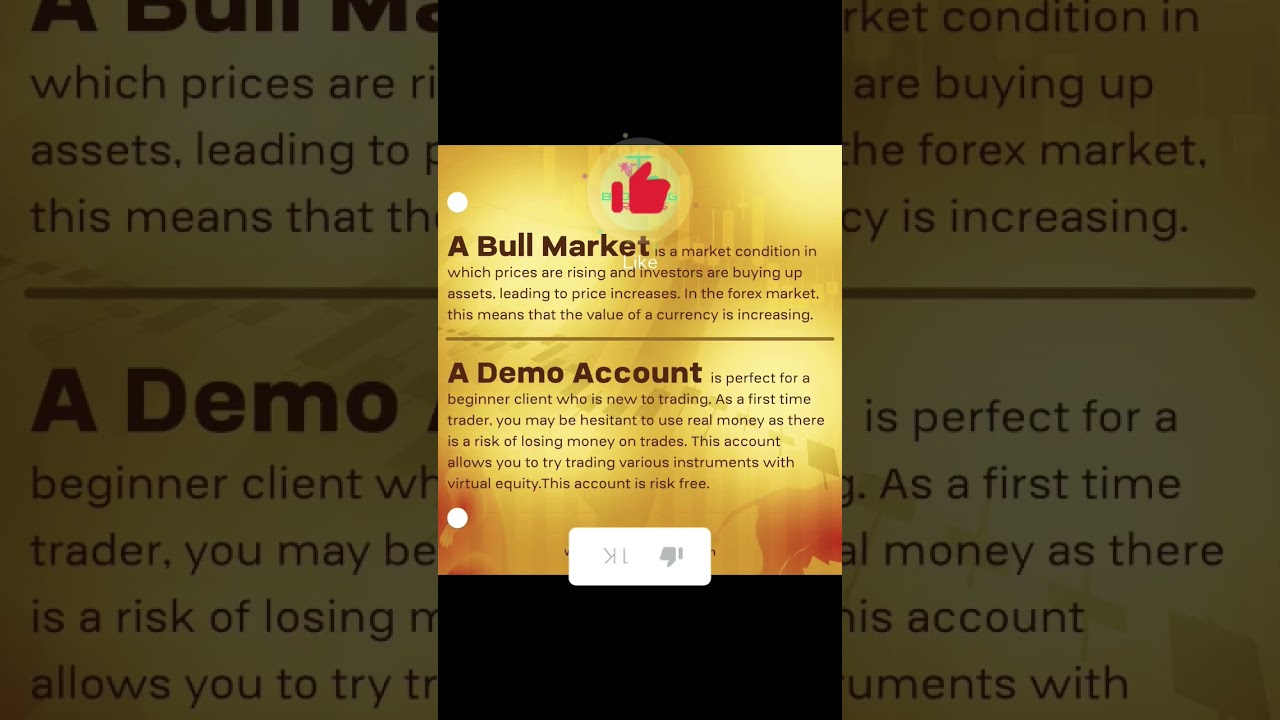
A bull market is a period of rising prices in the market. It is characterized by optimism, investor confidence, and expectations of continued growth.
21. Bear Market
A bear market is a period of declining prices in the market. It is characterized by pessimism, investor fear, and expectations of further losses.
22. Dividend
A dividend is a portion of a company’s profits that is paid out to shareholders. Dividends are typically paid quarterly and are a way for companies to share their success with investors.
#Tradingforbeginners
#Tradingterminology
#Stockmarketbasics
#Forextradingterms
#Cryptocurrencytrading
#Howtostarttrading
#Tradingstrategies
#Daytradingexplained
#Investingforbeginners
#Financialmarkets
#Tradingtipsfornewbies
#Understandingthestockmarket
#Tradingjargonexplained
#Beginnertradingguide
#Tradingeducation
Trading can be an exciting and potentially lucrative activity, but it comes with its own set of terms and terminology that can be overwhelming for beginners. Understanding these terms is essential to navigating the markets effectively. Here’s a breakdown of some essential trading terms:
1. Asset
An asset is anything of value that can be traded. In financial markets, assets include stocks, bonds, commodities, currencies, and cryptocurrencies.
2. Stock
A stock represents ownership in a company. When you buy a stock, you own a small portion of that company and are entitled to a portion of its profits (dividends) and voting rights.
3. Bond
A bond is a loan made by an investor to a borrower (usually a corporation or government). In exchange, the borrower agrees to pay interest over time and repay the principal at maturity.
4. Commodities
Commodities are basic goods used in trade that are exchangeable for other goods of the same type. Examples include gold, oil, wheat, and coffee.
5. Currency
Currency trading, or forex trading, involves the buying and selling of different currencies in the foreign exchange market. The goal is to profit from changes in exchange rates.
6. Cryptocurrency
Cryptocurrencies are digital or virtual currencies that use cryptography for security. Bitcoin, Ethereum, and Litecoin are the most well-known cryptocurrencies.
7. Market
A market is a place where buyers and sellers come together to trade assets. It can be a physical location, such as the New York Stock Exchange, or a virtual one, such as an online trading platform.
8. Broker
A broker is an individual or firm that acts as an intermediary between buyers and sellers. Brokers execute trades on behalf of their clients and often provide additional services such as research and advice.
9. Order
An order is an instruction to buy or sell an asset. There are several types of orders, including market orders, limit orders, and stop orders.
10. Market Order
A market order is an order to buy or sell an asset immediately at the best available current price.
11. Limit Order
A limit order is an order to buy or sell an asset at a specified price or better. It will only be executed if the market reaches the specified price.
12. Stop Order
A stop order, or stop-loss order, is an order to buy or sell an asset once it reaches a certain price, known as the stop price. It is often used to limit losses or protect profits.
13. Spread
The spread is the difference between the bid price (what buyers are willing to pay) and the ask price (what sellers are willing to accept). It represents the cost of trading and can vary depending on market conditions.
14. Leverage
Leverage allows traders to control a larger position with a smaller amount of capital. It amplifies both potential gains and losses. For example, with 10:1 leverage, a $1,000 investment can control a $10,000 position.
15. Margin
Margin is the amount of money a trader needs to open a leveraged position. It acts as collateral to cover potential losses. Trading on margin can increase both potential profits and risks.
16. Volatility
Volatility refers to the degree of variation in the price of an asset over time. High volatility means the price can change dramatically in a short period, while low volatility means the price is relatively stable.
17. Liquidity
Liquidity refers to how easily an asset can be bought or sold without affecting its price. High liquidity means there are many buyers and sellers, making it easy to trade. Low liquidity means there are fewer participants, which can lead to larger price swings.
18. Portfolio
A portfolio is a collection of investments held by an individual or institution. Diversifying a portfolio across different asset classes can help manage risk.
19. Diversification
Diversification is a risk management strategy that involves spreading investments across various assets to reduce exposure to any single asset or risk.
20. Bull Market
A bull market is a period of rising prices in the market. It is characterized by optimism, investor confidence, and expectations of continued growth.
21. Bear Market
A bear market is a period of declining prices in the market. It is characterized by pessimism, investor fear, and expectations of further losses.
22. Dividend
A dividend is a portion of a company’s profits that is paid out to shareholders. Dividends are typically paid quarterly and are a way for companies to share their success with investors.
#Tradingforbeginners
#Tradingterminology
#Stockmarketbasics
#Forextradingterms
#Cryptocurrencytrading
#Howtostarttrading
#Tradingstrategies
#Daytradingexplained
#Investingforbeginners
#Financialmarkets
#Tradingtipsfornewbies
#Understandingthestockmarket
#Tradingjargonexplained
#Beginnertradingguide
#Tradingeducation
Tags and Topics
Browse our collection to discover more content in these categories.
Video Information
Views
52
Likes
2
Duration
0:39
Published
Mar 11, 2025
Related Trending Topics
LIVE TRENDSRelated trending topics. Click any trend to explore more videos.
Trending Now