Unlock Your Savings with the New SAVE Student Loan Repayment Plan 💰
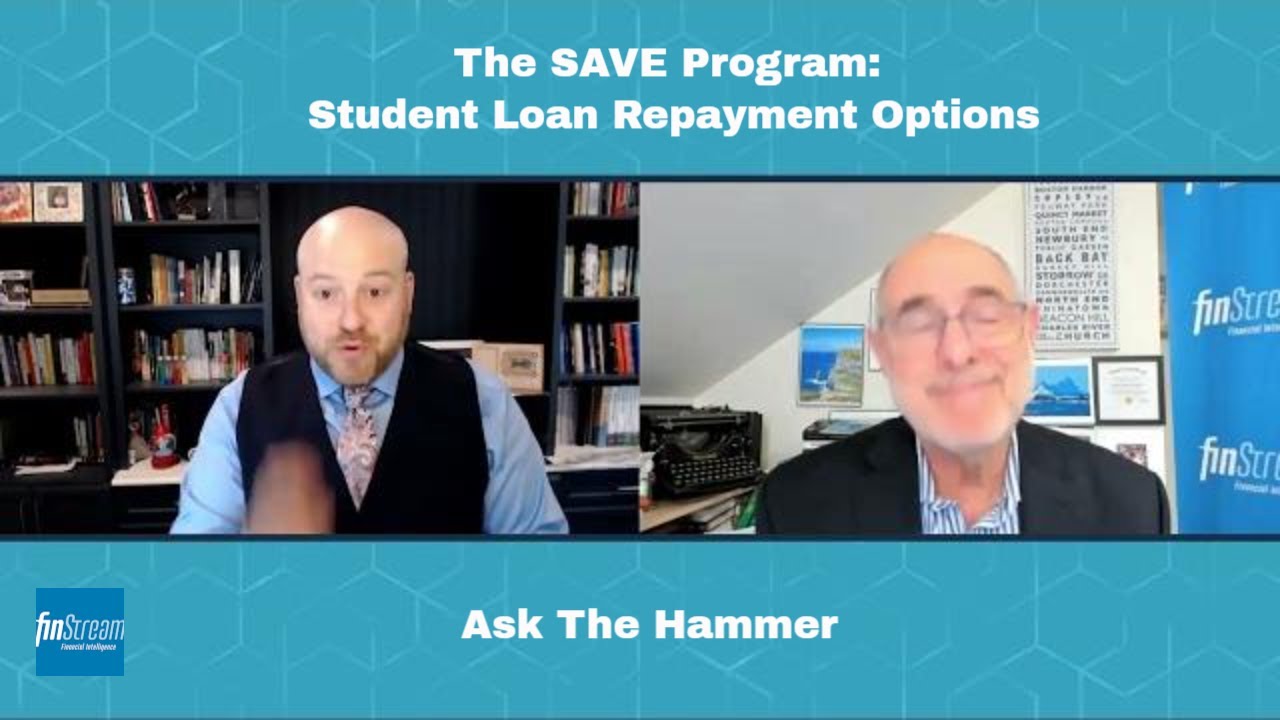
Discover how the SAVE Program can help you manage student loans more effectively. Join Jeffrey Levine, The Hammer, as he explains this innovative repayment option in 'Ask the Hammer.'
FinStreamTV
40 views • Dec 4, 2023
About this video
The SAVE Program: Student Loan Repayment Options: In this episode of "Ask the Hammer," Jeffrey Levine, aka The Hammer, reviews the SAVE program, a new form of income-driven repayment (IDR) option for student loans. Jeffrey explains that the SAVE program is generally superior to existing IDR options for several reasons:
1. **Higher Non-Discretionary Income Percentage**: The SAVE program considers a higher percentage of an individual's income as non-discretionary, meaning it is essential for basic needs like food, shelter, and clothing. If your income is below a certain threshold, you might not have to make any payments, and a zero-dollar payment can still count towards your repayment plan.
2. **Lower Percentage of Discretionary Income Used**: The program requires a lower percentage of your discretionary income to be used for loan repayment compared to other programs.
However, Jeffrey notes that the SAVE program is not suitable for everyone. For instance, those with graduate-level loans might find that switching to the SAVE program could extend their repayment period compared to other programs. He emphasizes the importance of comparing each option based on individual circumstances, such as the type of loans, the progress in loan repayment, and expected future income.
Jeffrey also discusses the potential for loan forgiveness after a certain period (20 years for most people under the SAVE program, 25 years for graduate debt, and 10 years in some cases). He mentions that currently, forgiven loans are not considered taxable income, but this could change in the future.
The discussion also highlights the complexity of choosing the right repayment plan and the usefulness of consulting a financial advisor specializing in student loans or using online calculators. However, Jeffrey warns that incorrect inputs can lead to misleading outputs, so professional advice might be beneficial.
Finally, Jeffrey and the host discuss the importance of understanding the specifics of each repayment plan, including the potential tax implications of forgiven loans and the varying repayment periods depending on the type of debt (undergraduate or graduate).
The session concludes with an invitation for viewers to send their questions to askthehammer@buckinghamgroup.com for future discussions.
#saveprogram #studentloandebt #studentloans #finstream #askthehammer #studentloanforgiveness #studentloanplanner
1. **Higher Non-Discretionary Income Percentage**: The SAVE program considers a higher percentage of an individual's income as non-discretionary, meaning it is essential for basic needs like food, shelter, and clothing. If your income is below a certain threshold, you might not have to make any payments, and a zero-dollar payment can still count towards your repayment plan.
2. **Lower Percentage of Discretionary Income Used**: The program requires a lower percentage of your discretionary income to be used for loan repayment compared to other programs.
However, Jeffrey notes that the SAVE program is not suitable for everyone. For instance, those with graduate-level loans might find that switching to the SAVE program could extend their repayment period compared to other programs. He emphasizes the importance of comparing each option based on individual circumstances, such as the type of loans, the progress in loan repayment, and expected future income.
Jeffrey also discusses the potential for loan forgiveness after a certain period (20 years for most people under the SAVE program, 25 years for graduate debt, and 10 years in some cases). He mentions that currently, forgiven loans are not considered taxable income, but this could change in the future.
The discussion also highlights the complexity of choosing the right repayment plan and the usefulness of consulting a financial advisor specializing in student loans or using online calculators. However, Jeffrey warns that incorrect inputs can lead to misleading outputs, so professional advice might be beneficial.
Finally, Jeffrey and the host discuss the importance of understanding the specifics of each repayment plan, including the potential tax implications of forgiven loans and the varying repayment periods depending on the type of debt (undergraduate or graduate).
The session concludes with an invitation for viewers to send their questions to askthehammer@buckinghamgroup.com for future discussions.
#saveprogram #studentloandebt #studentloans #finstream #askthehammer #studentloanforgiveness #studentloanplanner
Tags and Topics
Browse our collection to discover more content in these categories.
Video Information
Views
40
Likes
1
Duration
8:01
Published
Dec 4, 2023
Related Trending Topics
LIVE TRENDSRelated trending topics. Click any trend to explore more videos.
No specific trending topics match this video yet.
Explore All Trends