Planetary Parade Feb 2026: How to View 6 Planets 🌌
Discover how to see the spectacular planetary parade in February 2026, featuring a rare alignment of 6 planets in the night sky.
Techie Traveler Foodie
1.6K views • Jan 25, 2026
About this video
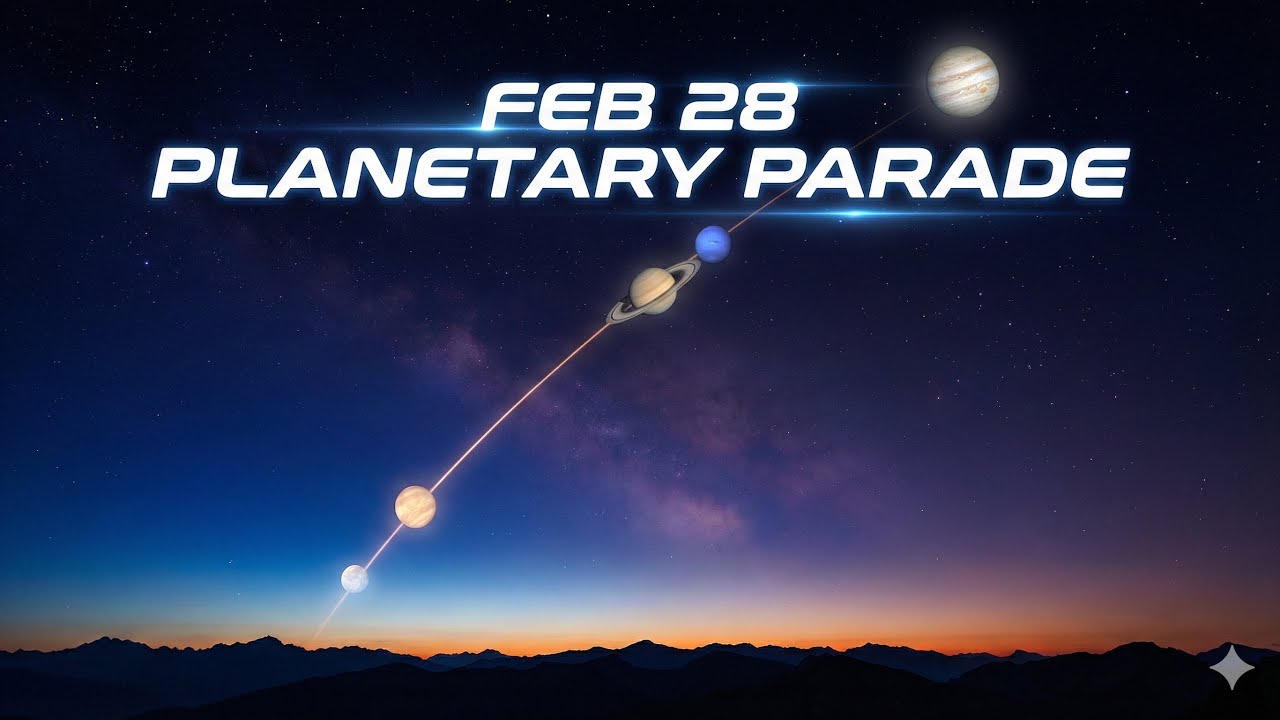
Get ready for the biggest astronomical event of early 2026! This February, the solar system puts on a massive show culminating in a "planetary parade" where Mercury, Venus, Saturn, Neptune, Uranus, and Jupiter align in the night sky.
In this video, we break down:
• The Main Event (Feb 28): How to spot the six-planet alignment stretching from the western horizon to the high eastern sky shortly after sunset. While Venus and Jupiter will be brilliant to the naked eye, we explain why you’ll need binoculars or a telescope to catch Uranus and the elusive Neptune.
• The Rare Conjunction (Feb 15-20): Witness the "closest approach of the decade" between Saturn and Neptune, where they appear less than one degree apart in the constellation Aries. This is a historically rare pairing that hasn't happened in this constellation for centuries.
• The "Ring of Fire" & "Blood Moon": We touch on the annular solar eclipse happening in Antarctica on February 17 and look ahead to the total lunar eclipse (Blood Moon) arriving just days after the parade on March 3.
• Viewing Tips: Learn why you need a perfectly clear western horizon to see Mercury and Neptune fighting the twilight glare, and why safety is critical when observing near the setting sun.
Subscribe for more weekly updates on the cosmos and the Artemis II mission era!
In this video, we break down:
• The Main Event (Feb 28): How to spot the six-planet alignment stretching from the western horizon to the high eastern sky shortly after sunset. While Venus and Jupiter will be brilliant to the naked eye, we explain why you’ll need binoculars or a telescope to catch Uranus and the elusive Neptune.
• The Rare Conjunction (Feb 15-20): Witness the "closest approach of the decade" between Saturn and Neptune, where they appear less than one degree apart in the constellation Aries. This is a historically rare pairing that hasn't happened in this constellation for centuries.
• The "Ring of Fire" & "Blood Moon": We touch on the annular solar eclipse happening in Antarctica on February 17 and look ahead to the total lunar eclipse (Blood Moon) arriving just days after the parade on March 3.
• Viewing Tips: Learn why you need a perfectly clear western horizon to see Mercury and Neptune fighting the twilight glare, and why safety is critical when observing near the setting sun.
Subscribe for more weekly updates on the cosmos and the Artemis II mission era!
Video Information
Views
1.6K
Likes
19
Duration
6:45
Published
Jan 25, 2026
User Reviews
4.3
(1) Related Trending Topics
LIVE TRENDSRelated trending topics. Click any trend to explore more videos.
No specific trending topics match this video yet.
Explore All Trends