The BEST Aperture for Landscape Photography
Adjusting your aperture not only increases or decreases the overall exposure of your image but also affects how the image looks. Opening your aperture incr...

Austin James Jackson
185.2K views • Jul 30, 2024
About this video
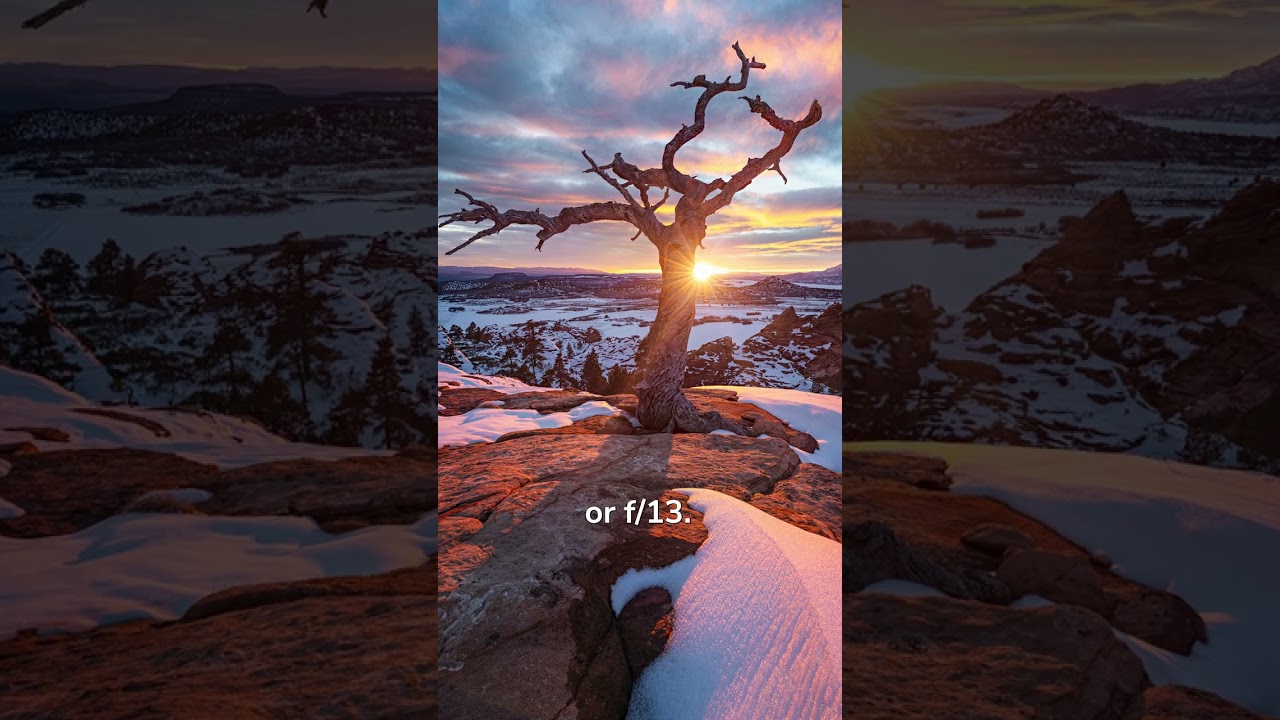
Adjusting your aperture not only increases or decreases the overall exposure of your image but also affects how the image looks.
Opening your aperture increases background blur and decreases depth of field, helping your subject to stand out from its surroundings. Stopping your aperture down will increase the depth of field.
Landscape photographers usually want the highest depth of field possible. But before you set your aperture to f/22, listen up.
When you stop your aperture down, you can experience diffraction, ultimately resulting in lower image quality. Even though you may have a greater depth of field, you'll leave a lot on the table regarding image quality.
Because of this, many photographers choose to do a focus stack, where you select multiple focus points in your image and then blend the images together in Photoshop to create an image with front-to-back focus. When you do this, you'd think that you would want to select the sharpest aperture on your lens with the least amount of diffraction, which is usually somewhere between f/4 and f/8. This isn't advisable either, because your depth of field is so shallow that it can be difficult to seamlessly blend a focus stack.
Due to all of these factors, I think that f/11 (best balance between depth of field and minimal diffraction) is best for any scene you plan on focus stacking, and your lens' sharpest aperture is the best bet for any scene that doesn't require a focus stack.
Opening your aperture increases background blur and decreases depth of field, helping your subject to stand out from its surroundings. Stopping your aperture down will increase the depth of field.
Landscape photographers usually want the highest depth of field possible. But before you set your aperture to f/22, listen up.
When you stop your aperture down, you can experience diffraction, ultimately resulting in lower image quality. Even though you may have a greater depth of field, you'll leave a lot on the table regarding image quality.
Because of this, many photographers choose to do a focus stack, where you select multiple focus points in your image and then blend the images together in Photoshop to create an image with front-to-back focus. When you do this, you'd think that you would want to select the sharpest aperture on your lens with the least amount of diffraction, which is usually somewhere between f/4 and f/8. This isn't advisable either, because your depth of field is so shallow that it can be difficult to seamlessly blend a focus stack.
Due to all of these factors, I think that f/11 (best balance between depth of field and minimal diffraction) is best for any scene you plan on focus stacking, and your lens' sharpest aperture is the best bet for any scene that doesn't require a focus stack.
Tags and Topics
Browse our collection to discover more content in these categories.
Video Information
Views
185.2K
Likes
4.7K
Duration
0:26
Published
Jul 30, 2024
User Reviews
4.7
(37) Related Trending Topics
LIVE TRENDSRelated trending topics. Click any trend to explore more videos.