Starship High Altitude Test - SN10
On Wednesday, March 3, Starship serial number (SN10) successfully completed SpaceX’s third high-altitude flight test of a Starship prototype from our site in...
SpaceX
15.6M views • Mar 3, 2021
About this video
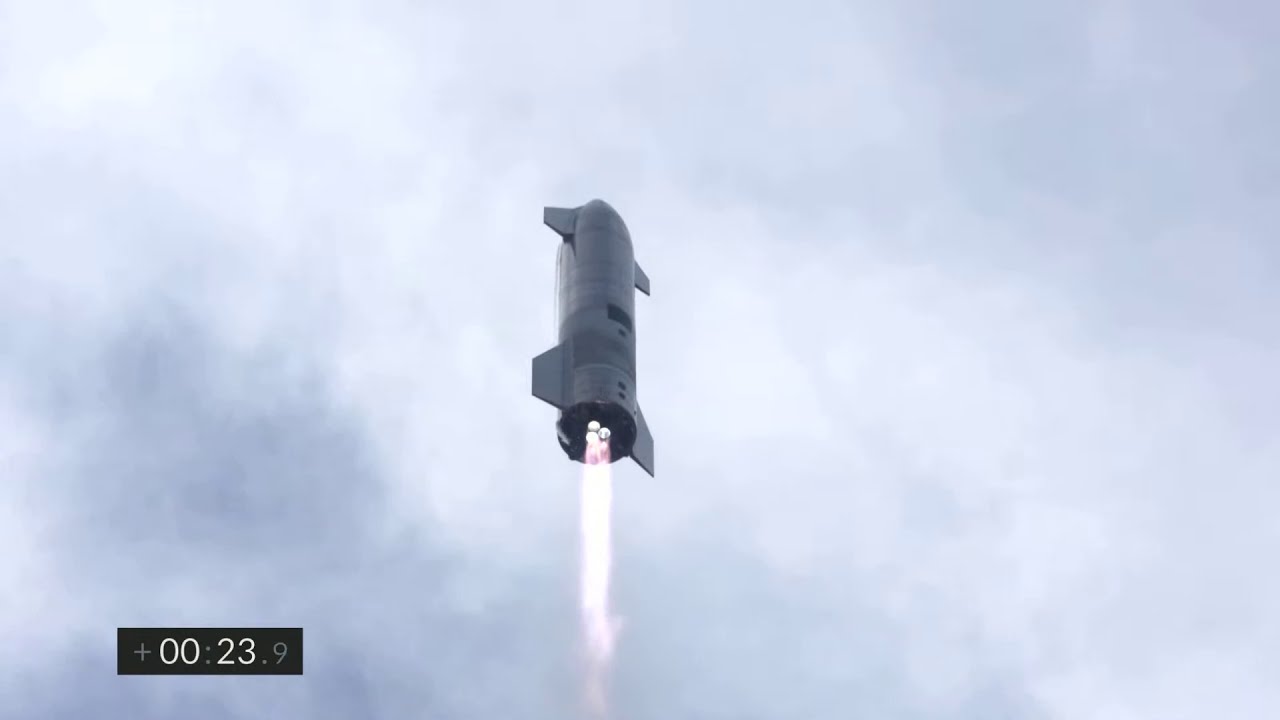
On Wednesday, March 3, Starship serial number (SN10) successfully completed SpaceX’s third high-altitude flight test of a Starship prototype from our site in Cameron County, Texas.
Similar to the high-altitude flight tests of Starship SN8 and SN9, SN10 was powered through ascent by three Raptor engines, each shutting down in sequence prior to the vehicle reaching apogee – approximately 10 km in altitude. SN10 performed a propellant transition to the internal header tanks, which hold landing propellant, before reorienting itself for reentry and a controlled aerodynamic descent.
The Starship prototype descended under active aerodynamic control, accomplished by independent movement of two forward and two aft flaps on the vehicle. All four flaps were actuated by an onboard flight computer to control Starship’s attitude during flight and enabled a precise landing at the intended location. SN10’s Raptor engines reignited as the vehicle performed the landing flip maneuver immediately before successfully touching down on the landing pad!
As if the flight test was not exciting enough, SN10 experienced a rapid unscheduled disassembly shortly after landing. These test flights are all about improving our understanding and development of a fully reusable transportation system designed to carry both crew and cargo on long-duration interplanetary flights, and help humanity return to the Moon, and travel to Mars and beyond.
Similar to the high-altitude flight tests of Starship SN8 and SN9, SN10 was powered through ascent by three Raptor engines, each shutting down in sequence prior to the vehicle reaching apogee – approximately 10 km in altitude. SN10 performed a propellant transition to the internal header tanks, which hold landing propellant, before reorienting itself for reentry and a controlled aerodynamic descent.
The Starship prototype descended under active aerodynamic control, accomplished by independent movement of two forward and two aft flaps on the vehicle. All four flaps were actuated by an onboard flight computer to control Starship’s attitude during flight and enabled a precise landing at the intended location. SN10’s Raptor engines reignited as the vehicle performed the landing flip maneuver immediately before successfully touching down on the landing pad!
As if the flight test was not exciting enough, SN10 experienced a rapid unscheduled disassembly shortly after landing. These test flights are all about improving our understanding and development of a fully reusable transportation system designed to carry both crew and cargo on long-duration interplanetary flights, and help humanity return to the Moon, and travel to Mars and beyond.
Tags and Topics
Browse our collection to discover more content in these categories.
Video Information
Views
15.6M
Likes
296.4K
Duration
14:47
Published
Mar 3, 2021
User Reviews
4.9
(3129) Related Trending Topics
LIVE TRENDSRelated trending topics. Click any trend to explore more videos.
No specific trending topics match this video yet.
Explore All Trends