Understanding Gears: Simple Machines Explained
Learn how gears work in simple machines with this fun and informative video. Explore more on simple machines in the playlist! ⚙️

Next Generation Science
100.6K views • Oct 17, 2021
About this video
#ngscience.com #gears #simplemachines
A fun and informative video on the function of gears. See the playlist for more videos on simple machines and head to ngscience.com for all related content.
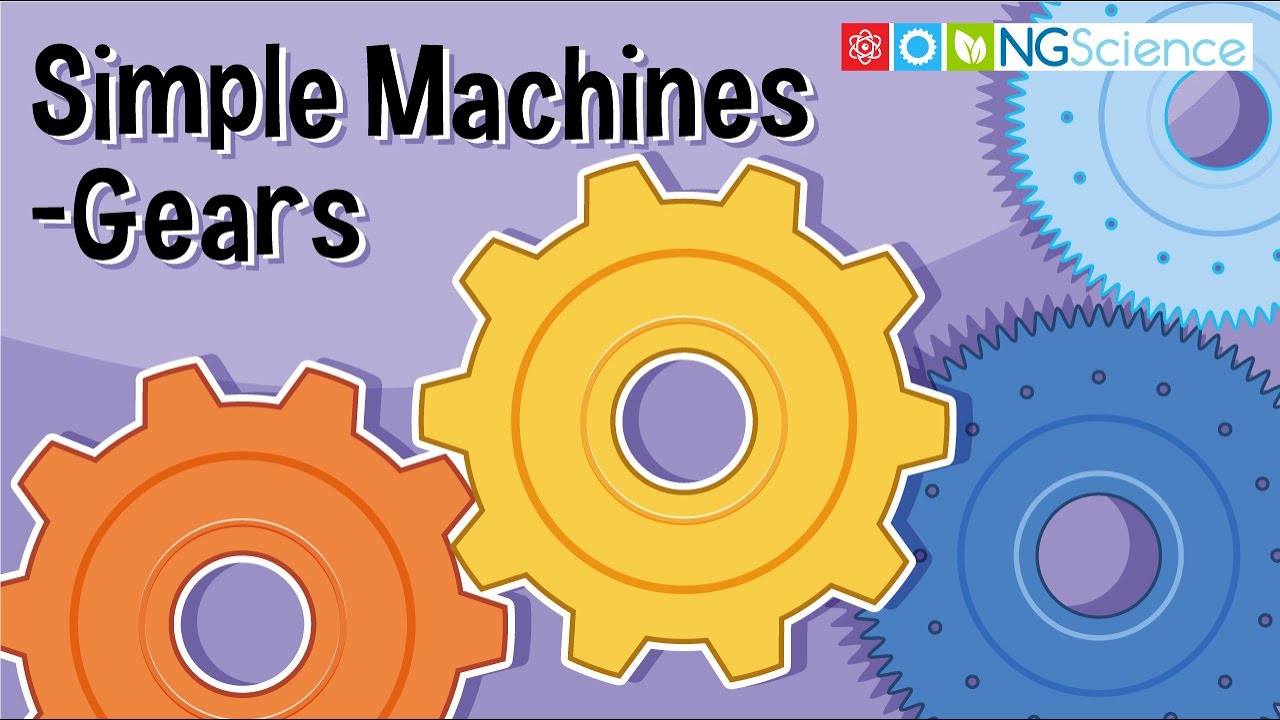
Gears are simple machines that consist of two or more wheels that fit together with interlocking teeth. When one gear is turned, the other interlocked gear turns in the opposite direction.
Gears function in different ways. They can change the direction of the applied force. They can multiply the applied force when the effort applied to a smaller gear moves over a greater distance than a connected larger gear. They can also multiply speed when a larger gear turns a smaller gear.
Fishing reels, analog watches and can openers are objects that make use of gears. Many bicycles have a rear wheel fitted with gears of different sizes which are attached to a front gear by a chain. The gears work by multiplying the speed of your pedaling. A lower gear, such as a 2 or 3, will make you pedal faster than a higher gear, such as a 7 or 8. But the higher gears allow you to travel farther with each pedal stroke than lower gears.
Simple Machines
Imagine hammering a nail into a piece of wood. As you hit the nail, it bends and needs to be replaced. How could you remove the nail? You probably would not be able to apply enough force using only your fingers and hands. If you use the claw of the hammer, much less force is required and the nail can be removed easily.
A hammer is an example of a simple machine. Simple machines are devices, usually with one moving part, that make work easier. They make work easier by performing one or more of the following:
• multiplying the applied force by increasing the distance of the effort.
• multiplying speed.
• changing the direction of the applied force.
A fun and informative video on the function of gears. See the playlist for more videos on simple machines and head to ngscience.com for all related content.
Gears are simple machines that consist of two or more wheels that fit together with interlocking teeth. When one gear is turned, the other interlocked gear turns in the opposite direction.
Gears function in different ways. They can change the direction of the applied force. They can multiply the applied force when the effort applied to a smaller gear moves over a greater distance than a connected larger gear. They can also multiply speed when a larger gear turns a smaller gear.
Fishing reels, analog watches and can openers are objects that make use of gears. Many bicycles have a rear wheel fitted with gears of different sizes which are attached to a front gear by a chain. The gears work by multiplying the speed of your pedaling. A lower gear, such as a 2 or 3, will make you pedal faster than a higher gear, such as a 7 or 8. But the higher gears allow you to travel farther with each pedal stroke than lower gears.
Simple Machines
Imagine hammering a nail into a piece of wood. As you hit the nail, it bends and needs to be replaced. How could you remove the nail? You probably would not be able to apply enough force using only your fingers and hands. If you use the claw of the hammer, much less force is required and the nail can be removed easily.
A hammer is an example of a simple machine. Simple machines are devices, usually with one moving part, that make work easier. They make work easier by performing one or more of the following:
• multiplying the applied force by increasing the distance of the effort.
• multiplying speed.
• changing the direction of the applied force.
Tags and Topics
Browse our collection to discover more content in these categories.
Video Information
Views
100.6K
Likes
269
Duration
1:08
Published
Oct 17, 2021
User Reviews
4.0
(20) Related Trending Topics
LIVE TRENDSRelated trending topics. Click any trend to explore more videos.
No specific trending topics match this video yet.
Explore All Trends