Shock Types & Mechanisms Explained by Dr. Najeeb 🩺
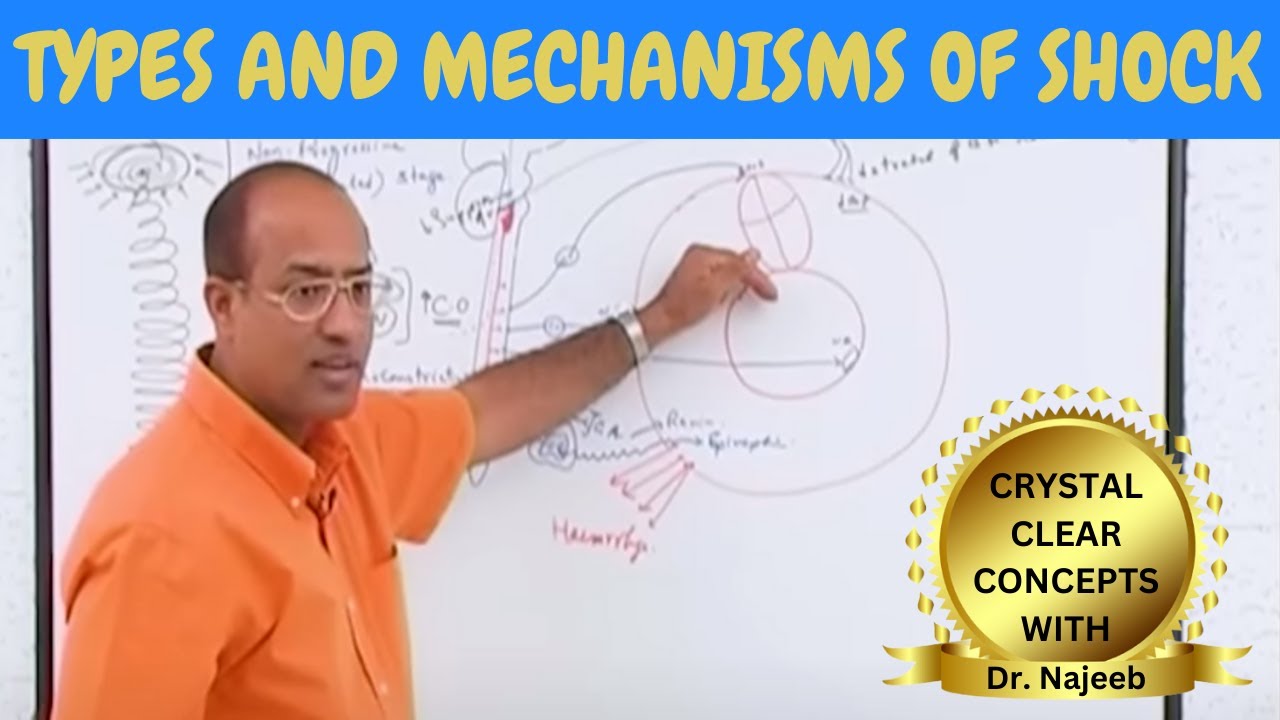
Learn about the different types and mechanisms of shock in this informative video by Dr. Najeeb. Sign up on our website for more!

Dr. Najeeb Lectures
562.4K views • Jun 23, 2022
About this video
#mechanisms #drnajeeblectures #typesofshock #shock #drnajeeb
Shock | Types And Mechanisms of Shock | Dr Najeeb
Like this video?
Sign up now on our website at https://www.DrNajeebLectures.com to access 1000+ Exclusive videos on Basic Medical Sciences & Clinical Medicine. These are premium videos (NOT FROM YOUTUBE). All these videos come with English subtitles & download options. Sign up now! Get Lifetime Access for a one-time payment of $24 ONLY!
Sign up now on our website at https://members.drnajeeblectures.com/
---------------------------------------------------------------------------------------------------------------------------
Why sign up for premium membership? Here's why!
Membership Features for premium website members.
1. More than 1000+ Medical Lectures.
2. Basic Medical Sciences & Clinical Medicine.
3. Mobile-friendly interface with android and iOS apps.
4. English subtitles and new videos every week.
5. Download option for offline video playback.
6. Fanatic customer support and that's 24/7.
7. Fast video playback option to learn faster.
8. Trusted by over 2M+ students in 190 countries.
---------------------------------------------------------------------------------------------------------------------------
▬▬▬▬▬▬▬▬▬▬ Contents of this video ▬▬▬▬▬▬▬▬▬▬
0:00 Types, Mechanisms & Stages of Shock
Definitions of different types of shocks;
HYPOVOLEMIC SHOCK
CARDIOGENIC SHOCK
DISTRIBUTIVE SHOCK & its 3 types:
1-Anaphylactic Shock
2-Neurogenic Shock
3-Septic Shock
22:22 OBSTRUCTIVE SHOCK
CAUSES of HYPOVOLEMIC SHOCK
1-HEMORRHAGE:
External Hemorrhage
Internal Hemorrhage
2-LOSS OF PLASMA:
Exfoliative Dermatitis
3-LOSS OF FLUIDS & ELECTROLYTES:
Diarrhea & Vomiting
Polyuria: e.g., Diabetic Ketoacidosis
Excessive Sweating
3rd Spacing; Ascites, Bowel Obstruction, Acute Pancreatitis,
36:20 CARDIOGENIC SHOCK
1-ARRHYTHMIAS:
Tachyarrhythmia & Bradyarrhythmia
2-TRUE PUMP FAILURE:
Massive Myocardial Infarction
Cardiomyopathies
CARDIOMYOPATHIES
3-SEVERE VALVULAR DYSFUNCTION:
Valvular Regurgitation; like Mitral Valve Regurgitation, Aortic Valve Regurgitation.
4-RUPTURE OF VENTRICULAR SEPTUM or FREE WALL
53:09 DISTRIBUTIVE SHOCK:
1-Neurogenic Shock:
Vasomotor Center Failure/Depression
2-Anaphylactic Shock
3-Septic Shock
1:02:35 Acute Adrenal Insufficiency
1:21:21 OBSTRUCTIVE SHOCK:
1-Cardiac Tamponade
2-Tension Pneumothorax
3-Massive Pulmonary Embolism
4-Atrial Myxoma
5-Left Atrial Mural Thrombus
1:15:20 Syncope; Vasovagal shock.
Outline of STAGES OF SHOCK:
1-Non-Progressive Compensated Stage
2-Progressive Stage of Shock
3-Refractory Shock/Irreversible Shock
4-NON-PROGRESSIVE COMPENSATED STAGE SHOCK; in detail:
1-Sympathetic Autonomous Nervous System (SANS):
Chemoreceptors, Baroreceptors, Vasomotor Center, Vasoconstriction & Arterioloconstriction
Cardiac Output (CO) & Systolic Blood Pressure (SBP), Total Peripheral Resistance (TPR) & Diastolic Blood Pressure (DBP)
Compensatory mechanisms try to stabilize the blood pressure.
2-Renin-Angiotensin-Aldosterone Axis System (RAAA):
Reduced renal perfusion, Renin release, Angiotensin-1, Angiotensinogen (ATG), Angiotensin-2 (AT-2)
Why more Renin is released?
Arterioloconstriction leads to increased TPR; DBP stabilized.
AT-2 act on Adrenal Cortex; ZG will release Aldosterone; salt & water retained; increased blood volume;
SBP stabilized.
3-ADH(Vasopressin
4-REVERSE STRESS-RELAXATION of Circulatory System
5-FLUID SHIFT (Interstitial to Vascular)
1:52:07 PROGRESSIVE STAGE OF SHOCK:
Compensatory Mechanisms are exhausted and are failing; deterioration starts.
Fight b/w Vasoconstrictor & Vasodilator mechanisms.
"Peripheral tissues will become resistant to the compensatory vasoconstrictor mechanisms & start vasodilating".
Endothelial Cells are injured; NO is released which acts as Vasodilator and cardio depressant.
Lactic Acidosis
Disseminated Intravascular Coagulation (DIC)
2:06:45 REFRACTORY IRREVERSIBLE STAGE:
"Cells & tissues start committing suicide".
1-Na+K+ ATPases are not working
2-Lysosomal Membrane breaks down
3-ATP into Adenosine; raised uric acid in the blood.
2:16:36 Post mortem findings in these patients.
SEPTIC SHOCK & its types:
1-Bacteremia
2-Septicemia
3-Endotoxemia
Differences b/w in Gram +ve & Gram -ve bacteria.
Differences b/w Endotoxins & Exotoxins.
4-Pyemia
5-Empyema
6-Abscess
---------------------------------------------------------------------------------------------------------------------------
Join this channel to get access to perks:
Sign up now on our website at https://members.drnajeeblectures.com/#!/register-fast
https://www.youtube.com/channel/UCPHpx55tgrbm8FrYYCflAHw/join
Follow us on Facebook :- https://www.facebook.com/DrNajeeb/
Follow us on Instagram :- https://www.instagram.com/drnajeeblectures/
Shock | Types And Mechanisms of Shock | Dr Najeeb
Like this video?
Sign up now on our website at https://www.DrNajeebLectures.com to access 1000+ Exclusive videos on Basic Medical Sciences & Clinical Medicine. These are premium videos (NOT FROM YOUTUBE). All these videos come with English subtitles & download options. Sign up now! Get Lifetime Access for a one-time payment of $24 ONLY!
Sign up now on our website at https://members.drnajeeblectures.com/
---------------------------------------------------------------------------------------------------------------------------
Why sign up for premium membership? Here's why!
Membership Features for premium website members.
1. More than 1000+ Medical Lectures.
2. Basic Medical Sciences & Clinical Medicine.
3. Mobile-friendly interface with android and iOS apps.
4. English subtitles and new videos every week.
5. Download option for offline video playback.
6. Fanatic customer support and that's 24/7.
7. Fast video playback option to learn faster.
8. Trusted by over 2M+ students in 190 countries.
---------------------------------------------------------------------------------------------------------------------------
▬▬▬▬▬▬▬▬▬▬ Contents of this video ▬▬▬▬▬▬▬▬▬▬
0:00 Types, Mechanisms & Stages of Shock
Definitions of different types of shocks;
HYPOVOLEMIC SHOCK
CARDIOGENIC SHOCK
DISTRIBUTIVE SHOCK & its 3 types:
1-Anaphylactic Shock
2-Neurogenic Shock
3-Septic Shock
22:22 OBSTRUCTIVE SHOCK
CAUSES of HYPOVOLEMIC SHOCK
1-HEMORRHAGE:
External Hemorrhage
Internal Hemorrhage
2-LOSS OF PLASMA:
Exfoliative Dermatitis
3-LOSS OF FLUIDS & ELECTROLYTES:
Diarrhea & Vomiting
Polyuria: e.g., Diabetic Ketoacidosis
Excessive Sweating
3rd Spacing; Ascites, Bowel Obstruction, Acute Pancreatitis,
36:20 CARDIOGENIC SHOCK
1-ARRHYTHMIAS:
Tachyarrhythmia & Bradyarrhythmia
2-TRUE PUMP FAILURE:
Massive Myocardial Infarction
Cardiomyopathies
CARDIOMYOPATHIES
3-SEVERE VALVULAR DYSFUNCTION:
Valvular Regurgitation; like Mitral Valve Regurgitation, Aortic Valve Regurgitation.
4-RUPTURE OF VENTRICULAR SEPTUM or FREE WALL
53:09 DISTRIBUTIVE SHOCK:
1-Neurogenic Shock:
Vasomotor Center Failure/Depression
2-Anaphylactic Shock
3-Septic Shock
1:02:35 Acute Adrenal Insufficiency
1:21:21 OBSTRUCTIVE SHOCK:
1-Cardiac Tamponade
2-Tension Pneumothorax
3-Massive Pulmonary Embolism
4-Atrial Myxoma
5-Left Atrial Mural Thrombus
1:15:20 Syncope; Vasovagal shock.
Outline of STAGES OF SHOCK:
1-Non-Progressive Compensated Stage
2-Progressive Stage of Shock
3-Refractory Shock/Irreversible Shock
4-NON-PROGRESSIVE COMPENSATED STAGE SHOCK; in detail:
1-Sympathetic Autonomous Nervous System (SANS):
Chemoreceptors, Baroreceptors, Vasomotor Center, Vasoconstriction & Arterioloconstriction
Cardiac Output (CO) & Systolic Blood Pressure (SBP), Total Peripheral Resistance (TPR) & Diastolic Blood Pressure (DBP)
Compensatory mechanisms try to stabilize the blood pressure.
2-Renin-Angiotensin-Aldosterone Axis System (RAAA):
Reduced renal perfusion, Renin release, Angiotensin-1, Angiotensinogen (ATG), Angiotensin-2 (AT-2)
Why more Renin is released?
Arterioloconstriction leads to increased TPR; DBP stabilized.
AT-2 act on Adrenal Cortex; ZG will release Aldosterone; salt & water retained; increased blood volume;
SBP stabilized.
3-ADH(Vasopressin
4-REVERSE STRESS-RELAXATION of Circulatory System
5-FLUID SHIFT (Interstitial to Vascular)
1:52:07 PROGRESSIVE STAGE OF SHOCK:
Compensatory Mechanisms are exhausted and are failing; deterioration starts.
Fight b/w Vasoconstrictor & Vasodilator mechanisms.
"Peripheral tissues will become resistant to the compensatory vasoconstrictor mechanisms & start vasodilating".
Endothelial Cells are injured; NO is released which acts as Vasodilator and cardio depressant.
Lactic Acidosis
Disseminated Intravascular Coagulation (DIC)
2:06:45 REFRACTORY IRREVERSIBLE STAGE:
"Cells & tissues start committing suicide".
1-Na+K+ ATPases are not working
2-Lysosomal Membrane breaks down
3-ATP into Adenosine; raised uric acid in the blood.
2:16:36 Post mortem findings in these patients.
SEPTIC SHOCK & its types:
1-Bacteremia
2-Septicemia
3-Endotoxemia
Differences b/w in Gram +ve & Gram -ve bacteria.
Differences b/w Endotoxins & Exotoxins.
4-Pyemia
5-Empyema
6-Abscess
---------------------------------------------------------------------------------------------------------------------------
Join this channel to get access to perks:
Sign up now on our website at https://members.drnajeeblectures.com/#!/register-fast
https://www.youtube.com/channel/UCPHpx55tgrbm8FrYYCflAHw/join
Follow us on Facebook :- https://www.facebook.com/DrNajeeb/
Follow us on Instagram :- https://www.instagram.com/drnajeeblectures/
Tags and Topics
Browse our collection to discover more content in these categories.
Video Information
Views
562.4K
Likes
7.2K
Duration
03:07:41
Published
Jun 23, 2022
User Reviews
4.6
(112) Related Trending Topics
LIVE TRENDSRelated trending topics. Click any trend to explore more videos.
No specific trending topics match this video yet.
Explore All Trends