Samadhi & Nirvikalpa Samadhi by Sadhguru 🧘♂️
Sadhguru explains the true meaning of samadhi beyond its common association with graves, exploring higher states of consciousness.
Life Beyond Logic
15.9K views • Feb 23, 2021
About this video

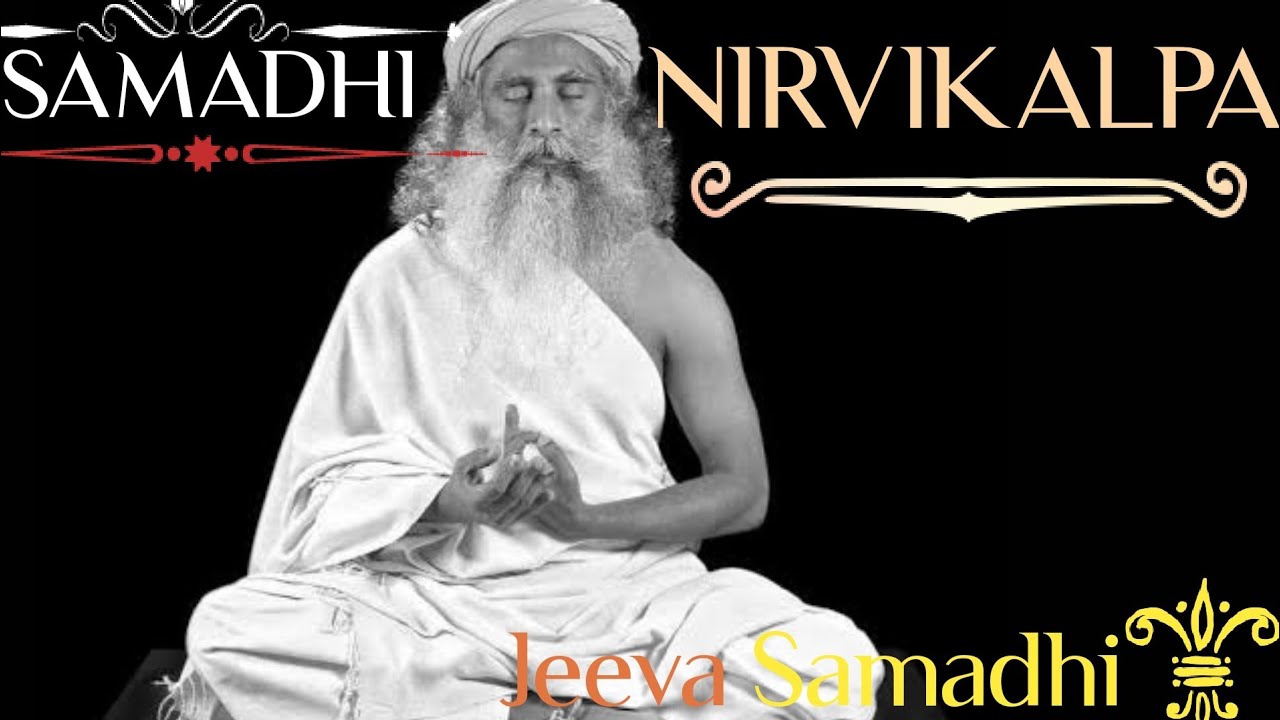
Sadhguru: In India, the word “samadhi” in common usage refers to a grave or a tombstone. When someone is buried in a place and some kind of monument is set on top of that, that is referred to as a samadhi. But “samadhi” also refers to the highest state of human consciousness that one can attain to.
When one dies and is buried, that place will be given the name of that person. But when one attains to a certain state in a particular place, the name of the place will be given to the person. That is why you see many yogis named after a certain place. This is how Sri Palani Swami got his name, because he sat in a state of samadhi in a place called Palani. People just called him Palani Swami because he never introduced himself to anyone. He never told them what his name was because he did not carry one. Because he attained in that place, people called him Palani Swami. Any number of yogis and sages have names like this.
What is Samadhi?
The word samadhi has been largely misunderstood. People think samadhi means some death-like situation. The word samadhi literally means sama and dhi – sama meaning equanimity and dhi meaning buddhi or the intellect. If you reach an equanimous state of intellect, it is known as samadhi.
The word “samadhi” comes from sama and dhi. Sama means equanimity, dhimeans buddhi. If you arrive at an equanimous state of intellect, it is known as samadhi.
The fundamental nature of the intellect is to discriminate – you are able to discriminate between a person and a tree only because your intellect is functioning. This discriminatory quality is very important for survival. If you want to break a stone, you have to discriminate between the stone and your finger, otherwise you will break your finger. Discrimination is an instrument which supports and executes the instinct of survival present in every cell of the body.
If you transcend the intellect, you become equanimous. This does not mean you lose the ability to discriminate. If you lose the discriminatory intellect, you will become insane. In a samadhi state, your discriminatory intellect is perfectly in shape but at the same time you have transcended it. You are not making a distinction – you are simply here, seeing life in its true working. The moment you drop or transcend the intellect, discrimination cannot exist.
Everything becomes one whole, which is the reality. A state like this gives you an experience of the oneness of the existence, the unification of everything that is.
The whole aspect of spirituality is to go beyond that discrimination and the survival instinct, which are meant only for the physicality of life. Samadhi is a state of equanimity where the intellect goes beyond its normal function of discrimination. This in turn, loosens one from his or her physical body. A space between what is you and your body is created.
In this state, there is no time or space. Time and space is a creation of your mind. Once you transcend the mind as a limitation, time and space do not exist for you. What is here is there, what is now is then. There is no past or future for you. Everything is here, in this moment. You may think someone has been in samadhi for three days, but for them, it was just a few moments – it just passes off like that. They have transcended the duality of what is and what is not. They have crossed the boundary and tasted that which is not – that which has no form, shape, attributes, qualities – nothing.
The whole existence, the many forms of creation, are present only as long as the intellect is there. The moment you dissolve your intellect, everything dissolves into one.
That Which Is Not
The existence is made of “that which is” and “that which is not”. “That which is” has form, shape, qualities, beauty. “That which is not” has none of these things, but it is free. Here and there, “that which is not” spurts into “that which is”. And as “that which is” becomes more conscious, it will long to become “that which is not”. Though one enjoys the form, qualities, attributes and beauty attached to it, the longing to get to a state of utter freedom of being is unavoidable and inevitable. It is just a question of time, and the bondage of time and space also is only the hallucination of “that which is”. “That which is not” neither perceives time nor space because it is boundless and eternal, not shackled by the limitations of time and space.
.
.
.
.
Mahasamadhi
Mahasamadhi is a dimension where you transcend discrimination – not just experientially but also existentially.
As long as you are in the body, whatever liberation you attain, the body is a limitation. It is not complete liberation. When someone leaves their body in full awareness, then we call this Mahasamadhi
Sadhguru: In India, the word “samadhi” in common usage refers to a grave or a tombstone. When someone is buried in a place and some kind of monument is set on top of that, that is referred to as a samadhi. But “samadhi” also refers to the highest state of human consciousness that one can attain to.
When one dies and is buried, that place will be given the name of that person. But when one attains to a certain state in a particular place, the name of the place will be given to the person. That is why you see many yogis named after a certain place. This is how Sri Palani Swami got his name, because he sat in a state of samadhi in a place called Palani. People just called him Palani Swami because he never introduced himself to anyone. He never told them what his name was because he did not carry one. Because he attained in that place, people called him Palani Swami. Any number of yogis and sages have names like this.
What is Samadhi?
The word samadhi has been largely misunderstood. People think samadhi means some death-like situation. The word samadhi literally means sama and dhi – sama meaning equanimity and dhi meaning buddhi or the intellect. If you reach an equanimous state of intellect, it is known as samadhi.
The word “samadhi” comes from sama and dhi. Sama means equanimity, dhimeans buddhi. If you arrive at an equanimous state of intellect, it is known as samadhi.
The fundamental nature of the intellect is to discriminate – you are able to discriminate between a person and a tree only because your intellect is functioning. This discriminatory quality is very important for survival. If you want to break a stone, you have to discriminate between the stone and your finger, otherwise you will break your finger. Discrimination is an instrument which supports and executes the instinct of survival present in every cell of the body.
If you transcend the intellect, you become equanimous. This does not mean you lose the ability to discriminate. If you lose the discriminatory intellect, you will become insane. In a samadhi state, your discriminatory intellect is perfectly in shape but at the same time you have transcended it. You are not making a distinction – you are simply here, seeing life in its true working. The moment you drop or transcend the intellect, discrimination cannot exist.
Everything becomes one whole, which is the reality. A state like this gives you an experience of the oneness of the existence, the unification of everything that is.
The whole aspect of spirituality is to go beyond that discrimination and the survival instinct, which are meant only for the physicality of life. Samadhi is a state of equanimity where the intellect goes beyond its normal function of discrimination. This in turn, loosens one from his or her physical body. A space between what is you and your body is created.
In this state, there is no time or space. Time and space is a creation of your mind. Once you transcend the mind as a limitation, time and space do not exist for you. What is here is there, what is now is then. There is no past or future for you. Everything is here, in this moment. You may think someone has been in samadhi for three days, but for them, it was just a few moments – it just passes off like that. They have transcended the duality of what is and what is not. They have crossed the boundary and tasted that which is not – that which has no form, shape, attributes, qualities – nothing.
The whole existence, the many forms of creation, are present only as long as the intellect is there. The moment you dissolve your intellect, everything dissolves into one.
That Which Is Not
The existence is made of “that which is” and “that which is not”. “That which is” has form, shape, qualities, beauty. “That which is not” has none of these things, but it is free. Here and there, “that which is not” spurts into “that which is”. And as “that which is” becomes more conscious, it will long to become “that which is not”. Though one enjoys the form, qualities, attributes and beauty attached to it, the longing to get to a state of utter freedom of being is unavoidable and inevitable. It is just a question of time, and the bondage of time and space also is only the hallucination of “that which is”. “That which is not” neither perceives time nor space because it is boundless and eternal, not shackled by the limitations of time and space.
.
.
.
.
Mahasamadhi
Mahasamadhi is a dimension where you transcend discrimination – not just experientially but also existentially.
As long as you are in the body, whatever liberation you attain, the body is a limitation. It is not complete liberation. When someone leaves their body in full awareness, then we call this Mahasamadhi
Tags and Topics
Browse our collection to discover more content in these categories.
Video Information
Views
15.9K
Likes
458
Duration
14:09
Published
Feb 23, 2021
User Reviews
4.6
(3) Related Trending Topics
LIVE TRENDSRelated trending topics. Click any trend to explore more videos.
Trending Now