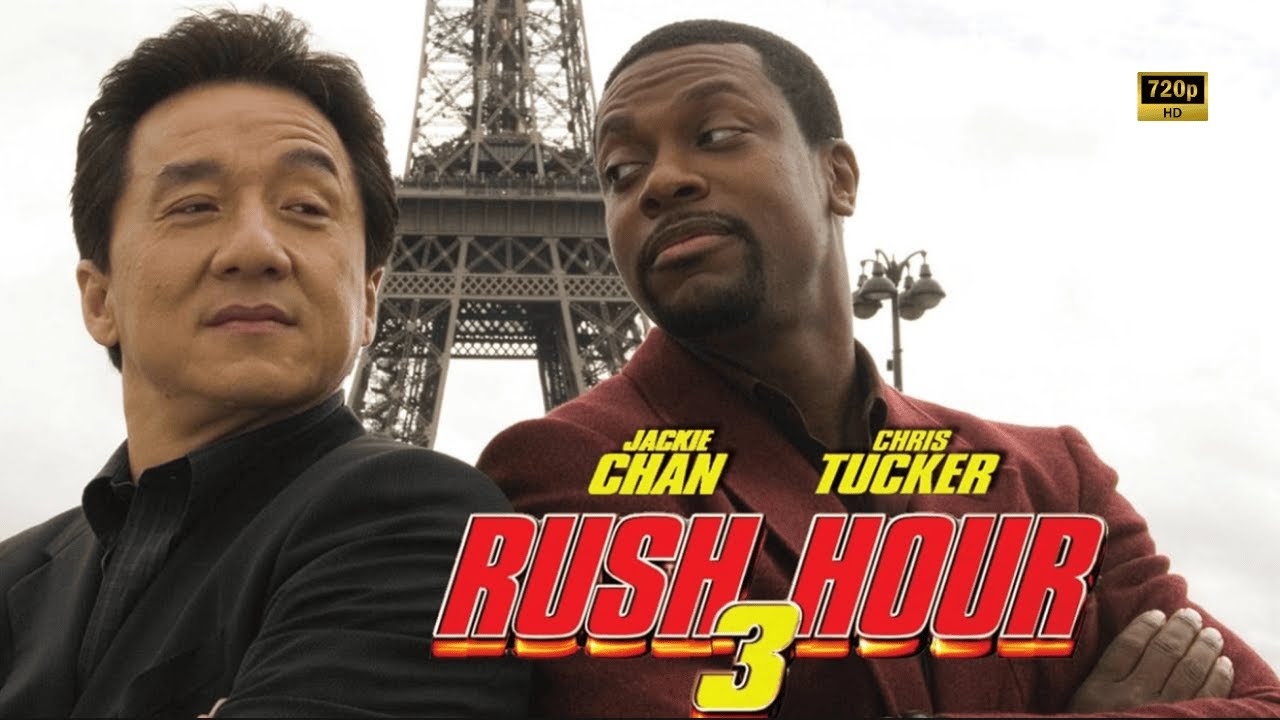
Rush Hour 3 (2007) || Jackie Chan, Chris Tucker || Action-Comedy Psychology & Production Breakdown
Two detectives from opposite worlds reunite in Paris as a routine case spirals into international danger. What begins as comedy quickly escalates into a high...
Stream Mechanics
38.9K views • Jan 18, 2026
About this video
Two detectives from opposite worlds reunite in Paris as a routine case spirals into international danger.
What begins as comedy quickly escalates into a high-stakes confrontation shaped by culture, loyalty, and chaos.
In this in-depth video essay, we analyze Rush Hour 3 through the lenses of cinematic finance, production strategy, action-comedy psychology, and studio economics. We explore how the franchise balanced budget discipline, global market appeal, physical comedy choreography, and late-2000s action filmmaking technology to sustain audience engagement. This breakdown examines narrative structure, character dynamics, pacing economics, cinematography, music, and marketing logic—revealing how studio comedy is engineered for both laughter and ROI.
Movie Credits
Directed by: Brett Ratner
Written by: Jeff Nathanson
Starring: Jackie Chan, Chris Tucker, Hiroyuki Sanada, Yvan Attal, Max von Sydow
Produced by: Arthur M. Sarkissian, Jay Stern, Roger Birnbaum
Music by: Lalo Schifrin
Cinematography: Roger Pratt
Edited by: Don Zimmerman
Distributed by: New Line Cinema
Released: 2007
Genre: Action, Comedy, Crime
Runtime: 91 minutes
Production Budget & Box Office: $140M (approx.) / $258M (approx.)
If you enjoyed this analysis, please like, subscribe, and hit the notification bell for more educational deep-dives into cinema’s art, finance, and psychology.
Fair Use Disclaimer:
This content is provided for educational and analytical purposes under Section 107 of the Copyright Act. It includes commentary on film, finance, technology, and production practices to promote understanding of media and cultural creation.
What begins as comedy quickly escalates into a high-stakes confrontation shaped by culture, loyalty, and chaos.
In this in-depth video essay, we analyze Rush Hour 3 through the lenses of cinematic finance, production strategy, action-comedy psychology, and studio economics. We explore how the franchise balanced budget discipline, global market appeal, physical comedy choreography, and late-2000s action filmmaking technology to sustain audience engagement. This breakdown examines narrative structure, character dynamics, pacing economics, cinematography, music, and marketing logic—revealing how studio comedy is engineered for both laughter and ROI.
Movie Credits
Directed by: Brett Ratner
Written by: Jeff Nathanson
Starring: Jackie Chan, Chris Tucker, Hiroyuki Sanada, Yvan Attal, Max von Sydow
Produced by: Arthur M. Sarkissian, Jay Stern, Roger Birnbaum
Music by: Lalo Schifrin
Cinematography: Roger Pratt
Edited by: Don Zimmerman
Distributed by: New Line Cinema
Released: 2007
Genre: Action, Comedy, Crime
Runtime: 91 minutes
Production Budget & Box Office: $140M (approx.) / $258M (approx.)
If you enjoyed this analysis, please like, subscribe, and hit the notification bell for more educational deep-dives into cinema’s art, finance, and psychology.
Fair Use Disclaimer:
This content is provided for educational and analytical purposes under Section 107 of the Copyright Act. It includes commentary on film, finance, technology, and production practices to promote understanding of media and cultural creation.
Tags and Topics
Browse our collection to discover more content in these categories.
Video Information
Views
38.9K
Likes
94
Duration
01:21:48
Published
Jan 18, 2026
User Reviews
4.0
(7) Related Trending Topics
LIVE TRENDSRelated trending topics. Click any trend to explore more videos.
Trending Now