Revolutionizing Complexity Theory: Quantum Versions of the Karp-Lipton Theorem 🚀
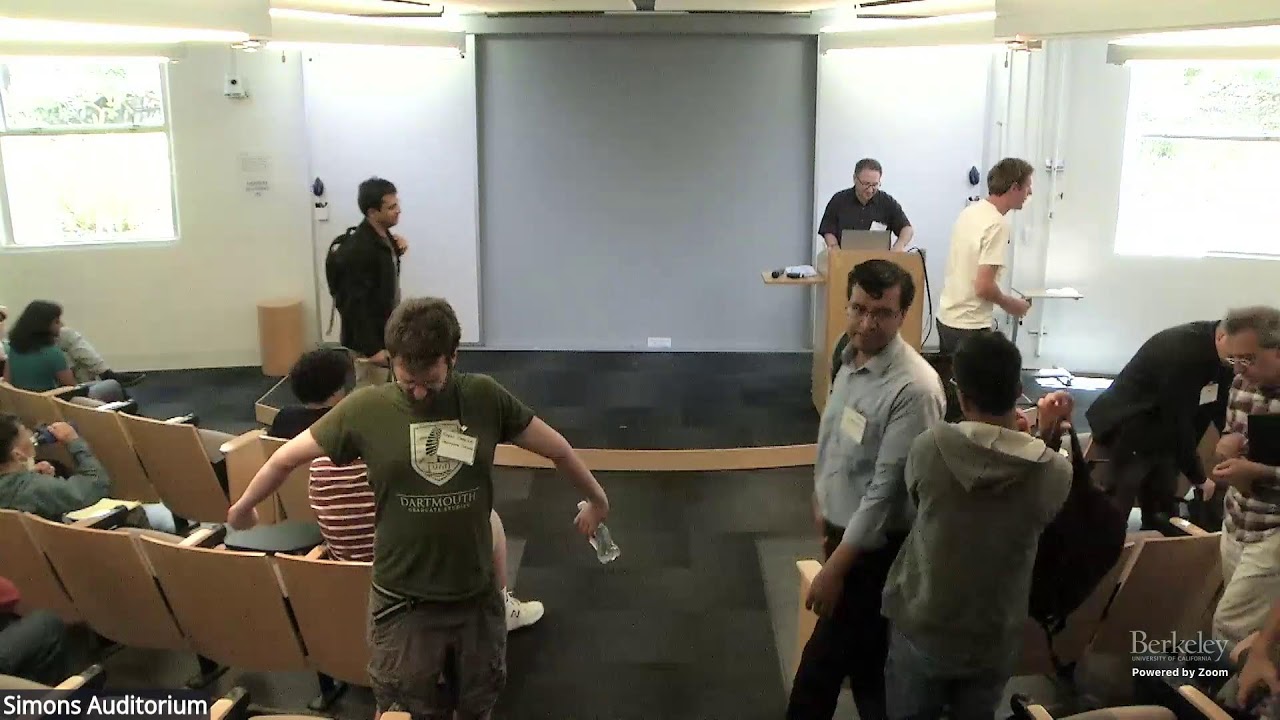
Explore cutting-edge research on quantum algorithms and their implications for the Karp-Lipton theorem, presented by Scott Aaronson. Discover how quantum computing is transforming our understanding of computational complexity!

Simons Institute for the Theory of Computing
156 views • Jun 18, 2025
About this video
Scott Aaronson (University of Texas at Austin)
https://simons.berkeley.edu/talks/scott-aaronson-university-texas-austin-2025-05-29
Quantum Algorithms, Complexity, and Fault Tolerance Reunion
The celebrated Karp-Lipton Theorem says that NP is in P/poly, then the polynomial hierarchy collapses to NP^NP. I've been curious for decades about which quantum analogues of this statement hold. In 2010, Andy Drucker and I showed that if NP is in BQP/qpoly -- that is, if quantum advice makes NP-complete problems easy -- then coNP^NP is contained in QMA^PromiseQMA. In 2006, I claimed to show that if PP is in BQP/qpoly, then the counting hierarchy CH collapses to PP, but unfortunately my proof had a gap. Last year my (then-)PhD student Justin Yirka filled the gap, in part by using the main result of me and Drucker from 2010: namely, the "BQP/qpoly = YQP/poly" theorem. I'll tell this whole story and then speculate about where to go next in understanding quantum advice.
https://simons.berkeley.edu/talks/scott-aaronson-university-texas-austin-2025-05-29
Quantum Algorithms, Complexity, and Fault Tolerance Reunion
The celebrated Karp-Lipton Theorem says that NP is in P/poly, then the polynomial hierarchy collapses to NP^NP. I've been curious for decades about which quantum analogues of this statement hold. In 2010, Andy Drucker and I showed that if NP is in BQP/qpoly -- that is, if quantum advice makes NP-complete problems easy -- then coNP^NP is contained in QMA^PromiseQMA. In 2006, I claimed to show that if PP is in BQP/qpoly, then the counting hierarchy CH collapses to PP, but unfortunately my proof had a gap. Last year my (then-)PhD student Justin Yirka filled the gap, in part by using the main result of me and Drucker from 2010: namely, the "BQP/qpoly = YQP/poly" theorem. I'll tell this whole story and then speculate about where to go next in understanding quantum advice.
Tags and Topics
Browse our collection to discover more content in these categories.
Video Information
Views
156
Likes
2
Duration
01:06:11
Published
Jun 18, 2025
Related Trending Topics
LIVE TRENDSRelated trending topics. Click any trend to explore more videos.
Trending Now