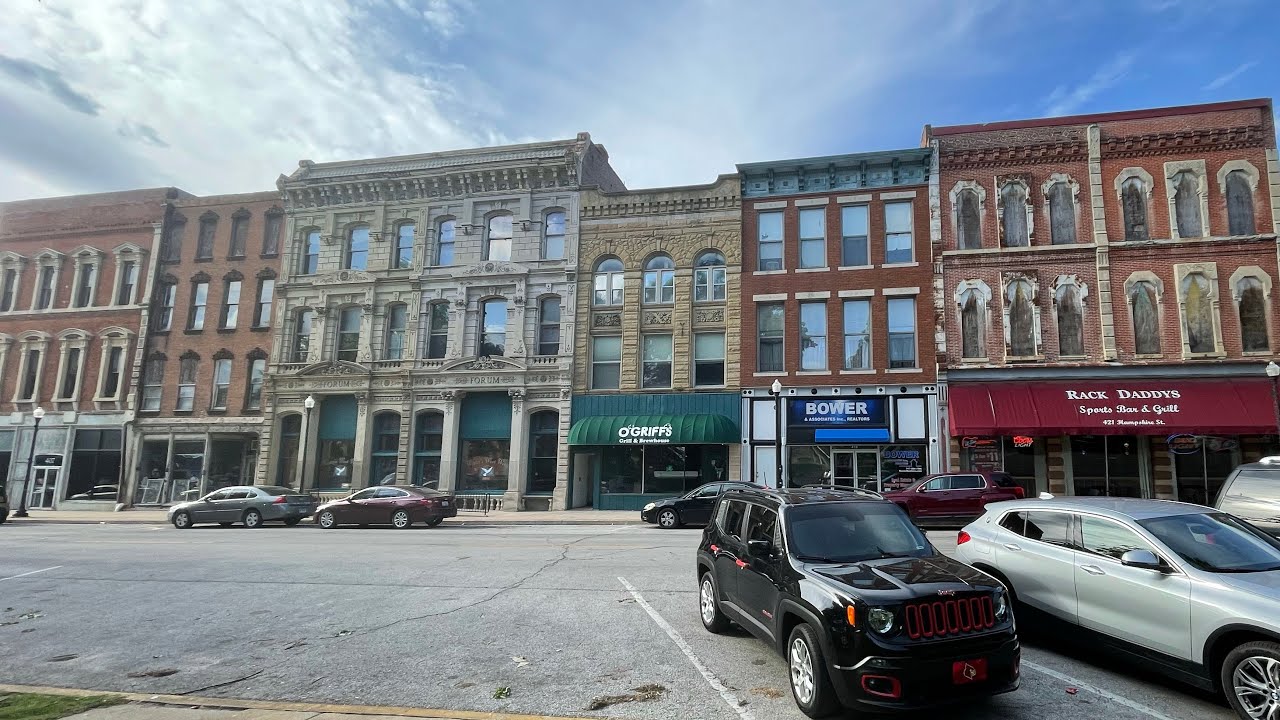
Historic District of Quincy, IL 🏙️
Explore Quincy, Illinois, known as the 'Gem City,' with its rich history and historic district in Adams County.

KCVids816
1.2K views • Jul 26, 2021
About this video
Quincy, Illinois.
“Quincy (/ˈkwɪnsi/ KWIN-see), known as Illinois's "Gem City", is a city in and the county seat of Adams County, Illinois, United States, located on the Mississippi River. The 2010 census counted a population of 40,633 in the city itself, up from 40,366 in 2000. As of July 1, 2015, the Quincy Micro Area had an estimated population of 77,220. During the 19th century, Quincy was a thriving transportation center as riverboats and rail service linked the city to many destinations west and along the river. It was Illinois' second-largest city, surpassing Peoria in 1870. The city has several historic districts, including the Downtown Quincy Historic District and the South Side German Historic District, which display the architecture of Quincy's many German immigrants from the late 19th century.”
https://en.m.wikipedia.org/wiki/Quincy,_Illinois
1:58 LINCOLN-DOUGLAS DEBATE
“On October 13, 1858, Two Candidates For U.S. Senator met in this public square for a sixth debate.
Quincy, in the west-central portion of the state, was a true battleground area where both candidates saw reasonsble prospects of victory. Quincy had been Douglas’ home district. Lincoln counted key local politicians as allies. Boatloads of Douglas supporters were recruited from Missouri to cheer on their favorite, while boatloads of Iowans traveled downriver to vigorously shout approval for Lincoln. Facing a crowd of nearly 15,000 people, the two candidates debated with intellectual rigor what America ought to do about slavery, and in doing so they examined the meaning of democracy to nineteenth century America.
In Quincy the moral argument against slavery was powerfully stated when Lincoln pronounced his strongest stand yet against the Institution stating, “it is a moral, a social, and a political wrong…” Douglas responded that slavery was not a moral issue and maintained that states “…can exist forever divided into free and slave states…”
Lincoln Was A Successful Lawyer Whose political career encompassed four terms in the state legislature and one term in the U.S. House. He retired from politics after service in Congress, but passage of the Kansas-Nebraska Act of 1854 caused him to reverse that decision, as it permitted slavery in areas declared free since the Missouri Compromise of 1820.
Douglas was running for a third term in the U.S. Senate. Douglas, assisted by Quincyan William A. Richardson, Chair of the House Committee on the Territories, guided the Kansas-Nebraska Act through Congress. Popular sovereignty, the hallmark of the act, allowed the territories to decide for themselves whether to be free or slave and put Douglas in direct conflict with Republicans over expansion of slavery. This fundamental difference underscored the most famous debate in American history.”
3:40 AUGUSTINE TOLTON
“Father Tolton, the first negro priest in the United States, was born of slave parents in Brush Creek, Missouri, in 1854. Educated at Quincy schools, he returned to this city after his ordination in Rome, Italy. In 1886, he celebrated his first Public Mass at St. Boniface Church. He became pastor of St. Joseph Church in Quincy and later established St. Monica’s Church for Negroes in Chicago. He died in Chicago in 1897, and is buried at St. Peter’s Cemetery, Quincy.”
Augustine Tolton:
https://en.m.wikipedia.org/wiki/Augustus_Tolton
4:12 In memory of the Potawatomi Indian “Trail of Death” Indiana to Kansas, September 4 - November 4, 1838.
“From October 8-10, 1838, more than 800 Potawatomi Indians were encamped here in Quincy, Illinois and directly across the Mississippi River in Missouri. They were being forced to march from Southern Michigan and Northern Indiana to Eastern Kansas by the United States government and Indiana officials, a result of the policy of forced removal of all Indians to lands west of the Mississippi River, to provide more land for European settlers moving from the east.
Many of the Indians attended Mass here at St. Boniface Church, including a young girl, Equa-Ke-Sec (Wa-Sech-Ki-Mo-Kwe). She was one of the few children to survive the treacherous journey that took more than 40 lives. At the end of the trail at St. Mary’s Mission on Sugar Creek in Linn County, Kansas, Equa-Ke-Sec was taught to pray and sew by an elderly religious sister, Mother Rose Phillipine Duchesne, a member of the French Order of the Madames of the Sacred Heart. The Indians called this holy lady, “She who prays always.” In 1988 Rose Philippine became the first woman west of the Mississippi River to be canonized a saint by Pope John Paul II in Rome.
After the Potawatomi were resettled in Northeastern Kansas, Equa-Ke-Sec was given the Christian name, Theresa Living. In 1861 Theresa married James Slavin of Ireland at the St. Mary’s Mission on the Potawatomi reserve near the present day St. Mary’s Kansas. Many Potawaomi were later removed from Kansas to Oklahoma.”
Music: Frank’s Last Chase - DJ Williams
“Quincy (/ˈkwɪnsi/ KWIN-see), known as Illinois's "Gem City", is a city in and the county seat of Adams County, Illinois, United States, located on the Mississippi River. The 2010 census counted a population of 40,633 in the city itself, up from 40,366 in 2000. As of July 1, 2015, the Quincy Micro Area had an estimated population of 77,220. During the 19th century, Quincy was a thriving transportation center as riverboats and rail service linked the city to many destinations west and along the river. It was Illinois' second-largest city, surpassing Peoria in 1870. The city has several historic districts, including the Downtown Quincy Historic District and the South Side German Historic District, which display the architecture of Quincy's many German immigrants from the late 19th century.”
https://en.m.wikipedia.org/wiki/Quincy,_Illinois
1:58 LINCOLN-DOUGLAS DEBATE
“On October 13, 1858, Two Candidates For U.S. Senator met in this public square for a sixth debate.
Quincy, in the west-central portion of the state, was a true battleground area where both candidates saw reasonsble prospects of victory. Quincy had been Douglas’ home district. Lincoln counted key local politicians as allies. Boatloads of Douglas supporters were recruited from Missouri to cheer on their favorite, while boatloads of Iowans traveled downriver to vigorously shout approval for Lincoln. Facing a crowd of nearly 15,000 people, the two candidates debated with intellectual rigor what America ought to do about slavery, and in doing so they examined the meaning of democracy to nineteenth century America.
In Quincy the moral argument against slavery was powerfully stated when Lincoln pronounced his strongest stand yet against the Institution stating, “it is a moral, a social, and a political wrong…” Douglas responded that slavery was not a moral issue and maintained that states “…can exist forever divided into free and slave states…”
Lincoln Was A Successful Lawyer Whose political career encompassed four terms in the state legislature and one term in the U.S. House. He retired from politics after service in Congress, but passage of the Kansas-Nebraska Act of 1854 caused him to reverse that decision, as it permitted slavery in areas declared free since the Missouri Compromise of 1820.
Douglas was running for a third term in the U.S. Senate. Douglas, assisted by Quincyan William A. Richardson, Chair of the House Committee on the Territories, guided the Kansas-Nebraska Act through Congress. Popular sovereignty, the hallmark of the act, allowed the territories to decide for themselves whether to be free or slave and put Douglas in direct conflict with Republicans over expansion of slavery. This fundamental difference underscored the most famous debate in American history.”
3:40 AUGUSTINE TOLTON
“Father Tolton, the first negro priest in the United States, was born of slave parents in Brush Creek, Missouri, in 1854. Educated at Quincy schools, he returned to this city after his ordination in Rome, Italy. In 1886, he celebrated his first Public Mass at St. Boniface Church. He became pastor of St. Joseph Church in Quincy and later established St. Monica’s Church for Negroes in Chicago. He died in Chicago in 1897, and is buried at St. Peter’s Cemetery, Quincy.”
Augustine Tolton:
https://en.m.wikipedia.org/wiki/Augustus_Tolton
4:12 In memory of the Potawatomi Indian “Trail of Death” Indiana to Kansas, September 4 - November 4, 1838.
“From October 8-10, 1838, more than 800 Potawatomi Indians were encamped here in Quincy, Illinois and directly across the Mississippi River in Missouri. They were being forced to march from Southern Michigan and Northern Indiana to Eastern Kansas by the United States government and Indiana officials, a result of the policy of forced removal of all Indians to lands west of the Mississippi River, to provide more land for European settlers moving from the east.
Many of the Indians attended Mass here at St. Boniface Church, including a young girl, Equa-Ke-Sec (Wa-Sech-Ki-Mo-Kwe). She was one of the few children to survive the treacherous journey that took more than 40 lives. At the end of the trail at St. Mary’s Mission on Sugar Creek in Linn County, Kansas, Equa-Ke-Sec was taught to pray and sew by an elderly religious sister, Mother Rose Phillipine Duchesne, a member of the French Order of the Madames of the Sacred Heart. The Indians called this holy lady, “She who prays always.” In 1988 Rose Philippine became the first woman west of the Mississippi River to be canonized a saint by Pope John Paul II in Rome.
After the Potawatomi were resettled in Northeastern Kansas, Equa-Ke-Sec was given the Christian name, Theresa Living. In 1861 Theresa married James Slavin of Ireland at the St. Mary’s Mission on the Potawatomi reserve near the present day St. Mary’s Kansas. Many Potawaomi were later removed from Kansas to Oklahoma.”
Music: Frank’s Last Chase - DJ Williams
Video Information
Views
1.2K
Likes
28
Duration
4:41
Published
Jul 26, 2021
User Reviews
4.5
(1) Related Trending Topics
LIVE TRENDSRelated trending topics. Click any trend to explore more videos.
No specific trending topics match this video yet.
Explore All Trends