Quantum-Resistant Ethereum: Securing the Future of Crypto 🔐
Discover how the Ethereum Foundation is integrating quantum resistance into its roadmap to enhance security and safeguard against future quantum threats. Stay ahead in the evolving crypto landscape!

Anastasia Marchenkova
4.6K views • Dec 4, 2023
About this video
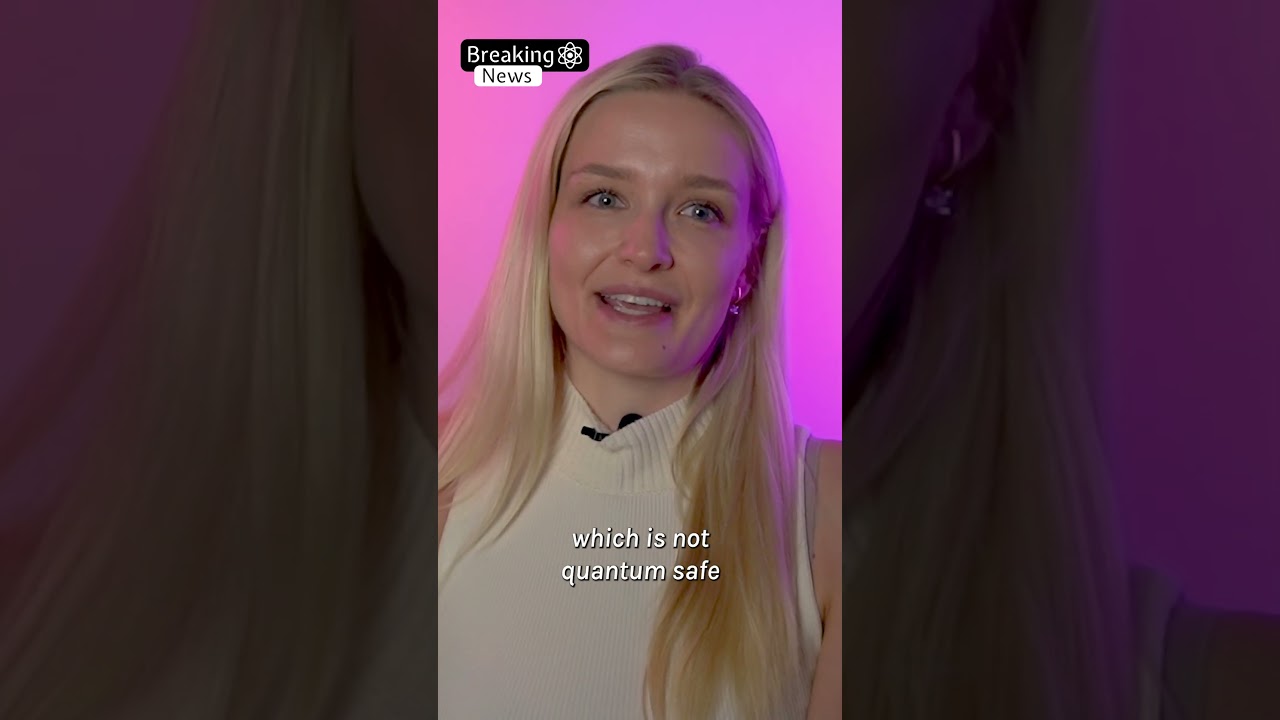
The Ethereum Foundation has recently made a significant update to its development roadmap by incorporating "quantum resistance," a move aimed at future-proofing the blockchain against the potential threats posed by quantum computing.
As it stands, Ethereum employs the BLS (Boneh-Lynn-Shacham) signature scheme to aggregate votes for validating blocks. However, this scheme is not quantum-resistant, meaning it could potentially be vulnerable to quantum computing attacks. In the realm of quantum computing, traditional cryptographic methods may become easily decodable, posing a significant risk to blockchain security.
Additionally, Ethereum currently uses the KZG (Kate-Zaverucha-Goldberg) commitment scheme for generating cryptographic secrets. This scheme is integral to various aspects of Ethereum's functioning but also lacks quantum resistance.
In response to these vulnerabilities, Ethereum's development team is actively exploring two new signature schemes: STARK-based and lattice-based systems. These systems are known for their potential quantum resistance and could offer a more secure alternative in a future where quantum computing is commonplace.
STARK-based signatures leverage cryptographic proofs known as STARKs (Scalable, Transparent, Argument of Knowledge), which are designed to be quantum-resistant. On the other hand, lattice-based cryptography is another promising area of research that provides security based on the hardness of solving problems in lattice mathematics, which are believed to be secure against quantum computing attacks.
By integrating quantum-resistant technologies, Ethereum is not only enhancing its current security but also preparing for a long-term future, potentially spanning centuries. This forward-thinking approach is in line with Ethereum's aim to be a durable and reliable blockchain platform, capable of withstanding the advancements in computational power brought about by quantum computing.
The addition of quantum resistance to Ethereum's roadmap highlights the platform's commitment to adaptability and long-term security, ensuring that it remains a trusted and viable blockchain solution in the face of evolving technological landscapes.
Questions to Ponder:
Q1: How will the integration of quantum-resistant technologies impact the current Ethereum ecosystem?
Q2: What are the potential challenges in transitioning Ethereum to quantum-resistant cryptographic schemes?
Q3: How might other blockchain platforms respond to Ethereum's move towards quantum resistance?
My Extraversion for Introverts course: https://www.introverttoleader.com
Apply for my Extraversion for Introverts coaching program: https://ubv05h4c8u6.typeform.com/to/ztnw5yfM
Trying to figure out how to use quantum computing in your business or need to secure against the quantum threat?
Request a consulting call here: https://ubv05h4c8u6.typeform.com/to/bVWpCWk1
As it stands, Ethereum employs the BLS (Boneh-Lynn-Shacham) signature scheme to aggregate votes for validating blocks. However, this scheme is not quantum-resistant, meaning it could potentially be vulnerable to quantum computing attacks. In the realm of quantum computing, traditional cryptographic methods may become easily decodable, posing a significant risk to blockchain security.
Additionally, Ethereum currently uses the KZG (Kate-Zaverucha-Goldberg) commitment scheme for generating cryptographic secrets. This scheme is integral to various aspects of Ethereum's functioning but also lacks quantum resistance.
In response to these vulnerabilities, Ethereum's development team is actively exploring two new signature schemes: STARK-based and lattice-based systems. These systems are known for their potential quantum resistance and could offer a more secure alternative in a future where quantum computing is commonplace.
STARK-based signatures leverage cryptographic proofs known as STARKs (Scalable, Transparent, Argument of Knowledge), which are designed to be quantum-resistant. On the other hand, lattice-based cryptography is another promising area of research that provides security based on the hardness of solving problems in lattice mathematics, which are believed to be secure against quantum computing attacks.
By integrating quantum-resistant technologies, Ethereum is not only enhancing its current security but also preparing for a long-term future, potentially spanning centuries. This forward-thinking approach is in line with Ethereum's aim to be a durable and reliable blockchain platform, capable of withstanding the advancements in computational power brought about by quantum computing.
The addition of quantum resistance to Ethereum's roadmap highlights the platform's commitment to adaptability and long-term security, ensuring that it remains a trusted and viable blockchain solution in the face of evolving technological landscapes.
Questions to Ponder:
Q1: How will the integration of quantum-resistant technologies impact the current Ethereum ecosystem?
Q2: What are the potential challenges in transitioning Ethereum to quantum-resistant cryptographic schemes?
Q3: How might other blockchain platforms respond to Ethereum's move towards quantum resistance?
My Extraversion for Introverts course: https://www.introverttoleader.com
Apply for my Extraversion for Introverts coaching program: https://ubv05h4c8u6.typeform.com/to/ztnw5yfM
Trying to figure out how to use quantum computing in your business or need to secure against the quantum threat?
Request a consulting call here: https://ubv05h4c8u6.typeform.com/to/bVWpCWk1
Tags and Topics
Browse our collection to discover more content in these categories.
Video Information
Views
4.6K
Likes
170
Duration
0:25
Published
Dec 4, 2023
User Reviews
4.6
(4) Related Trending Topics
LIVE TRENDSRelated trending topics. Click any trend to explore more videos.
No specific trending topics match this video yet.
Explore All Trends