Adaptive LMS Filter in Signal Processing 📡
Learn about adaptive LMS filters in signal processing with Python in this comprehensive 3-part series.
Mathena
2.4K views • Aug 28, 2024
About this video
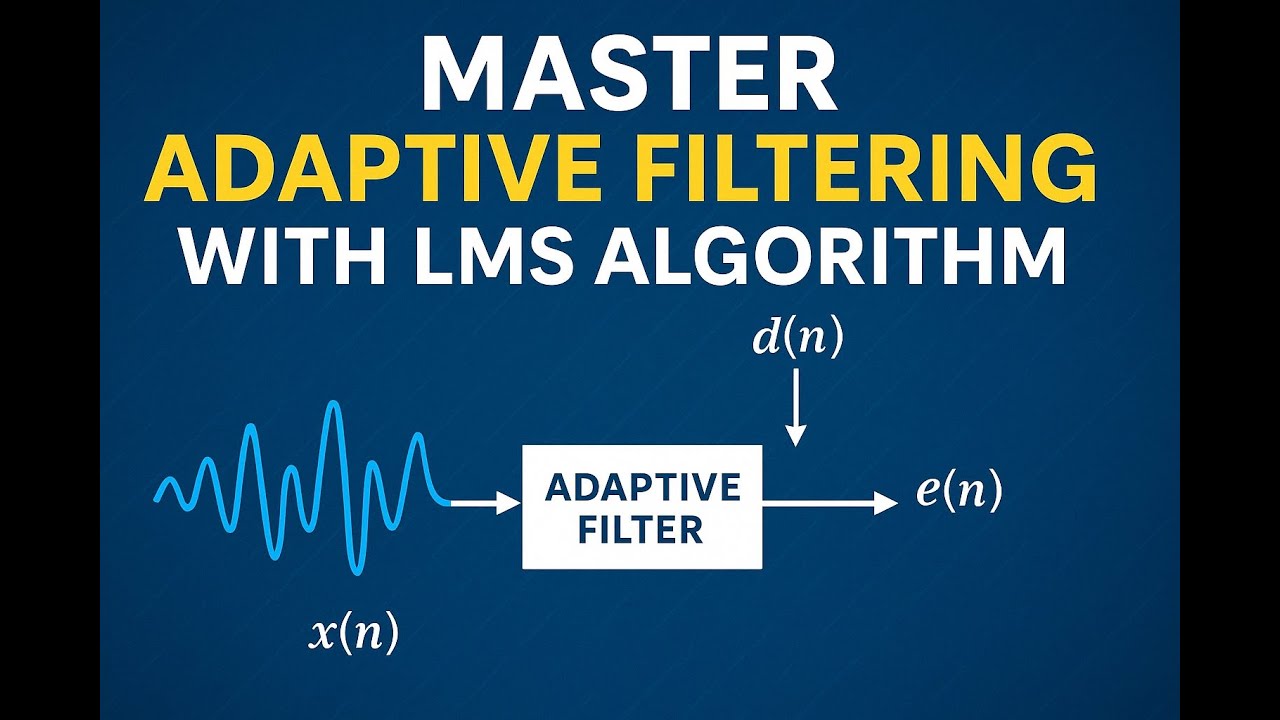
In this tutorial, we will dive deep into the world of signal processing and Python programming! In this three-part series, we're going to unravel the power of the LMS (Least Mean Squares) adaptive filter. Whether you're a student, a professional, or just curious about how adaptive filters can help you reduce noise and improve signal clarity, this tutorial is for you.
In Part 1, we'll start with the theory behind adaptive filters. You'll learn what an LMS filter is, how it works, and where it's commonly used. By the end of this section, you'll have a solid understanding of the mathematical principles that make LMS filters so effective.
Then, in Part 2, we'll roll up our sleeves and dive into the coding. We'll implement the LMS algorithm from scratch in Python to predict the slope of a linear function. This hands-on section will not only solidify your understanding but also show you how to apply these concepts in practical scenarios.
Finally, in Part 3, we’ll tackle a real-world problem—filtering noise from a sinusoidal signal using the LMS adaptive filter. You'll see the LMS filter in action, cleaning up a noisy signal to reveal the underlying pattern. This section is where the magic happens, and you'll get to apply everything you've learned to solve a practical problem.
So, if you're ready to master LMS filters, hit the subscribe button and join me on this journey. Make sure to watch all three parts, and by the end, you'll be equipped with the knowledge and skills to implement adaptive filters in your own projects.
#leastmeansquares, #lmsfilter, #adaptivefilter, #signalprocessing, #adaptivefilterlms, #adaptivefilterindsp, #adaptivefilteralgorithm, #lmsalgorithmforadaptivefilter, #adaptivelmsfilter, #adaptiveaudiofilter, #adaptive, #adaptivefiltersindigitalsignalprocessing, #lmsfilter
In Part 1, we'll start with the theory behind adaptive filters. You'll learn what an LMS filter is, how it works, and where it's commonly used. By the end of this section, you'll have a solid understanding of the mathematical principles that make LMS filters so effective.
Then, in Part 2, we'll roll up our sleeves and dive into the coding. We'll implement the LMS algorithm from scratch in Python to predict the slope of a linear function. This hands-on section will not only solidify your understanding but also show you how to apply these concepts in practical scenarios.
Finally, in Part 3, we’ll tackle a real-world problem—filtering noise from a sinusoidal signal using the LMS adaptive filter. You'll see the LMS filter in action, cleaning up a noisy signal to reveal the underlying pattern. This section is where the magic happens, and you'll get to apply everything you've learned to solve a practical problem.
So, if you're ready to master LMS filters, hit the subscribe button and join me on this journey. Make sure to watch all three parts, and by the end, you'll be equipped with the knowledge and skills to implement adaptive filters in your own projects.
#leastmeansquares, #lmsfilter, #adaptivefilter, #signalprocessing, #adaptivefilterlms, #adaptivefilterindsp, #adaptivefilteralgorithm, #lmsalgorithmforadaptivefilter, #adaptivelmsfilter, #adaptiveaudiofilter, #adaptive, #adaptivefiltersindigitalsignalprocessing, #lmsfilter
Video Information
Views
2.4K
Likes
53
Duration
11:23
Published
Aug 28, 2024
User Reviews
4.5
(2) Related Trending Topics
LIVE TRENDSRelated trending topics. Click any trend to explore more videos.
No specific trending topics match this video yet.
Explore All Trends