Master Logistic Regression: The Simple Yet Powerful ML Classifier 📊
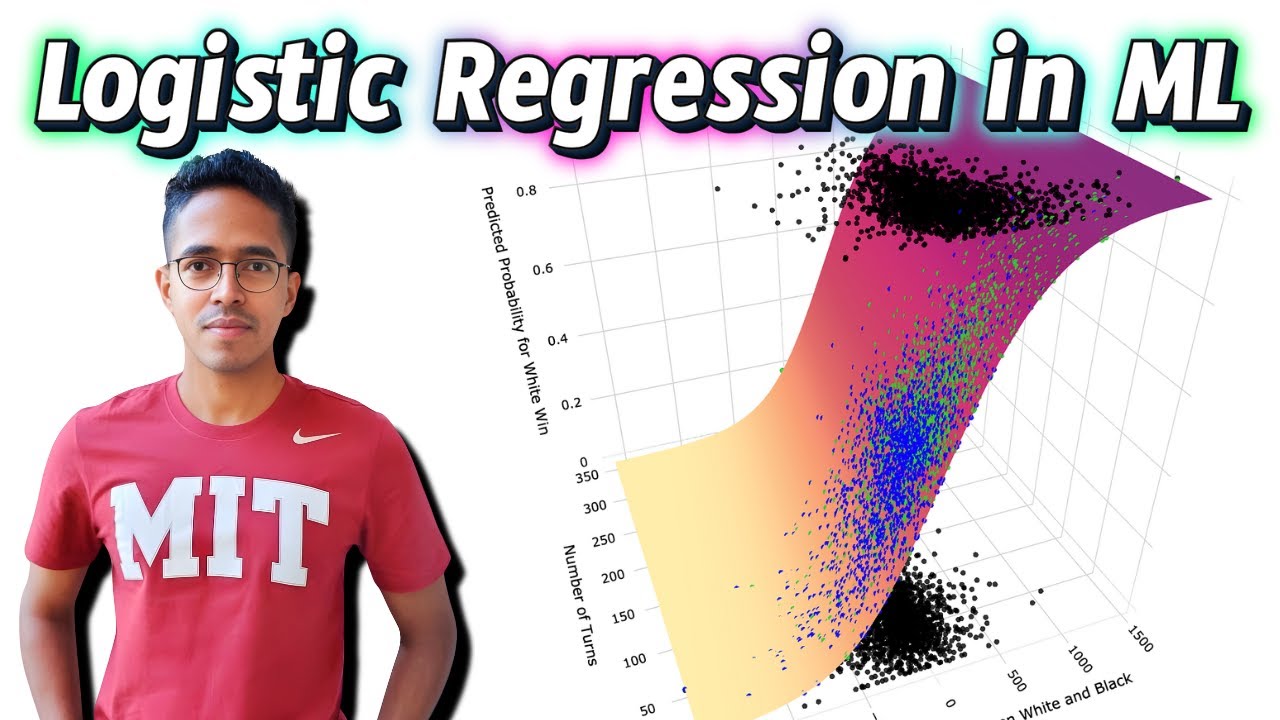
Discover why logistic regression remains a fundamental and efficient tool for machine learning classification tasks. Dive into Lecture 11 to unlock its secrets and applications!

Vizuara
1.2K views • Dec 24, 2024
About this video
Logistic Regression: The Unsung Hero of Machine Learning
In the age of complex neural networks and cutting-edge ensemble models, it’s easy to overlook the humble regression techniques that laid the foundation for modern machine learning. Among these, logistic regression stands as a quiet yet powerful tool that often gets overshadowed—but it remains indispensable in solving real-world problems.
Logistic regression isn’t about simplicity for simplicity's sake. It’s about effectiveness. It handles binary classification problems with elegance, offering interpretable results that help us understand the “why” behind predictions—a feature that even the most sophisticated black-box models struggle with.
But logistic regression is just one part of the broader regression family. Linear regression, for example, forms the cornerstone of predictive modeling, with its ability to quantify relationships and predict continuous outcomes. And let’s not forget regularized regression techniques like Ridge and Lasso, which tackle multicollinearity and feature selection challenges head-on.
Why revisit regression models today?
Because they remind us that machine learning isn’t just about performance metrics. It’s about insights. It’s about creating models that not only predict but explain. While regression models might not always win Kaggle competitions, they often win in production, where simplicity, speed, and transparency are crucial.
So next time you tackle a machine learning problem, don’t underestimate regression. Sometimes, the most straightforward tools can make the biggest impact.
In this lecture I published on Vizuara's YouTube channel we explore the theory and implementation from scratch (by hand and by code) of the logistic regression framework for a single, variable binary classification: https://youtu.be/rmp4Sw3_NqI
Check this out I am sure you will enjoy.
In the age of complex neural networks and cutting-edge ensemble models, it’s easy to overlook the humble regression techniques that laid the foundation for modern machine learning. Among these, logistic regression stands as a quiet yet powerful tool that often gets overshadowed—but it remains indispensable in solving real-world problems.
Logistic regression isn’t about simplicity for simplicity's sake. It’s about effectiveness. It handles binary classification problems with elegance, offering interpretable results that help us understand the “why” behind predictions—a feature that even the most sophisticated black-box models struggle with.
But logistic regression is just one part of the broader regression family. Linear regression, for example, forms the cornerstone of predictive modeling, with its ability to quantify relationships and predict continuous outcomes. And let’s not forget regularized regression techniques like Ridge and Lasso, which tackle multicollinearity and feature selection challenges head-on.
Why revisit regression models today?
Because they remind us that machine learning isn’t just about performance metrics. It’s about insights. It’s about creating models that not only predict but explain. While regression models might not always win Kaggle competitions, they often win in production, where simplicity, speed, and transparency are crucial.
So next time you tackle a machine learning problem, don’t underestimate regression. Sometimes, the most straightforward tools can make the biggest impact.
In this lecture I published on Vizuara's YouTube channel we explore the theory and implementation from scratch (by hand and by code) of the logistic regression framework for a single, variable binary classification: https://youtu.be/rmp4Sw3_NqI
Check this out I am sure you will enjoy.
Video Information
Views
1.2K
Likes
41
Duration
01:06:50
Published
Dec 24, 2024
User Reviews
4.5
(1) Related Trending Topics
LIVE TRENDSRelated trending topics. Click any trend to explore more videos.
No specific trending topics match this video yet.
Explore All Trends