Master Asymmetric Cryptography: Digital Signatures & Certificates Explained 🔐
Discover the essentials of asymmetric cryptography and how digital signatures and certificates secure your digital world. Perfect for beginners and tech enthusiasts!

Jeevan Dsouza
15 views • Mar 18, 2025
About this video
In this video, we dive deep into the fascinating world of asymmetric cryptography, a cornerstone of modern cybersecurity. Learn how digital signatures and certificates work together to secure online communications, protect data integrity, and verify identities. Whether you're a tech enthusiast, a student, or a professional in the field, this video will break down complex concepts into easy-to-understand explanations.
Keywords: asymmetric cryptography, digital signatures, certificates, public key cryptography, private key, encryption, decryption, cybersecurity, data integrity, authentication, PKI (Public Key Infrastructure), SSL/TLS, secure communication, encryption algorithms, RSA, ECC, digital identity, cryptographic keys, online security, data protection.
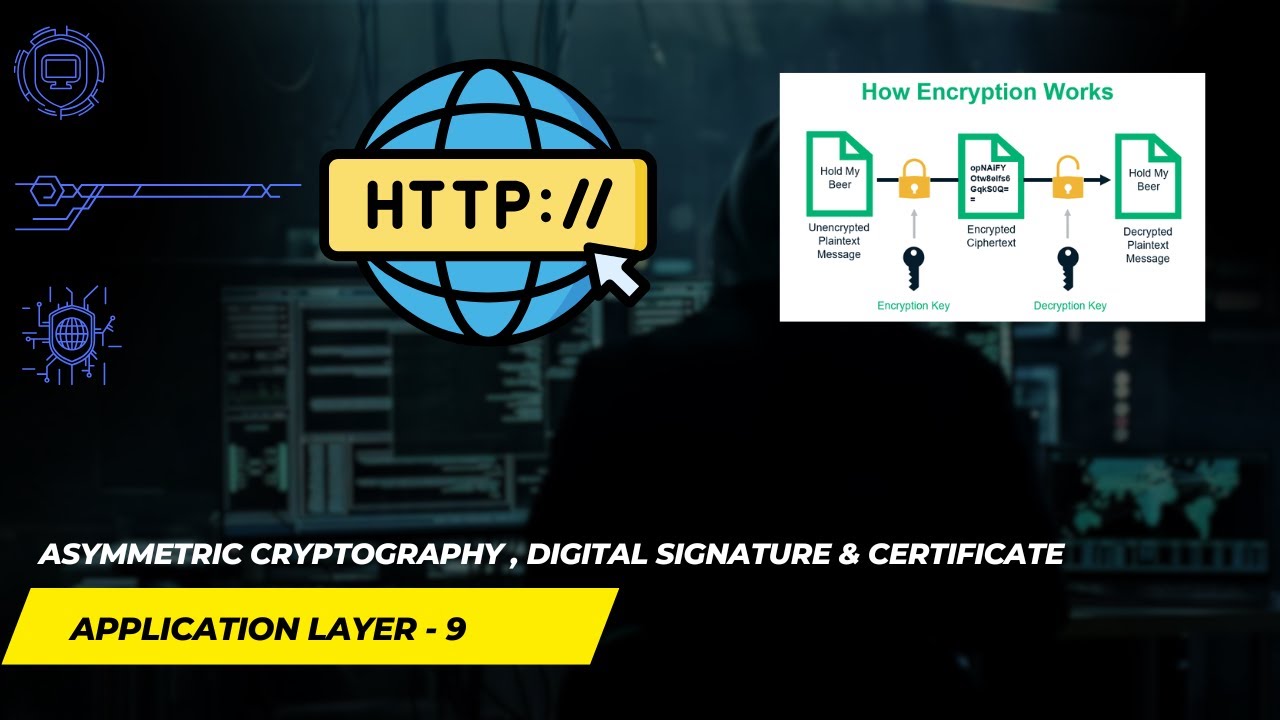
Asymmetric cryptography, also known as public key cryptography, uses a pair of keys: a public key and a private key. These keys are mathematically linked but serve different purposes. The public key can be shared openly, while the private key must remain secret. This unique system enables secure communication over untrusted networks, such as the internet.
One of the most important applications of asymmetric cryptography is digital signatures. A digital signature is like a virtual fingerprint, uniquely tied to both the sender and the message. It ensures that the message hasn’t been tampered with and verifies the sender’s identity. Here’s how it works: the sender uses their private key to create a signature, and the recipient uses the sender’s public key to verify it. This process guarantees data integrity and authentication, making it a critical tool for secure online transactions, software distribution, and email communication.
Another key component of asymmetric cryptography is certificates. A certificate is a digital document that binds a public key to an entity, such as a person, organization, or website. These certificates are issued by Certificate Authorities (CAs), trusted third parties that verify the identity of the certificate holder. Certificates play a vital role in PKI (Public Key Infrastructure), enabling secure connections in protocols like SSL/TLS, which protect your browsing sessions and online transactions.
In this video, we’ll explore real-world examples of asymmetric cryptography in action, from securing websites with HTTPS to signing software updates. We’ll also discuss popular encryption algorithms like RSA and ECC (Elliptic Curve Cryptography), and how they contribute to the strength and efficiency of cryptographic systems.
By the end of this video, you’ll have a solid understanding of how asymmetric cryptography, digital signatures, and certificates work together to create a safer digital world. Don’t forget to like, share, and subscribe for more content on cybersecurity, encryption, and technology!
Keywords: asymmetric cryptography, digital signatures, certificates, public key cryptography, private key, encryption, decryption, cybersecurity, data integrity, authentication, PKI (Public Key Infrastructure), SSL/TLS, secure communication, encryption algorithms, RSA, ECC, digital identity, cryptographic keys, online security, data protection.
Asymmetric cryptography, also known as public key cryptography, uses a pair of keys: a public key and a private key. These keys are mathematically linked but serve different purposes. The public key can be shared openly, while the private key must remain secret. This unique system enables secure communication over untrusted networks, such as the internet.
One of the most important applications of asymmetric cryptography is digital signatures. A digital signature is like a virtual fingerprint, uniquely tied to both the sender and the message. It ensures that the message hasn’t been tampered with and verifies the sender’s identity. Here’s how it works: the sender uses their private key to create a signature, and the recipient uses the sender’s public key to verify it. This process guarantees data integrity and authentication, making it a critical tool for secure online transactions, software distribution, and email communication.
Another key component of asymmetric cryptography is certificates. A certificate is a digital document that binds a public key to an entity, such as a person, organization, or website. These certificates are issued by Certificate Authorities (CAs), trusted third parties that verify the identity of the certificate holder. Certificates play a vital role in PKI (Public Key Infrastructure), enabling secure connections in protocols like SSL/TLS, which protect your browsing sessions and online transactions.
In this video, we’ll explore real-world examples of asymmetric cryptography in action, from securing websites with HTTPS to signing software updates. We’ll also discuss popular encryption algorithms like RSA and ECC (Elliptic Curve Cryptography), and how they contribute to the strength and efficiency of cryptographic systems.
By the end of this video, you’ll have a solid understanding of how asymmetric cryptography, digital signatures, and certificates work together to create a safer digital world. Don’t forget to like, share, and subscribe for more content on cybersecurity, encryption, and technology!
Video Information
Views
15
Duration
01:02:19
Published
Mar 18, 2025
Related Trending Topics
LIVE TRENDSRelated trending topics. Click any trend to explore more videos.
No specific trending topics match this video yet.
Explore All Trends