Atwood on Climate Change: Economics Overcomes Anti-Science 🌍
Margaret Atwood discusses how economic solutions are key to overcoming anti-science attitudes on climate change. Watch now!

Big Think
16.2K views • Dec 16, 2016
About this video
Margaret Atwood on Climate Change: Anti-Science Can Only Be Surmounted by Economics
Watch the newest video from Big Think: https://bigth.ink/NewVideo
Join Big Think Edge for exclusive videos: https://bigth.ink/Edge
----------------------------------------------------------------------------------
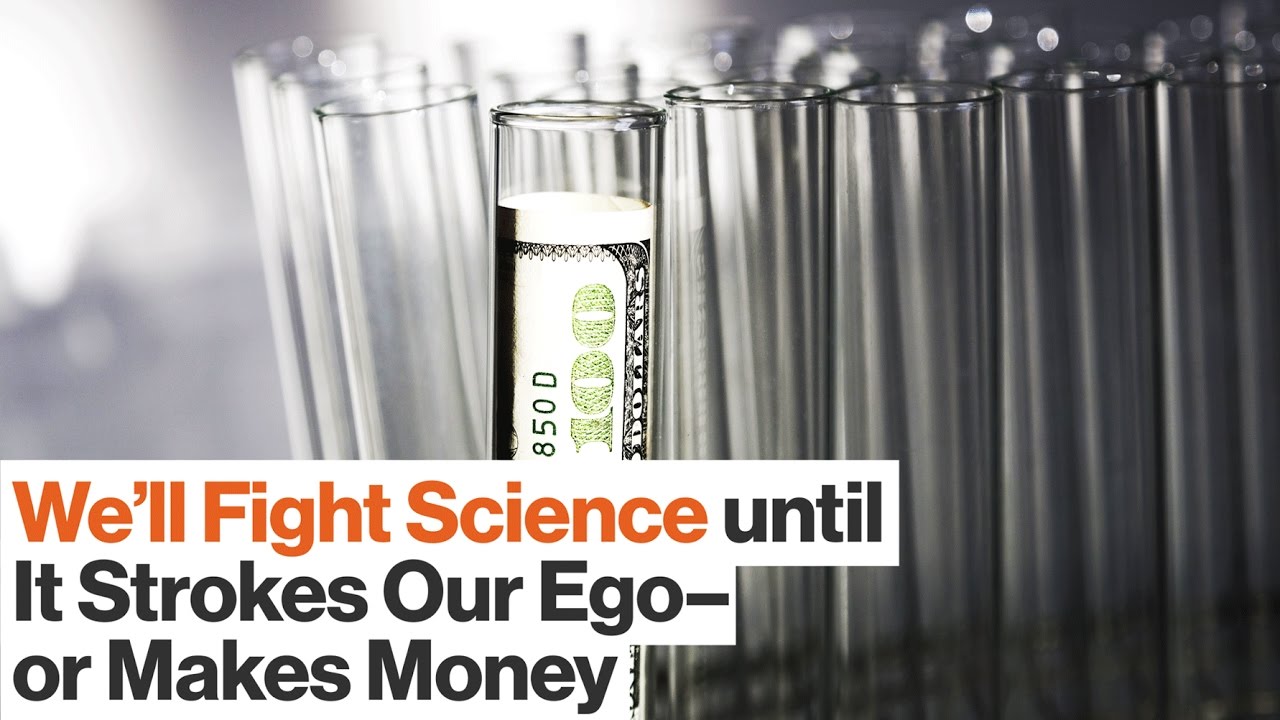
Only two things will change the minds of science skeptics: appeals to their ego, or their wallets.People do not want to give up their cherished beliefs, says author Margaret Atwood, especially the ones they find most comforting. What appears obvious and enlightening to atheists like Richard Dawkins, for example, it isn’t so straightforward for those whose identity and community is hinged on a certain set of beliefs. One person's liberation is another's nightmare.
It’s a very human quality to avoid things that are inconvenient or unappealing. Our days are vastly improved if we know to avoid the store with the long queues, to steer clear of dairy or gluten if it makes us sick, and to not order the whole roast duck if its head, still attached, is too much of a reminder. At some point, though, it’s necessary to confront uncomfortable truths – especially when a failure to do so affects the quality of human life (and all life) in a broader context. At that juncture, our avoidance moves beyond self-preservation and enters into exactly the opposite.
This mindset is what fuels anti-intellectualism, says Atwood, and it always has. When Galileo supported and expanded Copernicus’ heliocentric model of our solar system, he was punished by the church (Copernicus died too quickly to be reprimanded). Charles Darwin came under fire when he suggested we weren’t created but that we evolved. When new ideas interrupt what's comfortable, many will reject and discredit it simply to not have to change their behavior. Is this sounding familiar yet?
There will be a point when the position of climate-change deniers will shift, explains Atwood, but it won't be until the idea starts to appeal to our ego, or to our wallets. When the green energy sector becomes profitable enough, expect a sudden reduction in the amount of climate change opposition. "That will be the real tipping point in public consciousness in this country," Atwood says. She believes Elon Musk is the "wave of the future", with Tesla cars and the Powerwall home battery. When his technology becomes affordable and therefore profitable, the idea of green energy will truly have arrived in the wider consciousness.
Margaret Atwood's new book is Hag-Seed.
----------------------------------------------------------------------------------
MARGARET ATWOOD:
Margaret Atwood is a Canadian novelist, poet, and essayist. She is best known for her novels, in which she creates strong, often enigmatic, women characters and excels in telling open-ended stories, while dissecting contemporary urban life and sexual politics. She is among the most-honored authors of fiction in recent history. In addition to the Arthur C. Clark Award-winning "The Handmaid’s Tale," her novels include "Cat’s Eye," which was shortlisted for the Booker Prize, "Alias Grace," which won the Giller Prize in Canada and the Premio Mondello in Italy, and "The Blind Assassin," winner of the 2000 Booker Prize. "Oryx and Crake" was shortlisted for the Man Booker Prize in 2003. She was awarded the Prince of Asturias Prize for Literature in 2008. Her most recent novel is "The Year of the Flood."
----------------------------------------------------------------------------------
TRANSCRIPT:
Margaret Atwood: If you look at the history of what happened to Darwin when he published, what would you call that? Yes he was hugely attacked at the time. And it's often a case of people do not want to give up their cherished beliefs, especially cherished beliefs that they find comforting. So it's no good for Richard Dawkins to say let us just stand on the bold bear promontory of truth and acknowledge the basically nothingness of ourselves. People don't find that cozy so they will go around the block not to do that. And that's very understandable and human. And religious thinking, you know, the idea that there's somebody bigger than you out there who might be helpful to you if certain rules are observed, that goes back so far. We probably have an epigene or something or a cluster of epigenes for that and you see it a lot in small children that there is a monster under the bed and you can't tell them there isn't. They don't find that reassuring. What you can tell them is yes there is a monster under that bed but as long as I put this cabbage right in this spot it can't come out.
Read the full transcript at https://bigthink.com/videos/margaret-atwood-on-anti-science-and-anti-intellectualism
Watch the newest video from Big Think: https://bigth.ink/NewVideo
Join Big Think Edge for exclusive videos: https://bigth.ink/Edge
----------------------------------------------------------------------------------
Only two things will change the minds of science skeptics: appeals to their ego, or their wallets.People do not want to give up their cherished beliefs, says author Margaret Atwood, especially the ones they find most comforting. What appears obvious and enlightening to atheists like Richard Dawkins, for example, it isn’t so straightforward for those whose identity and community is hinged on a certain set of beliefs. One person's liberation is another's nightmare.
It’s a very human quality to avoid things that are inconvenient or unappealing. Our days are vastly improved if we know to avoid the store with the long queues, to steer clear of dairy or gluten if it makes us sick, and to not order the whole roast duck if its head, still attached, is too much of a reminder. At some point, though, it’s necessary to confront uncomfortable truths – especially when a failure to do so affects the quality of human life (and all life) in a broader context. At that juncture, our avoidance moves beyond self-preservation and enters into exactly the opposite.
This mindset is what fuels anti-intellectualism, says Atwood, and it always has. When Galileo supported and expanded Copernicus’ heliocentric model of our solar system, he was punished by the church (Copernicus died too quickly to be reprimanded). Charles Darwin came under fire when he suggested we weren’t created but that we evolved. When new ideas interrupt what's comfortable, many will reject and discredit it simply to not have to change their behavior. Is this sounding familiar yet?
There will be a point when the position of climate-change deniers will shift, explains Atwood, but it won't be until the idea starts to appeal to our ego, or to our wallets. When the green energy sector becomes profitable enough, expect a sudden reduction in the amount of climate change opposition. "That will be the real tipping point in public consciousness in this country," Atwood says. She believes Elon Musk is the "wave of the future", with Tesla cars and the Powerwall home battery. When his technology becomes affordable and therefore profitable, the idea of green energy will truly have arrived in the wider consciousness.
Margaret Atwood's new book is Hag-Seed.
----------------------------------------------------------------------------------
MARGARET ATWOOD:
Margaret Atwood is a Canadian novelist, poet, and essayist. She is best known for her novels, in which she creates strong, often enigmatic, women characters and excels in telling open-ended stories, while dissecting contemporary urban life and sexual politics. She is among the most-honored authors of fiction in recent history. In addition to the Arthur C. Clark Award-winning "The Handmaid’s Tale," her novels include "Cat’s Eye," which was shortlisted for the Booker Prize, "Alias Grace," which won the Giller Prize in Canada and the Premio Mondello in Italy, and "The Blind Assassin," winner of the 2000 Booker Prize. "Oryx and Crake" was shortlisted for the Man Booker Prize in 2003. She was awarded the Prince of Asturias Prize for Literature in 2008. Her most recent novel is "The Year of the Flood."
----------------------------------------------------------------------------------
TRANSCRIPT:
Margaret Atwood: If you look at the history of what happened to Darwin when he published, what would you call that? Yes he was hugely attacked at the time. And it's often a case of people do not want to give up their cherished beliefs, especially cherished beliefs that they find comforting. So it's no good for Richard Dawkins to say let us just stand on the bold bear promontory of truth and acknowledge the basically nothingness of ourselves. People don't find that cozy so they will go around the block not to do that. And that's very understandable and human. And religious thinking, you know, the idea that there's somebody bigger than you out there who might be helpful to you if certain rules are observed, that goes back so far. We probably have an epigene or something or a cluster of epigenes for that and you see it a lot in small children that there is a monster under the bed and you can't tell them there isn't. They don't find that reassuring. What you can tell them is yes there is a monster under that bed but as long as I put this cabbage right in this spot it can't come out.
Read the full transcript at https://bigthink.com/videos/margaret-atwood-on-anti-science-and-anti-intellectualism
Tags and Topics
Browse our collection to discover more content in these categories.
Video Information
Views
16.2K
Likes
781
Duration
4:34
Published
Dec 16, 2016
User Reviews
4.6
(3) Related Trending Topics
LIVE TRENDSRelated trending topics. Click any trend to explore more videos.
No specific trending topics match this video yet.
Explore All Trends