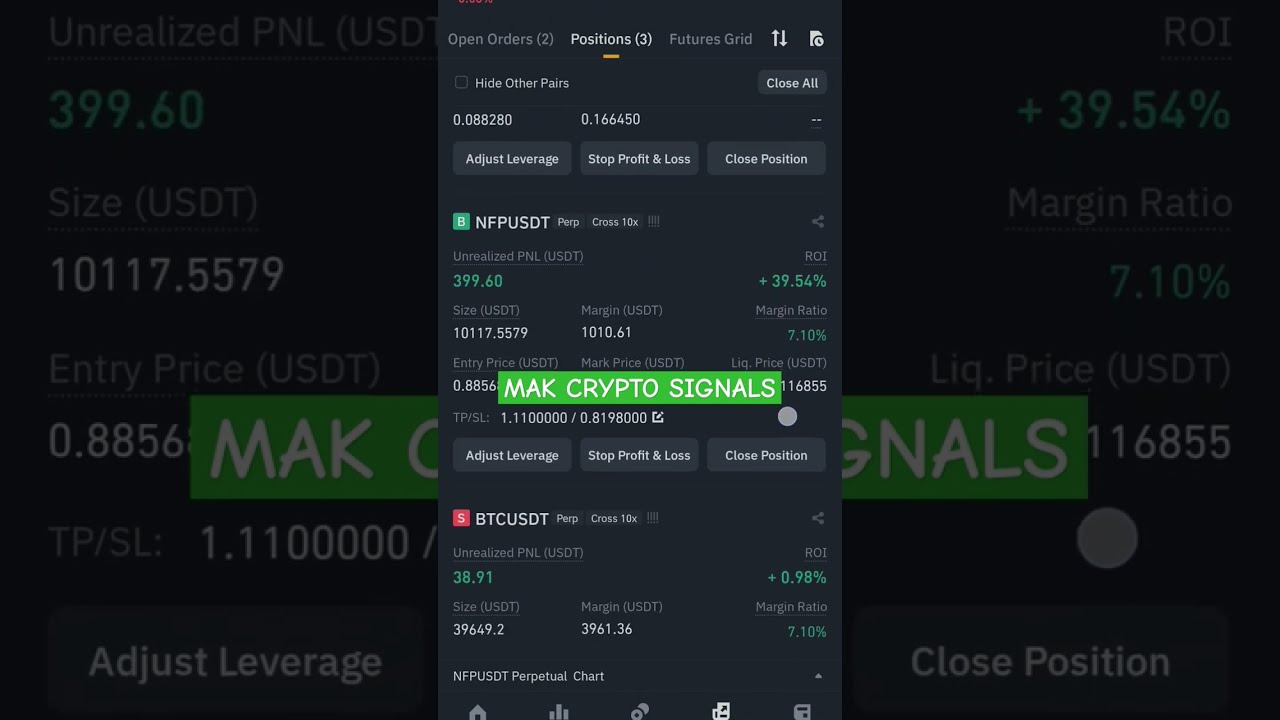
🔥 MAK Crypto Signals: Your Ultimate Guide to Profitable Crypto Trading!
Discover expert crypto signals and tips to boost your Bitcoin, Ethereum, and blockchain investments. Stay ahead in the fast-paced crypto market today! 🚀

DAILYCRYPTONEWS4U
19 views • Nov 20, 2024
About this video
#Cryptocurrency, #CryptoExchange, #CryptoTrading
#Bitcoin, #Ethereum, #Blockchain
#CryptoMarket, #DigitalCurrency, #CryptoInvesting
#CryptoTips, #CryptoSecurity, #CryptoNews
#Altcoins, #CryptoAnalysis, #CryptoWallets
#CryptoFees, #CryptoGuide, #CryptoBeginners
#CryptoCommunity, #CryptoUpdates, #CryptoProfits
#CryptoReviews, #CryptoPlatforms, #CryptoFeatures
Cryptocurrency, or crypto, is a form of digital or virtual currency that uses cryptography for security. Unlike traditional currencies issued by governments, cryptocurrencies operate on decentralized systems, typically using blockchain technology, which is a distributed ledger maintained by a network of computers (nodes). This decentralization makes them immune to control by governments or financial institutions.
Here are some key aspects of cryptocurrency:
Blockchain: A blockchain is a secure and transparent way to record transactions across multiple computers. It serves as a public ledger for all cryptocurrency transactions. Bitcoin, Ethereum, and many other cryptos use blockchain to ensure integrity.
Bitcoin: The first and most well-known cryptocurrency, created in 2009 by an anonymous individual or group under the pseudonym Satoshi Nakamoto. It paved the way for a new era of digital finance.
Altcoins: Any cryptocurrency that is not Bitcoin is considered an altcoin. Examples include Ethereum (ETH), Litecoin (LTC), and Ripple (XRP). Many altcoins offer unique features and improvements over Bitcoin.
Mining: Mining is the process through which new cryptocurrency coins are generated, and transactions are added to a blockchain. Miners use computational power to solve complex mathematical problems, and in return, they are rewarded with newly minted coins.
Wallets: Cryptocurrency wallets are digital tools that store users' private and public keys and allow them to send and receive crypto. They come in different forms, including software wallets, hardware wallets, and even paper wallets.
Exchanges: Platforms where users can buy, sell, and trade cryptocurrencies. Examples include Binance, Coinbase, and Kraken.
DeFi (Decentralized Finance): DeFi refers to a financial system built on blockchain technology, allowing people to trade, borrow, and lend without traditional intermediaries like banks.
Smart Contracts: Introduced by Ethereum, smart contracts are self-executing contracts with the terms of the agreement written directly into code. These contracts automatically execute and enforce themselves without the need for a middleman.
#Bitcoin, #Ethereum, #Blockchain
#CryptoMarket, #DigitalCurrency, #CryptoInvesting
#CryptoTips, #CryptoSecurity, #CryptoNews
#Altcoins, #CryptoAnalysis, #CryptoWallets
#CryptoFees, #CryptoGuide, #CryptoBeginners
#CryptoCommunity, #CryptoUpdates, #CryptoProfits
#CryptoReviews, #CryptoPlatforms, #CryptoFeatures
Cryptocurrency, or crypto, is a form of digital or virtual currency that uses cryptography for security. Unlike traditional currencies issued by governments, cryptocurrencies operate on decentralized systems, typically using blockchain technology, which is a distributed ledger maintained by a network of computers (nodes). This decentralization makes them immune to control by governments or financial institutions.
Here are some key aspects of cryptocurrency:
Blockchain: A blockchain is a secure and transparent way to record transactions across multiple computers. It serves as a public ledger for all cryptocurrency transactions. Bitcoin, Ethereum, and many other cryptos use blockchain to ensure integrity.
Bitcoin: The first and most well-known cryptocurrency, created in 2009 by an anonymous individual or group under the pseudonym Satoshi Nakamoto. It paved the way for a new era of digital finance.
Altcoins: Any cryptocurrency that is not Bitcoin is considered an altcoin. Examples include Ethereum (ETH), Litecoin (LTC), and Ripple (XRP). Many altcoins offer unique features and improvements over Bitcoin.
Mining: Mining is the process through which new cryptocurrency coins are generated, and transactions are added to a blockchain. Miners use computational power to solve complex mathematical problems, and in return, they are rewarded with newly minted coins.
Wallets: Cryptocurrency wallets are digital tools that store users' private and public keys and allow them to send and receive crypto. They come in different forms, including software wallets, hardware wallets, and even paper wallets.
Exchanges: Platforms where users can buy, sell, and trade cryptocurrencies. Examples include Binance, Coinbase, and Kraken.
DeFi (Decentralized Finance): DeFi refers to a financial system built on blockchain technology, allowing people to trade, borrow, and lend without traditional intermediaries like banks.
Smart Contracts: Introduced by Ethereum, smart contracts are self-executing contracts with the terms of the agreement written directly into code. These contracts automatically execute and enforce themselves without the need for a middleman.
Tags and Topics
Browse our collection to discover more content in these categories.
Video Information
Views
19
Duration
0:11
Published
Nov 20, 2024
Related Trending Topics
LIVE TRENDSRelated trending topics. Click any trend to explore more videos.
Trending Now