Germany Post-Nazi Fall (1945-46) | Documentary
Explore life in Germany after Nazi defeat in 1945, as the country was divided and occupied by Allied forces. 🇩🇪

Frontline War Memoirs
200.8K views • Mar 24, 2026
About this video
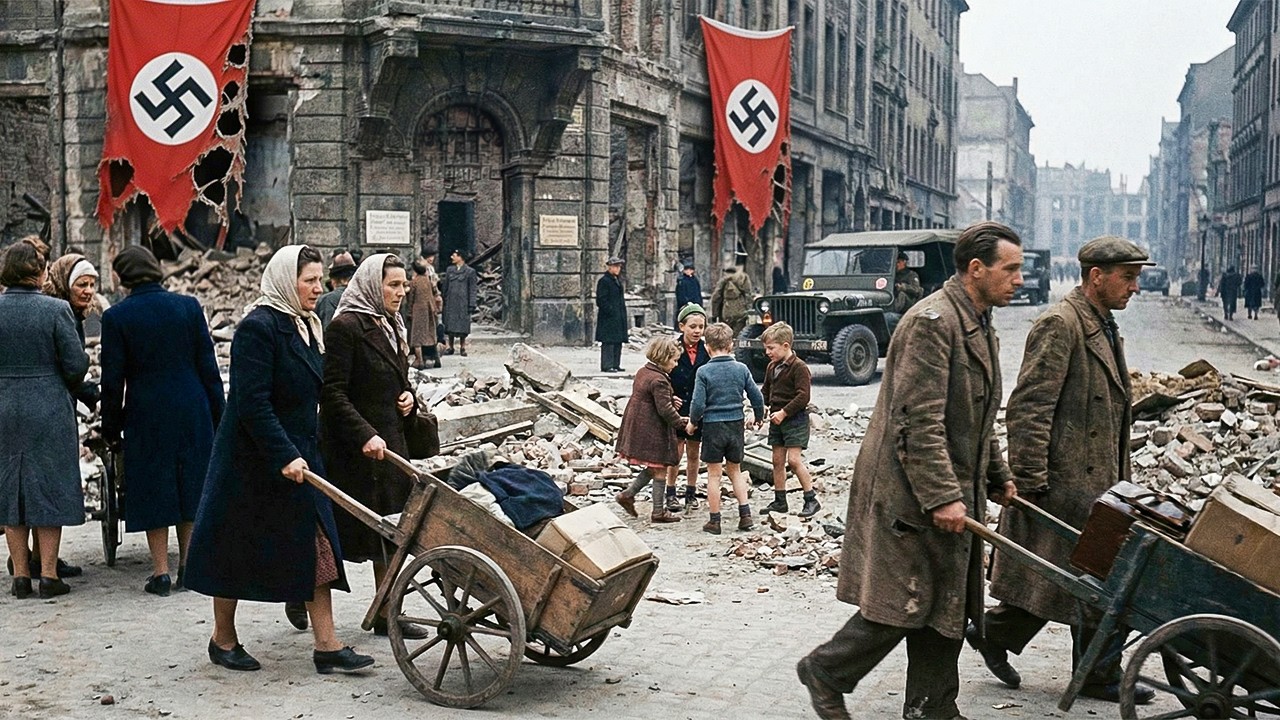
After the capitulation on May 8, 1945, Germany ceased to exist as a sovereign state and was divided into occupation zones administered by the United States, the United Kingdom, the Soviet Union and France. In cities such as Berlin, Hamburg, Cologne or Dresden, life unfolded among ruins, collapsed infrastructure and millions of displaced people. Rationing, the black market and the housing shortage defined daily life, while searches, the disarmament of the population and the prohibition of all structures of the Nazi regime began.
During the summer and autumn of 1945, the establishment of military governments completely transformed the administration. The NSDAP was dissolved, denazification processes began, and the major trials against the main leaders of the Third Reich were launched. At the same time, new political parties emerged in the western zones, while the dominance of the SED was consolidated in the Soviet zone. The press, radio and the education system were reorganized under reeducation programs aimed at eradicating National Socialist ideology and redefining German political culture.
Between 1945 and 1946, German society faced hunger, massive population displacements, the return of prisoners of war, expulsions from the east and deep psychological wounds. Women heading households, children marked by the war and communities forced to live alongside foreign troops reflected an irreversible social transformation. As 1946 progressed, the economic and political differences between the occupation zones became increasingly evident, foreshadowing the future division of the country and the beginning of a new stage in European history after the Second World War.
During the summer and autumn of 1945, the establishment of military governments completely transformed the administration. The NSDAP was dissolved, denazification processes began, and the major trials against the main leaders of the Third Reich were launched. At the same time, new political parties emerged in the western zones, while the dominance of the SED was consolidated in the Soviet zone. The press, radio and the education system were reorganized under reeducation programs aimed at eradicating National Socialist ideology and redefining German political culture.
Between 1945 and 1946, German society faced hunger, massive population displacements, the return of prisoners of war, expulsions from the east and deep psychological wounds. Women heading households, children marked by the war and communities forced to live alongside foreign troops reflected an irreversible social transformation. As 1946 progressed, the economic and political differences between the occupation zones became increasingly evident, foreshadowing the future division of the country and the beginning of a new stage in European history after the Second World War.
Tags and Topics
Browse our collection to discover more content in these categories.
Video Information
Views
200.8K
Likes
1.1K
Duration
01:02:00
Published
Mar 24, 2026
User Reviews
4.2
(40) Related Trending Topics
LIVE TRENDSRelated trending topics. Click any trend to explore more videos.