Lab Values Nursing NCLEX Review for Nurses and Nursing Students
Lab values nursing nclex-rn, nclex-pn, and ATI review: This video explains the lab values nurses need to know for the NCLEX exam. You'll need to know these a...
RegisteredNurseRN
2.1M views • Apr 6, 2019
About this video
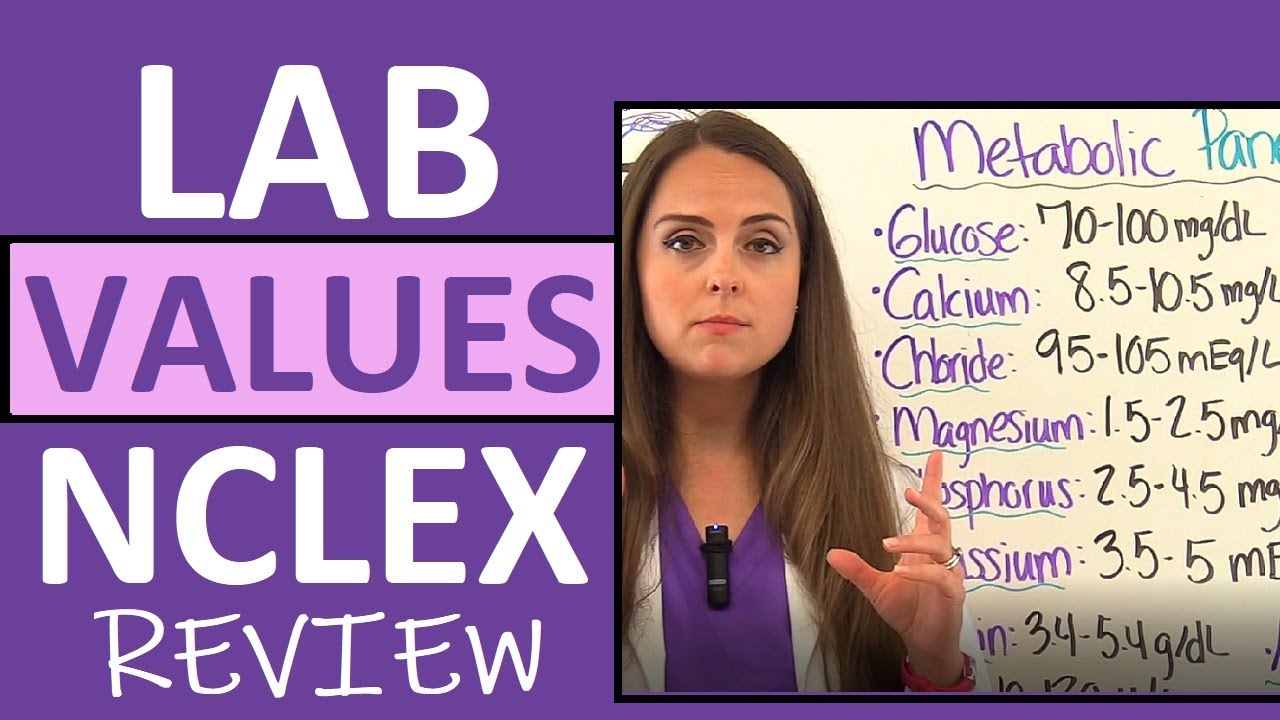
Lab values nursing nclex-rn, nclex-pn, and ATI review: This video explains the lab values nurses need to know for the NCLEX exam. You'll need to know these as a nursing student and as a nurse.
📚Nurse Sarah's Study Notes: https://nursesarah.com/
Normal lab values are a big thing you'll want to learn as you prep for your NCLEX exam. You can expect to encounter questions asking about these labs.
"Correction:" 07:05 Calcium level should read 8.5–10.5 mg/dL.
As a student prepping for NCLEX, you will want to know about the normal lab values of a CBC (complete blood count), BMP/CMP (basic or comprehensive metabolic panel), lipid panel, coagulation levels, arterial blood gases, and drug levels.
The complete blood count details the cells found in the blood: red blood cells (RBCs), white blood cells (WBCs), platelets, hemoglobin, and hematocrit level.
The metabolic panel details the fluid and electrolyte status of the patient, glucose level, renal, and liver function.
The lipid panel details the patient's risk for cardiovascular disease (LDL, HDL, total cholesterol, and triglycerides.
The arterial blood gas levels detail the patient's acid-base imbalance and if a respiratory or metabolic problem exists (blood pH, pCO2, HCO3, pO2, O2 saturation).
The hemoglobin A1C level is helpful in determining the patient's blood glucose level over the last 3 months.
Coagulation levels are important to determine clotting times, especially in a patient who is taking anticoagulants like Heparin or Warfarin.
Drugs level labs detail the amount of drug in the patient's system and is crucial in helping determine if a drug is toxic or therapeutic in a patient. Examples of drug levels would be: Digoxin, Dilantin, Lithium, Carbamazepine etc.
Quiz: https://www.registerednursern.com/labs-to-know-for-nclex-quiz-questions/
Notes: https://www.registerednursern.com/labs-to-know-for-nclex-review/
More NCLEX Reviews: https://www.youtube.com/playlist?list=PLQrdx7rRsKfWwTsEG3KPPQx9rWa8AqMIk
Instagram: https://www.instagram.com/registerednursern_com/
Facebook: https://www.facebook.com/RegisteredNurseRNs
Twitter: https://twitter.com/NursesRN
#labvaluesmadeeasy #labsnursing #labsnclex
Website: https://www.registerednursern.com/
More Videos: https://www.youtube.com/watch?v=R2XMro13dD0&list=UUPyMN8DzkFl2__xnTEiGZ1w
Popular Playlists:
NCLEX Reviews: https://www.youtube.com/playlist?list=PLQrdx7rRsKfWtwCDmLHyX2UeHofCIcgo0
Fluid & Electrolytes: https://www.youtube.com/playlist?list=PLQrdx7rRsKfWJSZ9pL8L3Q1dzdlxUzeKv
Nursing Skills: https://www.youtube.com/playlist?list=PLQrdx7rRsKfUhd_qQYEbp0Eab3uUKhgKb
📚Nurse Sarah's Study Notes: https://nursesarah.com/
Normal lab values are a big thing you'll want to learn as you prep for your NCLEX exam. You can expect to encounter questions asking about these labs.
"Correction:" 07:05 Calcium level should read 8.5–10.5 mg/dL.
As a student prepping for NCLEX, you will want to know about the normal lab values of a CBC (complete blood count), BMP/CMP (basic or comprehensive metabolic panel), lipid panel, coagulation levels, arterial blood gases, and drug levels.
The complete blood count details the cells found in the blood: red blood cells (RBCs), white blood cells (WBCs), platelets, hemoglobin, and hematocrit level.
The metabolic panel details the fluid and electrolyte status of the patient, glucose level, renal, and liver function.
The lipid panel details the patient's risk for cardiovascular disease (LDL, HDL, total cholesterol, and triglycerides.
The arterial blood gas levels detail the patient's acid-base imbalance and if a respiratory or metabolic problem exists (blood pH, pCO2, HCO3, pO2, O2 saturation).
The hemoglobin A1C level is helpful in determining the patient's blood glucose level over the last 3 months.
Coagulation levels are important to determine clotting times, especially in a patient who is taking anticoagulants like Heparin or Warfarin.
Drugs level labs detail the amount of drug in the patient's system and is crucial in helping determine if a drug is toxic or therapeutic in a patient. Examples of drug levels would be: Digoxin, Dilantin, Lithium, Carbamazepine etc.
Quiz: https://www.registerednursern.com/labs-to-know-for-nclex-quiz-questions/
Notes: https://www.registerednursern.com/labs-to-know-for-nclex-review/
More NCLEX Reviews: https://www.youtube.com/playlist?list=PLQrdx7rRsKfWwTsEG3KPPQx9rWa8AqMIk
Instagram: https://www.instagram.com/registerednursern_com/
Facebook: https://www.facebook.com/RegisteredNurseRNs
Twitter: https://twitter.com/NursesRN
#labvaluesmadeeasy #labsnursing #labsnclex
Website: https://www.registerednursern.com/
More Videos: https://www.youtube.com/watch?v=R2XMro13dD0&list=UUPyMN8DzkFl2__xnTEiGZ1w
Popular Playlists:
NCLEX Reviews: https://www.youtube.com/playlist?list=PLQrdx7rRsKfWtwCDmLHyX2UeHofCIcgo0
Fluid & Electrolytes: https://www.youtube.com/playlist?list=PLQrdx7rRsKfWJSZ9pL8L3Q1dzdlxUzeKv
Nursing Skills: https://www.youtube.com/playlist?list=PLQrdx7rRsKfUhd_qQYEbp0Eab3uUKhgKb
Tags and Topics
Browse our collection to discover more content in these categories.
Video Information
Views
2.1M
Likes
25.4K
Duration
13:26
Published
Apr 6, 2019
User Reviews
4.6
(418) Related Trending Topics
LIVE TRENDSRelated trending topics. Click any trend to explore more videos.