Investors Urged to Increase Safe Haven Assets 🛡️
Portfolio experts recommend boosting exposure to safe haven assets amid market uncertainties. Insights from Ed Campbell and Julian Emanuel.
CNBC Television
3.0K views • Jan 8, 2020
About this video
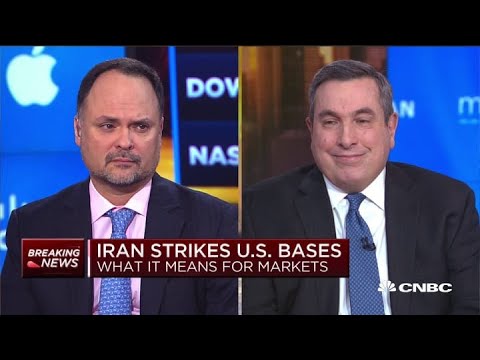
Ed Campbell, senior portfolio manager at QMA, and Julian Emanuel, chief equity and derivatives strategist at BTIG, join "Squawk Box" to discuss how the markets are reacting to Iran's strikes against U.S. bases in Iraq.
European stocks traded lower on Monday, as investors monitored rising tensions between the United States and Iran.
The pan-European Stoxx 600 slightly pared early losses but was still down 0.45% by the close. Travel & leisure , autos and chemicals baskets all fell more than 1% to lead losses as almost every sector traded in the red.
Market players are fleeing riskier assets like equities in favor of safer alternatives like gold and bonds after a U.S. airstrike last week killed Iran's top military commander, Qasem Soleimani, in Iraq. The attack has heightened already-volatile relations between Washington and Tehran.
Oil is also surging on the back of intensifying U.S.-Iran tensions, amid fears it could disrupt supply in the Middle East. Brent crude futures were up .6%, or 43 cents, at $68.60 a barrel at 4:30 p.m. London time. U.S. West Texas Intermediate (WTI) crude futures climbed 0.3%, or 17 cents, to $63.22.
Over the weekend, Iraq's parliament passed a resolution calling for the government to expel foreign troops from the country. President Donald Trump responded by threatening to impose sanctions on Iraq. Meanwhile, Iran has declared it will no longer adhere to uranium enrichment restrictions agreed under the 2015 nuclear deal.
European stocks traded lower on Monday, as investors monitored rising tensions between the United States and Iran.
The pan-European Stoxx 600 slightly pared early losses but was still down 0.45% by the close. Travel & leisure , autos and chemicals baskets all fell more than 1% to lead losses as almost every sector traded in the red.
Market players are fleeing riskier assets like equities in favor of safer alternatives like gold and bonds after a U.S. airstrike last week killed Iran's top military commander, Qasem Soleimani, in Iraq. The attack has heightened already-volatile relations between Washington and Tehran.
Oil is also surging on the back of intensifying U.S.-Iran tensions, amid fears it could disrupt supply in the Middle East. Brent crude futures were up .6%, or 43 cents, at $68.60 a barrel at 4:30 p.m. London time. U.S. West Texas Intermediate (WTI) crude futures climbed 0.3%, or 17 cents, to $63.22.
Over the weekend, Iraq's parliament passed a resolution calling for the government to expel foreign troops from the country. President Donald Trump responded by threatening to impose sanctions on Iraq. Meanwhile, Iran has declared it will no longer adhere to uranium enrichment restrictions agreed under the 2015 nuclear deal.
Back in Europe, Spanish Socialist leader Pedro Sanchez failed to secure parliament backing to form a government. He'll have another chance on Tuesday, when another vote will be held in which he only requires a simple majority.
On the data front, euro zone business activity hovered near stagnation in December, according to IHS Markit's final composite PMI (purchasing managers' index) figures published Monday.
The currency bloc's reading edged up to 50.9 in December from November's 50.6, slightly beating expectations but remaining just above the 50 mark, which separates growth from contraction.
France, Germany and Italy all saw service sector PMIs pick up in December to either match or beat forecasts, with improvements over the broad set of data pushing the euro higher.
Sterling climbed after Britain's service sector surged on the greater certainty resulting from the landslide Conservative election victory last month, despite a stagnant economy. December's composite PMI for the U.K. was revised up to 50.0 from an initial "flash" estimate of 49.0.
Jeweler Pandora leaped 11.9% after issuing a muted trading update but confirming its financial guidance for 2019, while Britain's John Wood Group led the bounce for oil stocks on the back of escalations in the Middle East, climbing 4.2%.
For access to live and exclusive video from CNBC subscribe to CNBC PRO: https://www.cnbc.com/pro/?__source=youtube
» Subscribe to CNBC TV: https://cnb.cx/SubscribeCNBCtelevision
» Subscribe to CNBC: https://cnb.cx/SubscribeCNBC
» Subscribe to CNBC Classic: https://cnb.cx/SubscribeCNBCclassic
Turn to CNBC TV for the latest stock market news and analysis. From market futures to live price updates CNBC is the leader in business news worldwide.
Connect with CNBC News Online
Get the latest news: http://www.cnbc.com/
Follow CNBC on LinkedIn: https://cnb.cx/LinkedInCNBC
Follow CNBC News on Facebook: https://cnb.cx/LikeCNBC
Follow CNBC News on Twitter: https://cnb.cx/FollowCNBC
Follow CNBC News on Instagram: https://cnb.cx/InstagramCNBC
#CNBC
#CNBC TV
European stocks traded lower on Monday, as investors monitored rising tensions between the United States and Iran.
The pan-European Stoxx 600 slightly pared early losses but was still down 0.45% by the close. Travel & leisure , autos and chemicals baskets all fell more than 1% to lead losses as almost every sector traded in the red.
Market players are fleeing riskier assets like equities in favor of safer alternatives like gold and bonds after a U.S. airstrike last week killed Iran's top military commander, Qasem Soleimani, in Iraq. The attack has heightened already-volatile relations between Washington and Tehran.
Oil is also surging on the back of intensifying U.S.-Iran tensions, amid fears it could disrupt supply in the Middle East. Brent crude futures were up .6%, or 43 cents, at $68.60 a barrel at 4:30 p.m. London time. U.S. West Texas Intermediate (WTI) crude futures climbed 0.3%, or 17 cents, to $63.22.
Over the weekend, Iraq's parliament passed a resolution calling for the government to expel foreign troops from the country. President Donald Trump responded by threatening to impose sanctions on Iraq. Meanwhile, Iran has declared it will no longer adhere to uranium enrichment restrictions agreed under the 2015 nuclear deal.
European stocks traded lower on Monday, as investors monitored rising tensions between the United States and Iran.
The pan-European Stoxx 600 slightly pared early losses but was still down 0.45% by the close. Travel & leisure , autos and chemicals baskets all fell more than 1% to lead losses as almost every sector traded in the red.
Market players are fleeing riskier assets like equities in favor of safer alternatives like gold and bonds after a U.S. airstrike last week killed Iran's top military commander, Qasem Soleimani, in Iraq. The attack has heightened already-volatile relations between Washington and Tehran.
Oil is also surging on the back of intensifying U.S.-Iran tensions, amid fears it could disrupt supply in the Middle East. Brent crude futures were up .6%, or 43 cents, at $68.60 a barrel at 4:30 p.m. London time. U.S. West Texas Intermediate (WTI) crude futures climbed 0.3%, or 17 cents, to $63.22.
Over the weekend, Iraq's parliament passed a resolution calling for the government to expel foreign troops from the country. President Donald Trump responded by threatening to impose sanctions on Iraq. Meanwhile, Iran has declared it will no longer adhere to uranium enrichment restrictions agreed under the 2015 nuclear deal.
Back in Europe, Spanish Socialist leader Pedro Sanchez failed to secure parliament backing to form a government. He'll have another chance on Tuesday, when another vote will be held in which he only requires a simple majority.
On the data front, euro zone business activity hovered near stagnation in December, according to IHS Markit's final composite PMI (purchasing managers' index) figures published Monday.
The currency bloc's reading edged up to 50.9 in December from November's 50.6, slightly beating expectations but remaining just above the 50 mark, which separates growth from contraction.
France, Germany and Italy all saw service sector PMIs pick up in December to either match or beat forecasts, with improvements over the broad set of data pushing the euro higher.
Sterling climbed after Britain's service sector surged on the greater certainty resulting from the landslide Conservative election victory last month, despite a stagnant economy. December's composite PMI for the U.K. was revised up to 50.0 from an initial "flash" estimate of 49.0.
Jeweler Pandora leaped 11.9% after issuing a muted trading update but confirming its financial guidance for 2019, while Britain's John Wood Group led the bounce for oil stocks on the back of escalations in the Middle East, climbing 4.2%.
For access to live and exclusive video from CNBC subscribe to CNBC PRO: https://www.cnbc.com/pro/?__source=youtube
» Subscribe to CNBC TV: https://cnb.cx/SubscribeCNBCtelevision
» Subscribe to CNBC: https://cnb.cx/SubscribeCNBC
» Subscribe to CNBC Classic: https://cnb.cx/SubscribeCNBCclassic
Turn to CNBC TV for the latest stock market news and analysis. From market futures to live price updates CNBC is the leader in business news worldwide.
Connect with CNBC News Online
Get the latest news: http://www.cnbc.com/
Follow CNBC on LinkedIn: https://cnb.cx/LinkedInCNBC
Follow CNBC News on Facebook: https://cnb.cx/LikeCNBC
Follow CNBC News on Twitter: https://cnb.cx/FollowCNBC
Follow CNBC News on Instagram: https://cnb.cx/InstagramCNBC
#CNBC
#CNBC TV
Tags and Topics
Browse our collection to discover more content in these categories.
Video Information
Views
3.0K
Likes
16
Duration
4:28
Published
Jan 8, 2020
User Reviews
4.0
(2) Related Trending Topics
LIVE TRENDSRelated trending topics. Click any trend to explore more videos.
No specific trending topics match this video yet.
Explore All Trends