Inside the Lebanese Army 🇱🇧
Explore Lebanon's journey to independence and the development of its military since 1943.
AlArabiya العربية
10.0K views • May 24, 2012
About this video
Lebanon gained its independence from France on November 22, 1943.
In 1944, the Lebanese government started negotiations with the French authorities on the status of the army. On August 1, 1945, three weeks after official talks had started between a Lebanese delegation and the French government, the army was placed under the full control of the Lebanese national government. Since that day, every year the Lebanese army has been celebrating the day it was established on August 1.
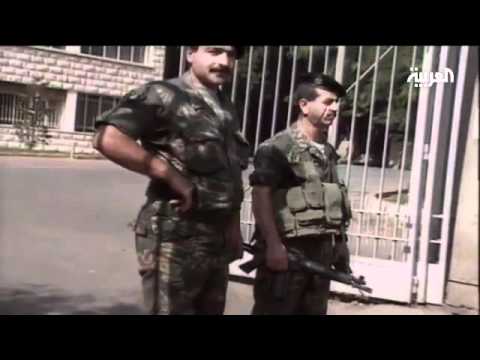
The Lebanese army today has 60,000 soldiers distributed among the army's three main divisions: ground forces, air forces and naval forces. All divisions are parts of different brigades that operate all over Lebanon.
Since Lebanon still adheres to the sectarian system of appointment, the Lebanese army, like other government institutions, abides by the same tradition and has an equitable number of Muslims and Christians.
However, observers say that Christians generally refrain from joining the army which has increased the number of Muslims to 60 percent and decreased the number of Christians to 40 percent as far as soldiers are concerned. The 50-50 percentage is still maintained for officers. It is noteworthy that each religious group is divided according to sects in a way that is proportional to a given sect's percentage in the population.
The Lebanese army presents itself as a national army made up of a variety of sects, but the majority of its personnel comes mainly from Akkar District in the north followed by the Beqaa in the east, the south, Mount Lebanon and Beirut.
Since 1958, events in Lebanon have not only affected society but also the army. In 1958, disputes between loyalists and the opposition took their toll on the army even though it managed to stay intact thanks to the leadership of President Fouad Shehab.
In 1975, which saw the start of the war that ripped through Lebanon for two decades, the army was divided between supporters of officer Ahmed al-Khatib who established the Army of Arab Lebanon and the Lebanese Front under the leadership of Colonel Antoine Barakat. The Lebanese Front then turned against President Suleiman Frangieh in favor of General Abdul Aziz al-Ahdab.
With the signing of the Taif agreement, the army was united again and remains so till the present day.
(Translated from Arabic by Sonia Farid)
Voice: Nadia Mayen
By Ramzi Masri & Awad Alfayyad
Al Arabiya
In 1944, the Lebanese government started negotiations with the French authorities on the status of the army. On August 1, 1945, three weeks after official talks had started between a Lebanese delegation and the French government, the army was placed under the full control of the Lebanese national government. Since that day, every year the Lebanese army has been celebrating the day it was established on August 1.
The Lebanese army today has 60,000 soldiers distributed among the army's three main divisions: ground forces, air forces and naval forces. All divisions are parts of different brigades that operate all over Lebanon.
Since Lebanon still adheres to the sectarian system of appointment, the Lebanese army, like other government institutions, abides by the same tradition and has an equitable number of Muslims and Christians.
However, observers say that Christians generally refrain from joining the army which has increased the number of Muslims to 60 percent and decreased the number of Christians to 40 percent as far as soldiers are concerned. The 50-50 percentage is still maintained for officers. It is noteworthy that each religious group is divided according to sects in a way that is proportional to a given sect's percentage in the population.
The Lebanese army presents itself as a national army made up of a variety of sects, but the majority of its personnel comes mainly from Akkar District in the north followed by the Beqaa in the east, the south, Mount Lebanon and Beirut.
Since 1958, events in Lebanon have not only affected society but also the army. In 1958, disputes between loyalists and the opposition took their toll on the army even though it managed to stay intact thanks to the leadership of President Fouad Shehab.
In 1975, which saw the start of the war that ripped through Lebanon for two decades, the army was divided between supporters of officer Ahmed al-Khatib who established the Army of Arab Lebanon and the Lebanese Front under the leadership of Colonel Antoine Barakat. The Lebanese Front then turned against President Suleiman Frangieh in favor of General Abdul Aziz al-Ahdab.
With the signing of the Taif agreement, the army was united again and remains so till the present day.
(Translated from Arabic by Sonia Farid)
Voice: Nadia Mayen
By Ramzi Masri & Awad Alfayyad
Al Arabiya
Tags and Topics
Browse our collection to discover more content in these categories.
Video Information
Views
10.0K
Likes
33
Duration
2:30
Published
May 24, 2012
User Reviews
4.0
(1) Related Trending Topics
LIVE TRENDSRelated trending topics. Click any trend to explore more videos.
No specific trending topics match this video yet.
Explore All Trends