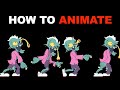
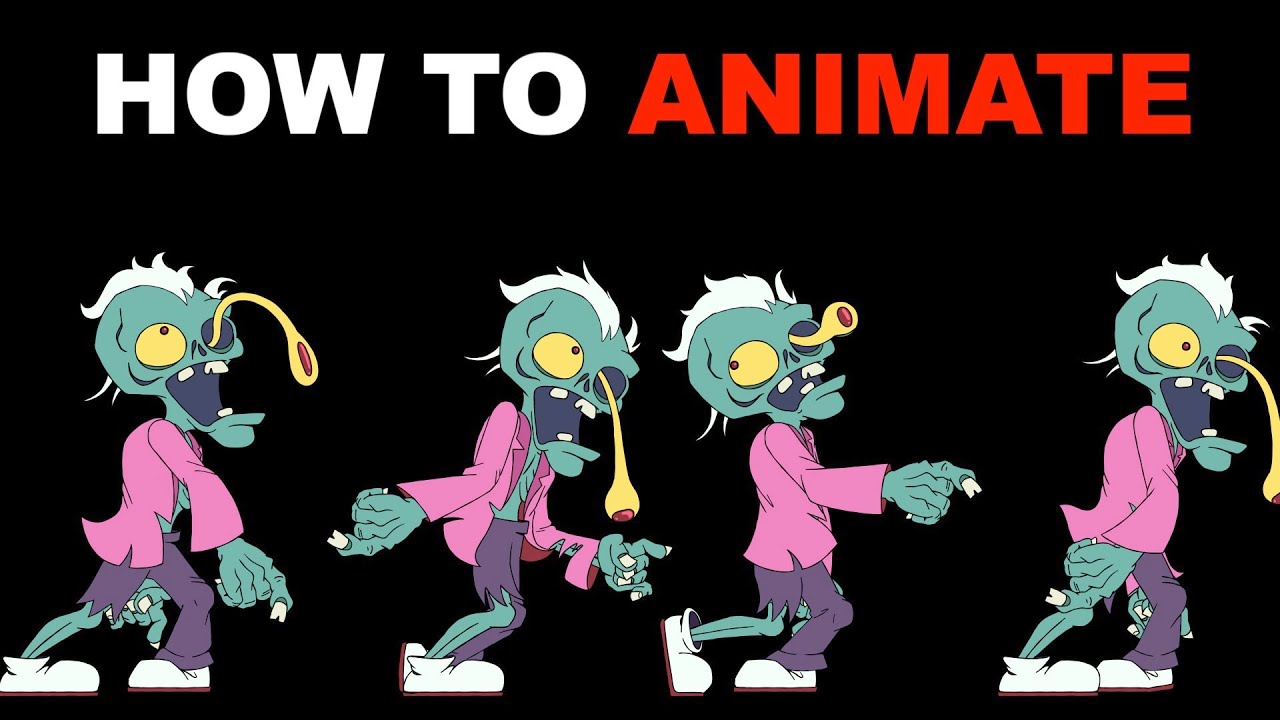
Zombie Walk Cycle Animation Tutorial 🧟♂️
Learn how to animate a zombie walk cycle in this beginner-friendly 2D animation tutorial. Perfect for aspiring animators!
Micah Buzan ANIMATION
3.8K views • Oct 29, 2025
About this video
2D animation tutorial for how to animate a Zombie walk cycle for beginner animators.
► Animation Tips Email List: https://www.micahbuzan.com/animation-course-sign-up/
🎓 2D Animation Courses: https://animatedloop.com/collections/courses
►Patreon: https://www.patreon.com/MicahBuzan
►Subscribe + 🔔 for New Videos: https://www.youtube.com/channel/UCCjxj7bGisHgWB3KZi_lAPA?sub_confirmation=1
TimeStamps
0:00 Intro
0:14 Walk Cycles
1:56 Animating Arms
2:26 Zombie Walk
3:01 Plants vs Zombies
4:08 Rough Animation
7:05 Breaking the Joints
8:19 Cleanup
9:53 Color
11:24 Animation Process Recap
Walks are built from the contact pose, which is the moment the heel of the front foot makes contact with the ground, and the passing position, which is where the front foot is directly underneath the body as the back leg overlaps the body as it starts to come forward.
I always start out drawing the two contact poses first, since this works out the width of the stride.
The next most important poses are the down position, which comes right after the contact pose, catching the weight of the step, and the up position, which comes directly after the passing position as the contact leg straightens and propels the body up.
Contact, Down, Passing, and Up.
These 4 key poses are all that's needed to communicate the idea of a walk. And of course, you simply repeat these 4 poses for the other foot. Now you have 8 key poses in total.
From here, you can add inbetweens to smoothen out the action.
The arms can be thought of as pendulums, with the wrists being pulled by the elbows, which are pulled by the shoulders.
You'll notice a general arc path for these joints.
But how would a Zombie walk?
A Zombie would struggle with its movement, not having the flexibility and coordination of a living person. There's an eerie sense of struggle behind every step a zombie takes.
This belabored walk can have loose and flimsy parts that contrast the stiff joints, such as the head wobbling around on a flimsy neck, and hands frozen in claw shapes that dangle from the arms.
I was inspired by the game Plants VS Zombies, which uses 2D skeletal animation, or character rigs, as can be done in programs like Spine, Moho, and Blender.
I'm animating frame-by-frame in TVPaint, but this method can be done in Blender GreasePencil, ToonBoom, Krita, or any drawing program that has a timeline and layers.
Animation Process:
Rough out the two contact poses. Remember that the arms oppose the legs as a counter balance, so when the left foot is forward, the right arm is back, and vice versa.
From here, draw an armature for the legs and pelvis.
Focusing on the legs first makes sure you're building on a solid foundation for each step.
Draw the contact pose, down pose, passing pose, and the up pose. That's 4 drawings. Now just redraw these 4 poses for the other leg to complete the full stride of both legs. In total, that's 8 poses. Everything else will be inbetweens.
Now we can attach the spine to the pelvis. I'm keeping a kind of loose and flimsy spine, animating with an s shape as done in the wave principle.
Now attach the thorax to the spine. Im using some inner contour lines to show the direction the body will be tilting as it walks.
Then rough in the motion of the skull, which will be dangling and bobbing up and down, hanging onto a weak and flimsy neck.
Draw spheres for where the shoulders will connect to the arms, keeping in mind a curved path of motion.
With the shoulder joints already established, it's just a matter of attaching these arms to the shoulders.
Zombies have parts that are stiff, like a head's that's tilted to the side or a hand that's twisted around the wrong way. Most Zombies really don't have great posture.
It's helpful to make a spacing guide to track the foot that's on the ground. The heal leads the action of the foot. The spacing on the foot is even on a walk cycle - this is to prevent the feet from sliding around.
All parts of the arm wouldn't start or stop moving at the exact same time. The elbow starts to move or break in the opposite direction it was moving, while the wrist continues moving in the original direction, eventually being dragged along by the new direction of the elbow.
A related concept is overlapping action, as applied to the loose clothing of the Zombie. The clothing is dragged along by the body, only changing direction after it's pulled by the body's force.
It can be hard to key pose really loose elements like hair or tails, so I'm drawing the hair straight-ahead. Just like the loose ends of the clothing from before, the hair will have overlapping action and take time to reverse it's motion as it's pulled along by the skull.
The Zombies clothing tells a lot about what kind of person this was in the past. This was a stylish person.The accessories we give to a character can totally change our perception of the character.
#animation #plantsvszombies #animationtutorial
► Animation Tips Email List: https://www.micahbuzan.com/animation-course-sign-up/
🎓 2D Animation Courses: https://animatedloop.com/collections/courses
►Patreon: https://www.patreon.com/MicahBuzan
►Subscribe + 🔔 for New Videos: https://www.youtube.com/channel/UCCjxj7bGisHgWB3KZi_lAPA?sub_confirmation=1
TimeStamps
0:00 Intro
0:14 Walk Cycles
1:56 Animating Arms
2:26 Zombie Walk
3:01 Plants vs Zombies
4:08 Rough Animation
7:05 Breaking the Joints
8:19 Cleanup
9:53 Color
11:24 Animation Process Recap
Walks are built from the contact pose, which is the moment the heel of the front foot makes contact with the ground, and the passing position, which is where the front foot is directly underneath the body as the back leg overlaps the body as it starts to come forward.
I always start out drawing the two contact poses first, since this works out the width of the stride.
The next most important poses are the down position, which comes right after the contact pose, catching the weight of the step, and the up position, which comes directly after the passing position as the contact leg straightens and propels the body up.
Contact, Down, Passing, and Up.
These 4 key poses are all that's needed to communicate the idea of a walk. And of course, you simply repeat these 4 poses for the other foot. Now you have 8 key poses in total.
From here, you can add inbetweens to smoothen out the action.
The arms can be thought of as pendulums, with the wrists being pulled by the elbows, which are pulled by the shoulders.
You'll notice a general arc path for these joints.
But how would a Zombie walk?
A Zombie would struggle with its movement, not having the flexibility and coordination of a living person. There's an eerie sense of struggle behind every step a zombie takes.
This belabored walk can have loose and flimsy parts that contrast the stiff joints, such as the head wobbling around on a flimsy neck, and hands frozen in claw shapes that dangle from the arms.
I was inspired by the game Plants VS Zombies, which uses 2D skeletal animation, or character rigs, as can be done in programs like Spine, Moho, and Blender.
I'm animating frame-by-frame in TVPaint, but this method can be done in Blender GreasePencil, ToonBoom, Krita, or any drawing program that has a timeline and layers.
Animation Process:
Rough out the two contact poses. Remember that the arms oppose the legs as a counter balance, so when the left foot is forward, the right arm is back, and vice versa.
From here, draw an armature for the legs and pelvis.
Focusing on the legs first makes sure you're building on a solid foundation for each step.
Draw the contact pose, down pose, passing pose, and the up pose. That's 4 drawings. Now just redraw these 4 poses for the other leg to complete the full stride of both legs. In total, that's 8 poses. Everything else will be inbetweens.
Now we can attach the spine to the pelvis. I'm keeping a kind of loose and flimsy spine, animating with an s shape as done in the wave principle.
Now attach the thorax to the spine. Im using some inner contour lines to show the direction the body will be tilting as it walks.
Then rough in the motion of the skull, which will be dangling and bobbing up and down, hanging onto a weak and flimsy neck.
Draw spheres for where the shoulders will connect to the arms, keeping in mind a curved path of motion.
With the shoulder joints already established, it's just a matter of attaching these arms to the shoulders.
Zombies have parts that are stiff, like a head's that's tilted to the side or a hand that's twisted around the wrong way. Most Zombies really don't have great posture.
It's helpful to make a spacing guide to track the foot that's on the ground. The heal leads the action of the foot. The spacing on the foot is even on a walk cycle - this is to prevent the feet from sliding around.
All parts of the arm wouldn't start or stop moving at the exact same time. The elbow starts to move or break in the opposite direction it was moving, while the wrist continues moving in the original direction, eventually being dragged along by the new direction of the elbow.
A related concept is overlapping action, as applied to the loose clothing of the Zombie. The clothing is dragged along by the body, only changing direction after it's pulled by the body's force.
It can be hard to key pose really loose elements like hair or tails, so I'm drawing the hair straight-ahead. Just like the loose ends of the clothing from before, the hair will have overlapping action and take time to reverse it's motion as it's pulled along by the skull.
The Zombies clothing tells a lot about what kind of person this was in the past. This was a stylish person.The accessories we give to a character can totally change our perception of the character.
#animation #plantsvszombies #animationtutorial
Tags and Topics
Browse our collection to discover more content in these categories.
Video Information
Views
3.8K
Likes
282
Duration
12:26
Published
Oct 29, 2025
User Reviews
4.6
(3) Related Trending Topics
LIVE TRENDSRelated trending topics. Click any trend to explore more videos.
No specific trending topics match this video yet.
Explore All Trends