How Alan Turing Saved 14 Million Lives During WWII 🧠
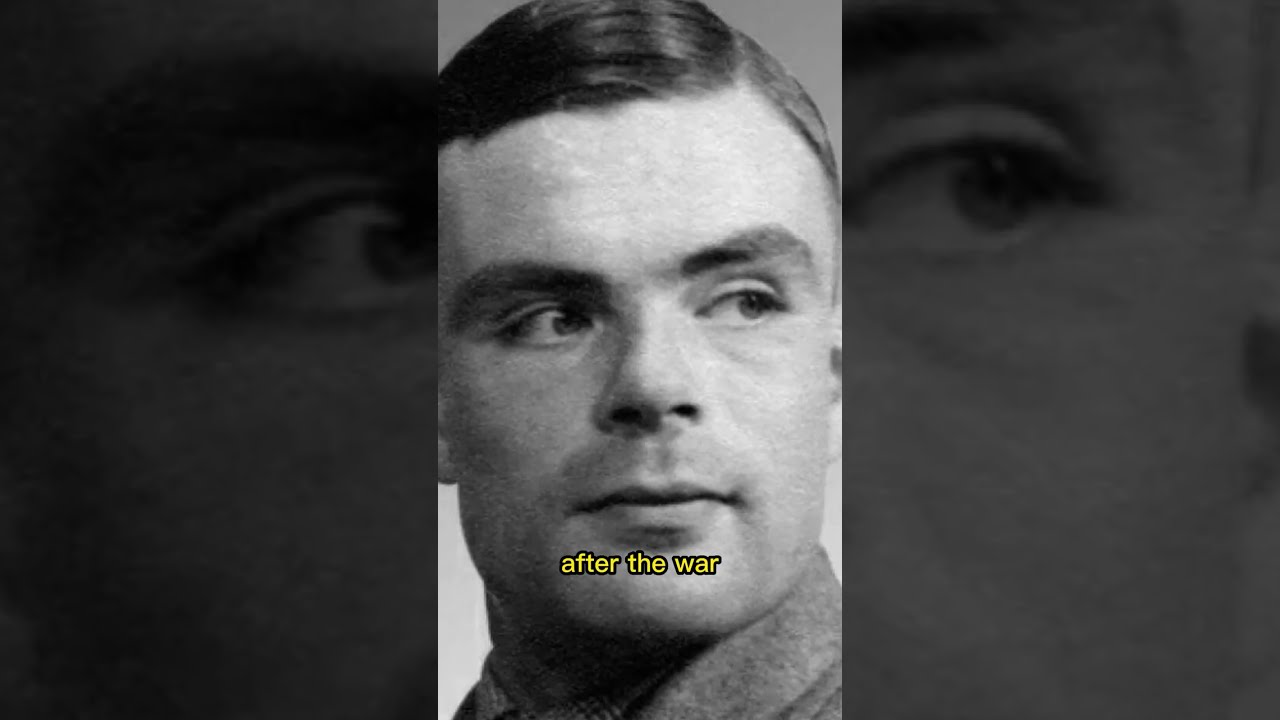
Discover the incredible story of Alan Turing, the mathematician who played a pivotal role in breaking the German Enigma code and saving millions of lives during World War II. Learn more about his groundbreaking work and legacy.

The Handler
15.2K views • Sep 28, 2022
About this video
More Details ⬇️
In 1938, Alan Turing earned his PhD in Mathematics from Princeton University. During World War II, he worked for the Government Code and Cypher School at Bletchley Park, where he was instrumental in breaking German codes and ciphers. He led the section responsible for German naval cryptanalysis and developed techniques to speed up the process of breaking ciphers. His work played a crucial role in several key Allied victories, including the Battle of the Atlantic.
After the war, Turing worked at the National Physical Laboratory, where he designed one of the first stored-program computers, the Automatic Computing Engine (ACE). However, much of his work was kept secret and he was not fully recognized for his contributions during his lifetime.
In 1952, Turing was charged and convicted for h0mosexual acts. He chose to undergo hormone treatment as an alternative to pris0n. He di3d in 1954 from cyanide p0isoning, the cause of which was determined to be s3icide by an inquest, although it has been suggested that it may have been accidental. He received a posthumous pardon in 2013 by Queen Elizabeth II and a 2017 law in the UK retroactively pardoned men c0nvicted under historical legislation that criminalized h0mosexual acts, informally known as the "Alan Turing law."
In 1938, Alan Turing earned his PhD in Mathematics from Princeton University. During World War II, he worked for the Government Code and Cypher School at Bletchley Park, where he was instrumental in breaking German codes and ciphers. He led the section responsible for German naval cryptanalysis and developed techniques to speed up the process of breaking ciphers. His work played a crucial role in several key Allied victories, including the Battle of the Atlantic.
After the war, Turing worked at the National Physical Laboratory, where he designed one of the first stored-program computers, the Automatic Computing Engine (ACE). However, much of his work was kept secret and he was not fully recognized for his contributions during his lifetime.
In 1952, Turing was charged and convicted for h0mosexual acts. He chose to undergo hormone treatment as an alternative to pris0n. He di3d in 1954 from cyanide p0isoning, the cause of which was determined to be s3icide by an inquest, although it has been suggested that it may have been accidental. He received a posthumous pardon in 2013 by Queen Elizabeth II and a 2017 law in the UK retroactively pardoned men c0nvicted under historical legislation that criminalized h0mosexual acts, informally known as the "Alan Turing law."
Tags and Topics
Browse our collection to discover more content in these categories.
Video Information
Views
15.2K
Likes
737
Duration
0:53
Published
Sep 28, 2022
User Reviews
4.6
(3) Related Trending Topics
LIVE TRENDSRelated trending topics. Click any trend to explore more videos.