Gaze Stability Exercises to Treat Dizziness/Vertigo Due to Vestibular Hypofunction
Dizziness or vertigo due to vestibular hypofunction secondary to labryrinthitis, vestibular neuritis, Meniere’s disease, concussion, or some other condition ...

Fauquier ENT
29.5K views • Jun 14, 2024
About this video
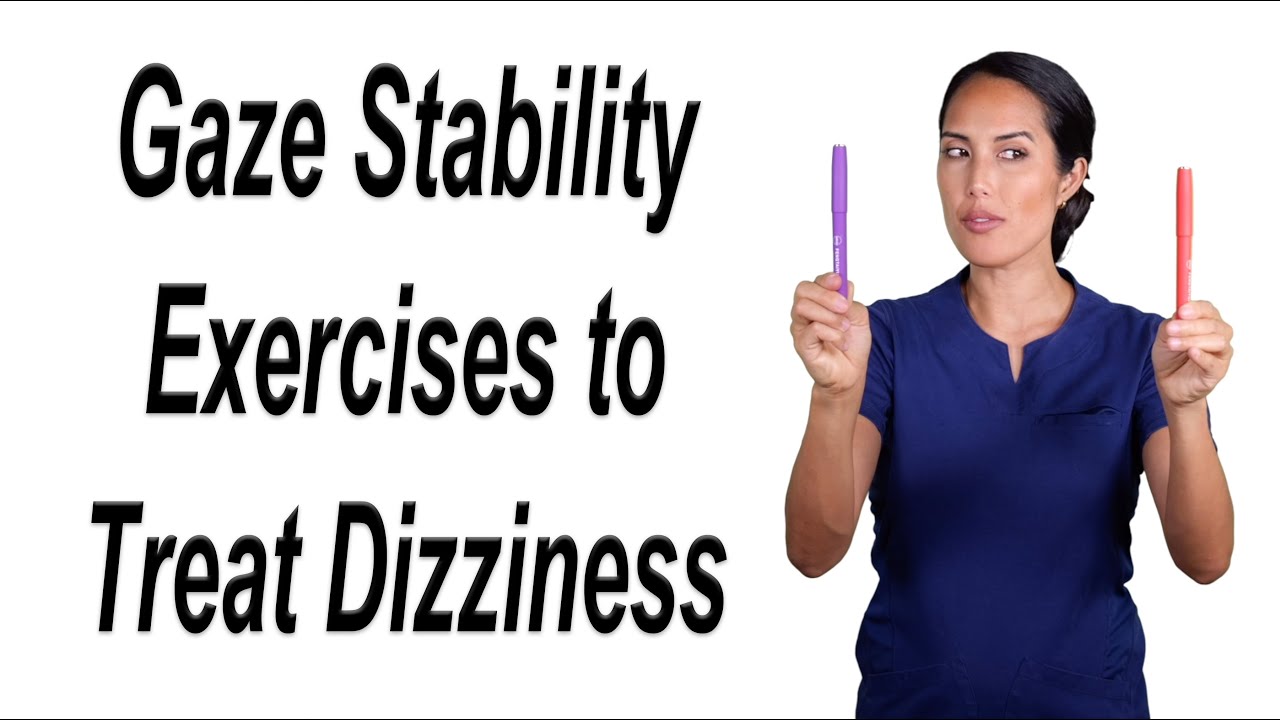
Dizziness or vertigo due to vestibular hypofunction secondary to labryrinthitis, vestibular neuritis, Meniere’s disease, concussion, or some other condition can often lead to chronic dizziness. Such dizziness may persist even if the underlying disease state has resolved leading to a baseline sense of imbalance.
For such patients, the goal is to help the brain recalibrate taking into account the vestibular hypofunction and reset the overall balance system to the new “settings” so to speak.
The main way to accomplish this are gaze stability exercises. Initially, these exercises should all be performed while sitting still. Incidentally, these exercises can also be performed to help recover from a concussion injury.
Perform 3 sets of 30-to-60-second intervals, done 3 to 5 times daily.
Keep in mind when performing these exercises, that the goal is to try and move your head as fast as possible without your vision blurring. The goal is 120-240 head shakes per minute. If you start to get visual blurring, slow the head movements down. But the goal is to always go as fast as possible, right up to the limit when visual blurring occurs.
1) VOR x 1 (0:58)
2) VOR Far (1:55)
3) VOR x 2 (2:34)
4) Gaze Stability Reading (3:12)
5) Imaginary VOR (3:46)
6) Two Target Head Turns (4:32)
7) Difficulty Progression (5:25)
Some improvement is appreciated after about 2 weeks. Complete resolution may take a few months.
You can download a sheet of random letters for the gaze stability reading here:
https://payhip.com/b/eq5lF
Online visual gaze exercises can be performed here: https://www.CheckHearing.org/saccadesTest.php
Vestibular Therapist:
Amy McMillin, PT https://yout.com/@treatdizzinessathome2023
https://www.CustomCareRehab.com
References:
Vestibular Rehabilitation for Peripheral Vestibular Hypofunction: An Updated Clinical Practice Guideline From the Academy of Neurologic Physical Therapy of the American Physical Therapy Association. https://pubmed.ncbi.nlm.nih.gov/34864777/
Actor Credit:
MJ Gordon @marinjayden
Certified Yoga Alliance Instructor (RYP500, RPYT, Yin)
Certified Fitness Instructor NCEP
https://www.MJ-Gordon.com
Video created by Dr. Christopher Chang:
https://www.FauquierENT.net
Still haven’t subscribed to Fauquier ENT on YouTube? ►► https://bit.ly/35SazwA
#vertigotreatment #dizzinessrelief #vestibulartherapy #concussion
For such patients, the goal is to help the brain recalibrate taking into account the vestibular hypofunction and reset the overall balance system to the new “settings” so to speak.
The main way to accomplish this are gaze stability exercises. Initially, these exercises should all be performed while sitting still. Incidentally, these exercises can also be performed to help recover from a concussion injury.
Perform 3 sets of 30-to-60-second intervals, done 3 to 5 times daily.
Keep in mind when performing these exercises, that the goal is to try and move your head as fast as possible without your vision blurring. The goal is 120-240 head shakes per minute. If you start to get visual blurring, slow the head movements down. But the goal is to always go as fast as possible, right up to the limit when visual blurring occurs.
1) VOR x 1 (0:58)
2) VOR Far (1:55)
3) VOR x 2 (2:34)
4) Gaze Stability Reading (3:12)
5) Imaginary VOR (3:46)
6) Two Target Head Turns (4:32)
7) Difficulty Progression (5:25)
Some improvement is appreciated after about 2 weeks. Complete resolution may take a few months.
You can download a sheet of random letters for the gaze stability reading here:
https://payhip.com/b/eq5lF
Online visual gaze exercises can be performed here: https://www.CheckHearing.org/saccadesTest.php
Vestibular Therapist:
Amy McMillin, PT https://yout.com/@treatdizzinessathome2023
https://www.CustomCareRehab.com
References:
Vestibular Rehabilitation for Peripheral Vestibular Hypofunction: An Updated Clinical Practice Guideline From the Academy of Neurologic Physical Therapy of the American Physical Therapy Association. https://pubmed.ncbi.nlm.nih.gov/34864777/
Actor Credit:
MJ Gordon @marinjayden
Certified Yoga Alliance Instructor (RYP500, RPYT, Yin)
Certified Fitness Instructor NCEP
https://www.MJ-Gordon.com
Video created by Dr. Christopher Chang:
https://www.FauquierENT.net
Still haven’t subscribed to Fauquier ENT on YouTube? ►► https://bit.ly/35SazwA
#vertigotreatment #dizzinessrelief #vestibulartherapy #concussion
Tags and Topics
Browse our collection to discover more content in these categories.
Video Information
Views
29.5K
Likes
559
Duration
6:48
Published
Jun 14, 2024
User Reviews
4.6
(5) Related Trending Topics
LIVE TRENDSRelated trending topics. Click any trend to explore more videos.
Trending Now