Four Popular Non-Cryptographic Hash Functions Compete — One Emerges 🧩
Discover how four widely-used non-cryptographic hash functions compare and which one stands out in Adam Harvey's insightful analysis, beyond the usual hashlib algorithms.

PyCon AU
852 views • Aug 4, 2015
About this video
When you say “hash function” in a room full of Python developers, people tend to think of the classics you get in hashlib: MD5, SHA-1, SHA-224, SHA-256, SHA-384, SHA-512, SHA-OHGODPLEASESTOP, and the like — cryptographic hash functions intended for cryptographic uses.
There’s another world out there, though: non-cryptographic hashes. Sometimes you just need to figure out if you’ve already seen a string or structure. Sometimes you need a basic checksum. Sometimes you need a hash that’s just fast and can fit into a 32 bit integer.
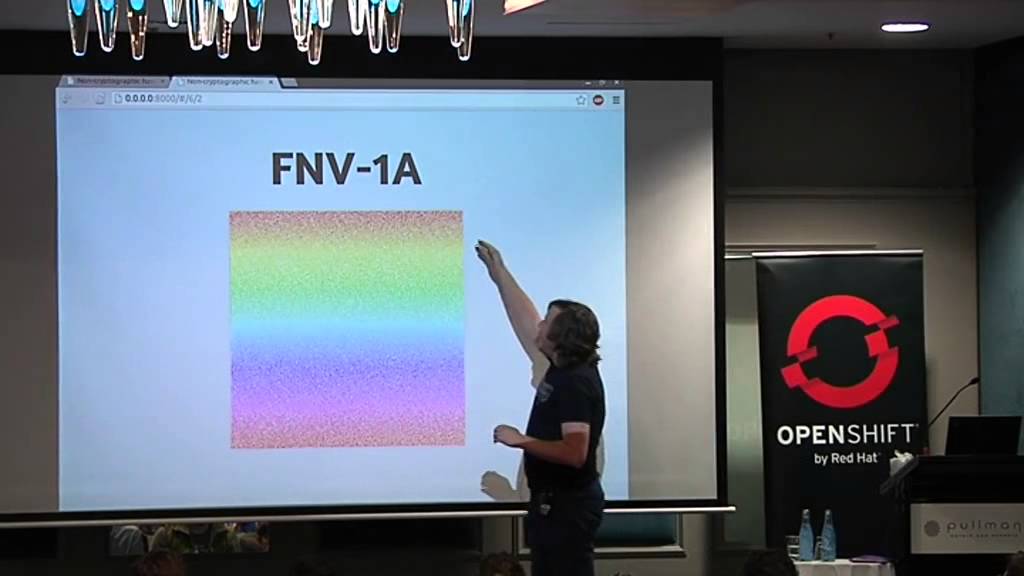
I’ll run through the state of the art in the world of non-cryptographic hashing — what your best options are, how they compare in terms of CPU and memory usage, and how they work. Who takes it? Whose mixing function reigns supreme?
Let’s find out.
* I’m saying “four”, but realistically I’m going to cover as many modern options as I can fit into the time available. Let’s say “four plus two or minus one” in reality.
PyCon Australia is the national conference for users of the Python Programming Language. In 2015, we're heading to Brisbane to bring together students, enthusiasts, and professionals with a love of Python from around Australia, and all around the World.
July 31-August 4, Brisbane, Queensland, Australia
There’s another world out there, though: non-cryptographic hashes. Sometimes you just need to figure out if you’ve already seen a string or structure. Sometimes you need a basic checksum. Sometimes you need a hash that’s just fast and can fit into a 32 bit integer.
I’ll run through the state of the art in the world of non-cryptographic hashing — what your best options are, how they compare in terms of CPU and memory usage, and how they work. Who takes it? Whose mixing function reigns supreme?
Let’s find out.
* I’m saying “four”, but realistically I’m going to cover as many modern options as I can fit into the time available. Let’s say “four plus two or minus one” in reality.
PyCon Australia is the national conference for users of the Python Programming Language. In 2015, we're heading to Brisbane to bring together students, enthusiasts, and professionals with a love of Python from around Australia, and all around the World.
July 31-August 4, Brisbane, Queensland, Australia
Tags and Topics
Browse our collection to discover more content in these categories.
Video Information
Views
852
Likes
8
Duration
32:39
Published
Aug 4, 2015
Related Trending Topics
LIVE TRENDSRelated trending topics. Click any trend to explore more videos.
No specific trending topics match this video yet.
Explore All Trends