Every Weapon in K-POP Demon Hunters Explained (You Won’t Believe the Last One)
The weapons of K-POP Demon Hunters aren’t just stylish props — each one carries deep meaning, hidden lore, and connections to Korean folklore and the Hunters...
K-POP Demon Hunters Explained
4.8K views • Aug 28, 2025
About this video
The weapons of K-POP Demon Hunters aren’t just stylish props — each one carries deep meaning, hidden lore, and connections to Korean folklore and the Hunters’ Creed. In this video, we break down every weapon in K-POP Demon Hunters, revealing their symbolism, cultural significance, and how they tie into the story of Rumi, Zoey, Mira, Celine, and the fight against Gwi-Ma.
✨ What you’ll learn in this video:
The secret meanings behind each weapon design
How the Hunters’ weapons connect to Korean mythology
Why these weapons matter in the battle to protect the HonMoon
Hidden details casual viewers might miss
Whether you’re a hardcore fan of K-POP Demon Hunters or just curious about the lore, this video will give you a complete explanation of the Hunters’ iconic weapons.
The cultural/historical significance/ relevance of HUNTR/X's weapon patterns:
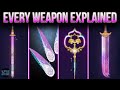
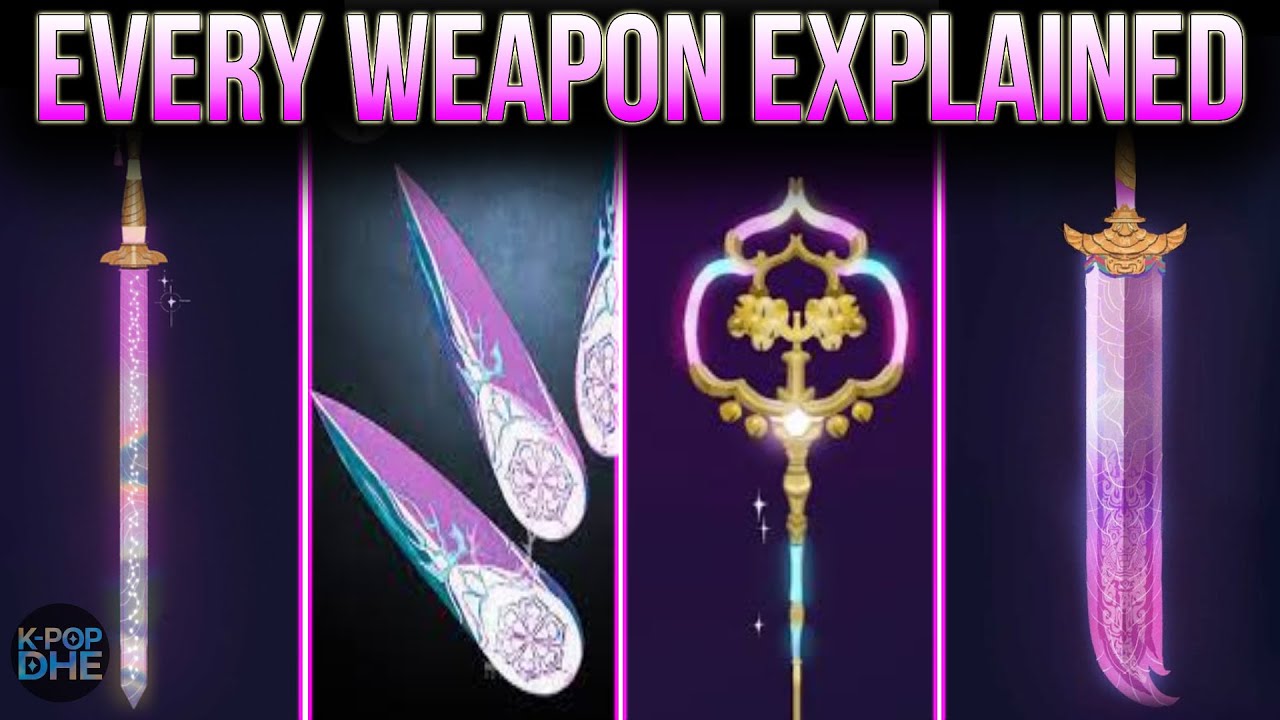
.Rumi’s Saingeom (사인검): Her straight double-edged sword carries glowing inscriptions that echo ancient Korean talismanic writing, like protective bujeok papers used to ward off evil. The angular, rune-like shapes carved into the blade symbolize not just raw power, but the authority of ancestral guardianship. In Korean legend, the Saingeom — literally “Four Tigers Sword” — was believed to repel demons, and the tiger itself is a national symbol of protection. On-screen, the shifting runes shimmer like living light, as if the blade itself is an ongoing prayer against corruption.
.Mira’s Gokdo (곡도): Her weapon is a long, curved polearm with flowing engravings that mimic stylized waves. This is no accident — the Gokdo reflects the Korean peninsula’s martial traditions, where polearms were used both in battlefield formations and in ceremonial rites. The wavelike designs suggest movement, adaptability, and resilience, echoing Mira’s fluid but devastating fighting style. The blue glow that pulses down its length reinforces her connection to the element of flow and balance.
.Zoey’s Shinkal (신칼): Zoey wields ritual throwing knives, each etched with intricate circular patterns that recall shamanic tools used in Korean folk rites. In traditional practice, knives like these weren’t always for combat, but for severing spiritual corruption and “cutting away” bad energy. The film nods to this heritage by having her blades shimmer with lines of light, almost like spirit-thread weaving through them. The tassels tied at their ends, reminiscent of norigae (Korean decorative charms), symbolize luck and divine favor — grounding Zoey’s playful nature with deep ancestral weight.
🔔 Subscribe for twice-weekly videos on K-POP Demon Hunters!
#KPOPDemonHunters #HUNTR/X #Explained #KPOPDHE #MovieExplained
✨ What you’ll learn in this video:
The secret meanings behind each weapon design
How the Hunters’ weapons connect to Korean mythology
Why these weapons matter in the battle to protect the HonMoon
Hidden details casual viewers might miss
Whether you’re a hardcore fan of K-POP Demon Hunters or just curious about the lore, this video will give you a complete explanation of the Hunters’ iconic weapons.
The cultural/historical significance/ relevance of HUNTR/X's weapon patterns:
.Rumi’s Saingeom (사인검): Her straight double-edged sword carries glowing inscriptions that echo ancient Korean talismanic writing, like protective bujeok papers used to ward off evil. The angular, rune-like shapes carved into the blade symbolize not just raw power, but the authority of ancestral guardianship. In Korean legend, the Saingeom — literally “Four Tigers Sword” — was believed to repel demons, and the tiger itself is a national symbol of protection. On-screen, the shifting runes shimmer like living light, as if the blade itself is an ongoing prayer against corruption.
.Mira’s Gokdo (곡도): Her weapon is a long, curved polearm with flowing engravings that mimic stylized waves. This is no accident — the Gokdo reflects the Korean peninsula’s martial traditions, where polearms were used both in battlefield formations and in ceremonial rites. The wavelike designs suggest movement, adaptability, and resilience, echoing Mira’s fluid but devastating fighting style. The blue glow that pulses down its length reinforces her connection to the element of flow and balance.
.Zoey’s Shinkal (신칼): Zoey wields ritual throwing knives, each etched with intricate circular patterns that recall shamanic tools used in Korean folk rites. In traditional practice, knives like these weren’t always for combat, but for severing spiritual corruption and “cutting away” bad energy. The film nods to this heritage by having her blades shimmer with lines of light, almost like spirit-thread weaving through them. The tassels tied at their ends, reminiscent of norigae (Korean decorative charms), symbolize luck and divine favor — grounding Zoey’s playful nature with deep ancestral weight.
🔔 Subscribe for twice-weekly videos on K-POP Demon Hunters!
#KPOPDemonHunters #HUNTR/X #Explained #KPOPDHE #MovieExplained
Tags and Topics
Browse our collection to discover more content in these categories.
Video Information
Views
4.8K
Likes
93
Duration
9:11
Published
Aug 28, 2025
User Reviews
4.6
(4) Related Trending Topics
LIVE TRENDSRelated trending topics. Click any trend to explore more videos.
No specific trending topics match this video yet.
Explore All Trends