Ep 6/6: Exploring Computational Complexity with Python & D-Wave 🚀
Discover how to analyze problem-solving times using classical and quantum computing in this final episode. Learn about complexity theory and practical approaches to tackling complex logic problems with Python and D-Wave.

Mastercard News
166 views • Jun 23, 2022
About this video
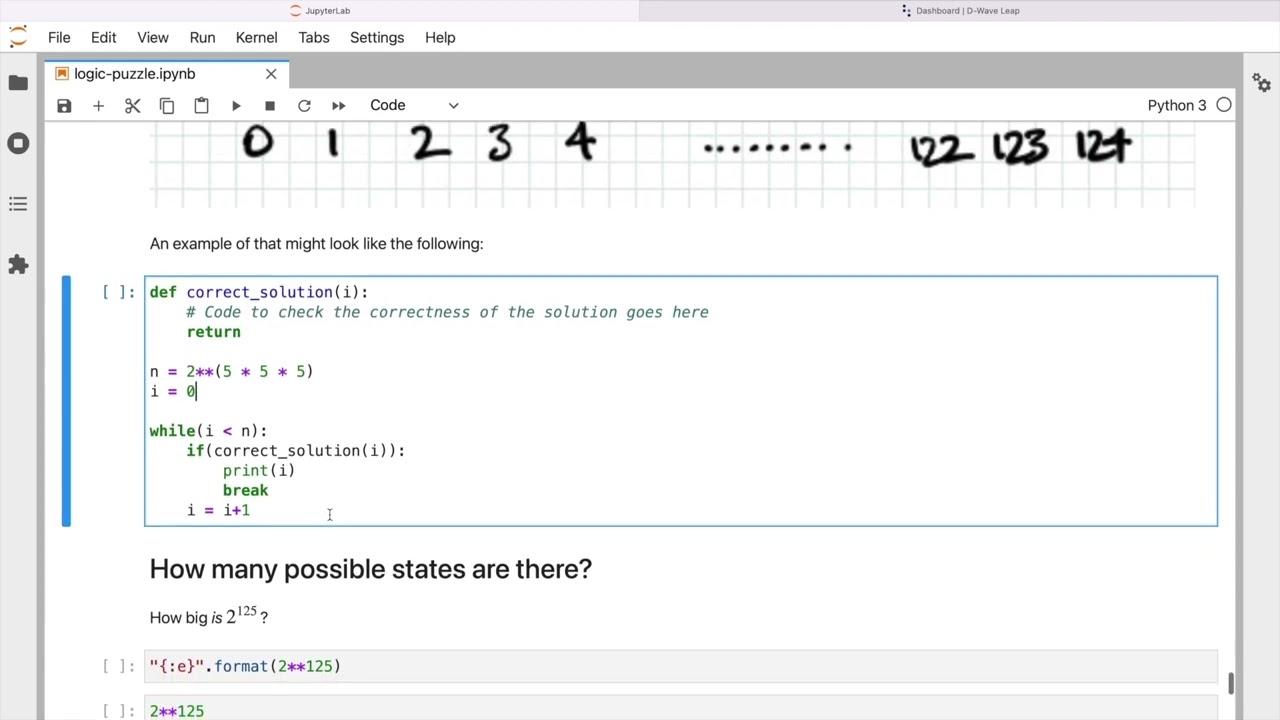
In this episode we will talk about complexity theory and how you can estimate how long it takes to solve certain problems using traditional classical computers. Then, using the logic puzzle from the previous episodes, we’ll calculate how long it would take to solve. It will highlight how we need to investigate alternative approaches, such as Quantum Computing, in order to solve these exponentially complex problems.
Quantum Computing is the next generation of computing technology, that relies on the properties of quantum physics or quantum mechanics to perform computation. Quantum Computing traces its origins to Richard Feynman, one of the towering geniuses of 20th century physics, who postulated in the 1980’s that it would be possible to harness quantum mechanics to build practical quantum computers. Since then, the field of quantum computing has evolved, with both the theory of what one could usefully do with quantum algorithms, as well as with the development of practical quantum computers. We have seen well established, scaled tech companies such as IBM, Google, Microsoft, Fujitsu and others enter the field, as well as the emergence of specialized start-ups such as D-Wave, IonQ, ColdQuanta and many others.
In technical terms, the promise of Quantum Computing is that it will allow us to solve a certain class of problems in a linear amount of time (linear with respect to the size of the input), that would take a traditional (or classical) computer a polynomial or even exponential amount of time. What this translates to in simple language is that Quantum Computing will help us solve the most difficult forms of computation that we face, across a wide range of areas, such as pharmaceuticals, finance, aerospace and climate.
Find out more about Quantum Computing and other initiatives across Mastercard on our Mastercard Developers portal here: https://developer.mastercard.com/blog
Videos in this series:
Ep 1: Introduction to how to solve complex logic problems with Python and D-Wave
Ep 2: What is Quantum Computing
Ep 3: Solving a logic puzzle
Ep 4: Coding the logic puzzle
Ep 5: Solving on a real Quantum Computer
Ep 6: A detour into computational complexity
View the full “Quantum Computing Series” playlist here: https://www.youtube.com/playlist?list=PLIfOLx3HAATfYHY7d3tObLoyIydUu8Js6
Quantum Computing is the next generation of computing technology, that relies on the properties of quantum physics or quantum mechanics to perform computation. Quantum Computing traces its origins to Richard Feynman, one of the towering geniuses of 20th century physics, who postulated in the 1980’s that it would be possible to harness quantum mechanics to build practical quantum computers. Since then, the field of quantum computing has evolved, with both the theory of what one could usefully do with quantum algorithms, as well as with the development of practical quantum computers. We have seen well established, scaled tech companies such as IBM, Google, Microsoft, Fujitsu and others enter the field, as well as the emergence of specialized start-ups such as D-Wave, IonQ, ColdQuanta and many others.
In technical terms, the promise of Quantum Computing is that it will allow us to solve a certain class of problems in a linear amount of time (linear with respect to the size of the input), that would take a traditional (or classical) computer a polynomial or even exponential amount of time. What this translates to in simple language is that Quantum Computing will help us solve the most difficult forms of computation that we face, across a wide range of areas, such as pharmaceuticals, finance, aerospace and climate.
Find out more about Quantum Computing and other initiatives across Mastercard on our Mastercard Developers portal here: https://developer.mastercard.com/blog
Videos in this series:
Ep 1: Introduction to how to solve complex logic problems with Python and D-Wave
Ep 2: What is Quantum Computing
Ep 3: Solving a logic puzzle
Ep 4: Coding the logic puzzle
Ep 5: Solving on a real Quantum Computer
Ep 6: A detour into computational complexity
View the full “Quantum Computing Series” playlist here: https://www.youtube.com/playlist?list=PLIfOLx3HAATfYHY7d3tObLoyIydUu8Js6
Video Information
Views
166
Likes
4
Duration
6:47
Published
Jun 23, 2022
Related Trending Topics
LIVE TRENDSRelated trending topics. Click any trend to explore more videos.
No specific trending topics match this video yet.
Explore All Trends