End-to-End Encryption Explained: The Key to Secure Information 🛡️
Discover how end-to-end encryption protects your data with advanced cryptography. Learn its importance in safeguarding sensitive information for #UPSC2024 and beyond.

World Map Forum
1 views • Jan 29, 2024
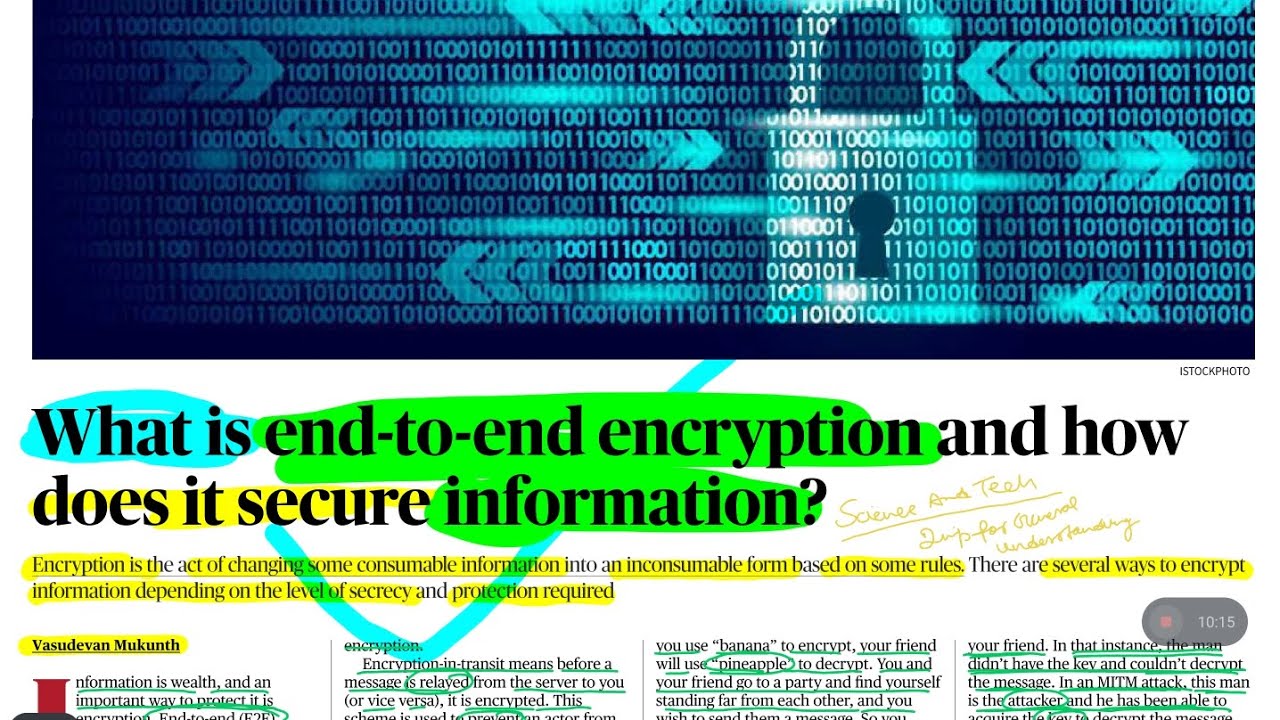
About this video
End-to-End Encryption: Safeguarding Information with Robust Security
End-to-end encryption is a sophisticated cryptographic technique that ensures the privacy and security of digital communication. In this advanced security paradigm, data is encrypted on the sender's device and remains encrypted until it reaches the intended recipient. The encryption keys, crucial for decoding the information, are exclusively held by the communicating parties, offering an impenetrable shield against unauthorized access.
How does it work?
1. **Initiation of Communication:** When a user initiates a message, file, or any form of data transfer, the application or platform generates a unique encryption key.
2. **Encryption of Data:** The generated key is then used to encrypt the data, converting it into an unintelligible format. This process occurs on the sender's device, ensuring the data's security from the outset.
3. **Secure Transmission:** The encrypted data is transmitted across networks, including the internet, making interception by third parties futile. Even if intercepted, the data remains unreadable without the decryption key.
4. **Recipient Decryption:** Upon reaching the recipient's device, the encrypted data is decrypted using the corresponding key, restoring it to its original form.
Key aspects and advantages:
- **User Control:** End-to-end encryption empowers users with control over their data, limiting access solely to the communicating parties.
- **Protection Against Interception:** The encryption methodology thwarts eavesdropping attempts, providing a robust defense against cyber threats.
- **Privacy Assurance:** With end-to-end encryption, service providers and intermediaries have no access to the decrypted content, ensuring user privacy.
- **Data Integrity:** Beyond confidentiality, this approach guarantees the integrity of the transmitted data, as any tampering would render the content undecipherable.
- **Wide Applicability:** End-to-end encryption is widely employed in various applications, including messaging platforms, email services, and file-sharing systems.
While end-to-end encryption significantly enhances digital security, users must remain vigilant about the security of their devices and safeguarding their encryption keys. As technology evolves, the continued implementation and refinement of encryption protocols play a pivotal role in fostering a secure digital landscape.
End-to-end encryption is a sophisticated cryptographic technique that ensures the privacy and security of digital communication. In this advanced security paradigm, data is encrypted on the sender's device and remains encrypted until it reaches the intended recipient. The encryption keys, crucial for decoding the information, are exclusively held by the communicating parties, offering an impenetrable shield against unauthorized access.
How does it work?
1. **Initiation of Communication:** When a user initiates a message, file, or any form of data transfer, the application or platform generates a unique encryption key.
2. **Encryption of Data:** The generated key is then used to encrypt the data, converting it into an unintelligible format. This process occurs on the sender's device, ensuring the data's security from the outset.
3. **Secure Transmission:** The encrypted data is transmitted across networks, including the internet, making interception by third parties futile. Even if intercepted, the data remains unreadable without the decryption key.
4. **Recipient Decryption:** Upon reaching the recipient's device, the encrypted data is decrypted using the corresponding key, restoring it to its original form.
Key aspects and advantages:
- **User Control:** End-to-end encryption empowers users with control over their data, limiting access solely to the communicating parties.
- **Protection Against Interception:** The encryption methodology thwarts eavesdropping attempts, providing a robust defense against cyber threats.
- **Privacy Assurance:** With end-to-end encryption, service providers and intermediaries have no access to the decrypted content, ensuring user privacy.
- **Data Integrity:** Beyond confidentiality, this approach guarantees the integrity of the transmitted data, as any tampering would render the content undecipherable.
- **Wide Applicability:** End-to-end encryption is widely employed in various applications, including messaging platforms, email services, and file-sharing systems.
While end-to-end encryption significantly enhances digital security, users must remain vigilant about the security of their devices and safeguarding their encryption keys. As technology evolves, the continued implementation and refinement of encryption protocols play a pivotal role in fostering a secure digital landscape.
Video Information
Views
1
Duration
11:17
Published
Jan 29, 2024
Related Trending Topics
LIVE TRENDSRelated trending topics. Click any trend to explore more videos.
No specific trending topics match this video yet.
Explore All Trends