Driving Around Downtown Quincy, IL in 4k Video
Filmed on Friday, March 17, 2023, I drive around downtown Quincy, Illinois to see what's happening. Quincy, known as Illinois's "Gem City", is a city in and...

Explore USA Cities
7.7K views • Apr 10, 2023
About this video
Filmed on Friday, March 17, 2023, I drive around downtown Quincy, Illinois to see what's happening.
Quincy, known as Illinois's "Gem City", is a city in and the county seat of Adams County, Illinois, United States, located on the Mississippi River.
The 2020 census counted a population of 39,463 in the city itself, down from 40,633 in 2010.
During the 19th century, Quincy was a thriving transportation center as riverboats and rail service linked the city to many destinations west and along the river. It was Illinois' second-largest city, surpassing Peoria in 1870.
After the War of 1812, the American government granted military tracts to veterans as a means to help populate the West. Peter Flinn, having acquired the land from veteran Mark McGowan for his military service in 1819, ended up selling 160 acres of land acquisitions to Moravia, New York native John Wood for $60. John Wood later founded Quincy, which at the time was coined Bluffs, Illinois.
The matter of slavery was a major religious and social issue in Quincy's early years. The Illinois city's location, separated only by the Mississippi River from the slave state of Missouri, which was a hotbed of political controversy on the issue, made Quincy itself a hotbed of political controversy on slavery.
Richard Eells, who was a staunch abolitionist, built his home in Quincy in 1835 and sheltered runaway slaves on their way to Chicago. His home became a major stop on the Underground Railroad. The divide over slavery climaxed in 1858, when Quincy hosted the sixth Senatorial debate by U.S. Senator Stephen A. Douglas and his challenger, Abraham Lincoln. With a crowd of 12,000 in attendance, Quincy was the largest community at which Lincoln and Douglas debated.
In 1860, a group of Franciscan friars founded the St. Francis Solanus College, which later developed into Quincy University.
Throughout the 19th century, Quincy had grown from a backwater hamlet along the Mississippi River to become one of the state's most important cities and ports. Activity from rail and steamboat continued to flourish and Quincy benefited from the increased traffic. It was during the early decades of the 20th century that many of the city's historic buildings in the Downtown Quincy Historic District were constructed, including the city's first skyscraper, the Western Catholic Union Building, in 1925.
The increasing presence of the automobile led Quincy to consider alternatives to Mississippi River crossings. Prior to the automobile, the most common means of crossing the near-mile wide river was by boat or ferry. In 1928, construction began on the Memorial Bridge which was a two-lane truss toll bridge; it opened in May 1930.
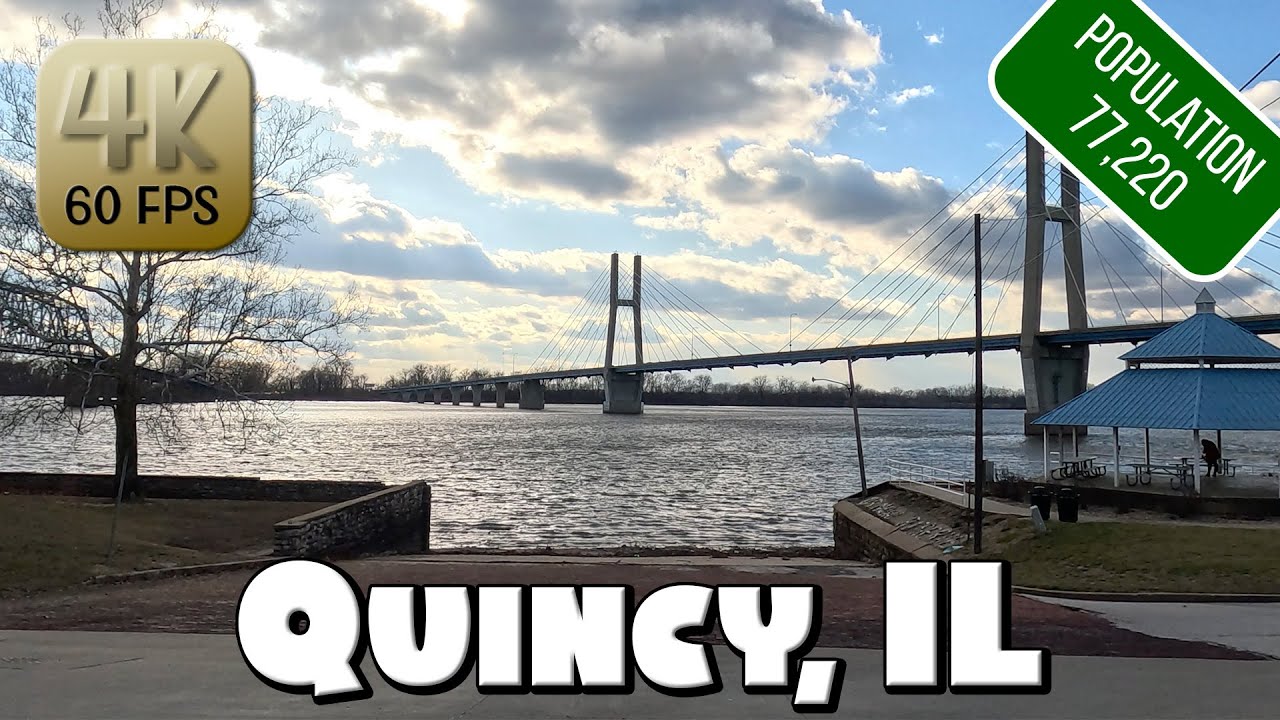
In 1987, the cable-stayed Bayview Bridge was constructed with the intent of alleviating traffic on the aging Memorial Bridge. Today, both bridges complement each other by carrying westbound (Bayview) and eastbound (Memorial) traffic. Although the lighting was originally intended for the Bayview Bridge during its construction phase, the actual installation of lights didn't occur until 2015.
During the Mississippi River flood of 1993, riverside businesses and industries suffered extensive damage when the river crested at a record 32.2 feet, 15 feet above flood stage.
On November 19, 1996, the United Express Flight 5925 collided on landing at Quincy with another Beechcraft, a private King Air, that was taking off from an intersecting runway. All occupants of both planes, twelve on board the 5925 and two on board the King Air, were killed as a result.
A flood in June 2008 submerged much of Quincy's riverfront and low-lying regions not protected by the bluffs. Record Mississippi River levels occurred on June 22, 2008. The Red Cross accepted donations for Quincy and other communities in Adams County, as natural disaster funds were depleted in 2010.
Quincy has been twice recognized as an All-America City and is a participant in the Tree City USA program. In the fall of 2010, Forbes Magazine listed Quincy as the eighth "Best Small City To Raise A Family."
Like most Mississippi river cities, blues music has made a lasting impression upon the city and every year the "Blues in the District" concert series brings the music to Washington Park.
As of the 2020 census there were 39,463 people, 17,226 households, and 9,940 families residing in the city. The racial makeup of the city was 86.3% White, 5.87% African American, 0.18% Native American, 1.01% Asian, 0.08% Pacific Islander, 0.95% from other races, and 5.59% from two or more races. Hispanic or Latino of any race were 2.33% of the population.
The median income for a household in the city was $46,935, and the median income for a family was $64,891. About 11.4% of families and 15.3% of the population were below the poverty line, including 22.7% of those under age 18 and 12.7% of those age 65 or over. #driving #travel #drivingtour
Quincy, known as Illinois's "Gem City", is a city in and the county seat of Adams County, Illinois, United States, located on the Mississippi River.
The 2020 census counted a population of 39,463 in the city itself, down from 40,633 in 2010.
During the 19th century, Quincy was a thriving transportation center as riverboats and rail service linked the city to many destinations west and along the river. It was Illinois' second-largest city, surpassing Peoria in 1870.
After the War of 1812, the American government granted military tracts to veterans as a means to help populate the West. Peter Flinn, having acquired the land from veteran Mark McGowan for his military service in 1819, ended up selling 160 acres of land acquisitions to Moravia, New York native John Wood for $60. John Wood later founded Quincy, which at the time was coined Bluffs, Illinois.
The matter of slavery was a major religious and social issue in Quincy's early years. The Illinois city's location, separated only by the Mississippi River from the slave state of Missouri, which was a hotbed of political controversy on the issue, made Quincy itself a hotbed of political controversy on slavery.
Richard Eells, who was a staunch abolitionist, built his home in Quincy in 1835 and sheltered runaway slaves on their way to Chicago. His home became a major stop on the Underground Railroad. The divide over slavery climaxed in 1858, when Quincy hosted the sixth Senatorial debate by U.S. Senator Stephen A. Douglas and his challenger, Abraham Lincoln. With a crowd of 12,000 in attendance, Quincy was the largest community at which Lincoln and Douglas debated.
In 1860, a group of Franciscan friars founded the St. Francis Solanus College, which later developed into Quincy University.
Throughout the 19th century, Quincy had grown from a backwater hamlet along the Mississippi River to become one of the state's most important cities and ports. Activity from rail and steamboat continued to flourish and Quincy benefited from the increased traffic. It was during the early decades of the 20th century that many of the city's historic buildings in the Downtown Quincy Historic District were constructed, including the city's first skyscraper, the Western Catholic Union Building, in 1925.
The increasing presence of the automobile led Quincy to consider alternatives to Mississippi River crossings. Prior to the automobile, the most common means of crossing the near-mile wide river was by boat or ferry. In 1928, construction began on the Memorial Bridge which was a two-lane truss toll bridge; it opened in May 1930.
In 1987, the cable-stayed Bayview Bridge was constructed with the intent of alleviating traffic on the aging Memorial Bridge. Today, both bridges complement each other by carrying westbound (Bayview) and eastbound (Memorial) traffic. Although the lighting was originally intended for the Bayview Bridge during its construction phase, the actual installation of lights didn't occur until 2015.
During the Mississippi River flood of 1993, riverside businesses and industries suffered extensive damage when the river crested at a record 32.2 feet, 15 feet above flood stage.
On November 19, 1996, the United Express Flight 5925 collided on landing at Quincy with another Beechcraft, a private King Air, that was taking off from an intersecting runway. All occupants of both planes, twelve on board the 5925 and two on board the King Air, were killed as a result.
A flood in June 2008 submerged much of Quincy's riverfront and low-lying regions not protected by the bluffs. Record Mississippi River levels occurred on June 22, 2008. The Red Cross accepted donations for Quincy and other communities in Adams County, as natural disaster funds were depleted in 2010.
Quincy has been twice recognized as an All-America City and is a participant in the Tree City USA program. In the fall of 2010, Forbes Magazine listed Quincy as the eighth "Best Small City To Raise A Family."
Like most Mississippi river cities, blues music has made a lasting impression upon the city and every year the "Blues in the District" concert series brings the music to Washington Park.
As of the 2020 census there were 39,463 people, 17,226 households, and 9,940 families residing in the city. The racial makeup of the city was 86.3% White, 5.87% African American, 0.18% Native American, 1.01% Asian, 0.08% Pacific Islander, 0.95% from other races, and 5.59% from two or more races. Hispanic or Latino of any race were 2.33% of the population.
The median income for a household in the city was $46,935, and the median income for a family was $64,891. About 11.4% of families and 15.3% of the population were below the poverty line, including 22.7% of those under age 18 and 12.7% of those age 65 or over. #driving #travel #drivingtour
Video Information
Views
7.7K
Likes
110
Duration
16:29
Published
Apr 10, 2023
User Reviews
4.5
(1) Related Trending Topics
LIVE TRENDSRelated trending topics. Click any trend to explore more videos.
Trending Now