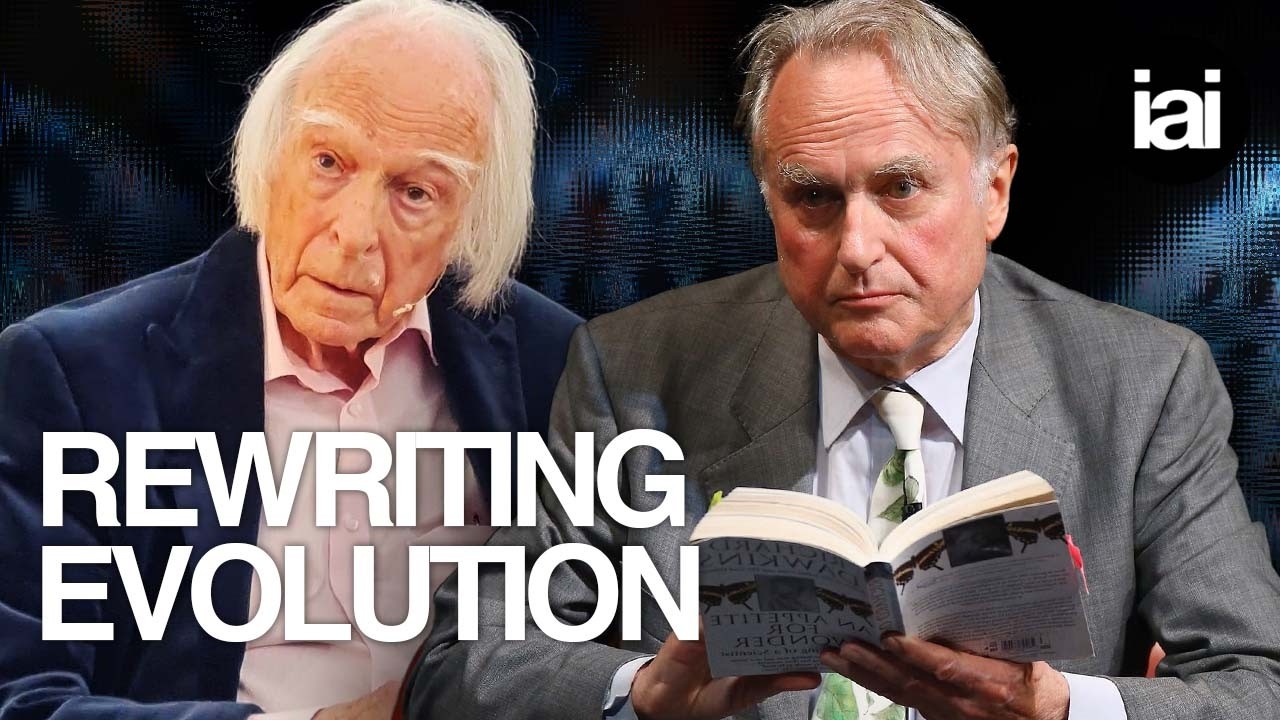
Did we get evolution completely wrong? | Richard Dawkins vs Denis Noble
Richard Dawkins and Denis Noble discuss Darwinian evolution, selfish genes, and whether animals are active agents or merely biological machines. Can organis...
The Institute of Art and Ideas
331.0K views • Nov 6, 2025
About this video
Richard Dawkins and Denis Noble discuss Darwinian evolution, selfish genes, and whether animals are active agents or merely biological machines.
Can organisms change their DNA?
With a free trial, you can watch the full debate NOW at https://iai.tv/video/the-gene-machine?utm_source=YouTube&utm_medium=description
Dawkins' Selfish Gene has been hugely influential, both within evolutionary biology and in the wider public sphere. It's a beautifully simple story: genes and not organisms drive evolutionary change. But critics argue the story is simplistic. The effect of a gene is not always the same and as is dependent on its host and the cell environment. DNA does not come neatly divided into individual genes. And in 2010 the renowned biologist EO Wilson and others revived the case for group selection. Some are now arguing that the Selfish Gene paradigm is holding back medical research.
Is it time to move on and acknowledge that Dawkins' theory is not the whole story? Might his theory be making a fundamental mistake in reducing humans to machines? Or does the Selfish Gene remain a remarkably powerful and accurate account of who we are?
#biology #science #evolution #darwin #naturalselection #genetics
Richard Dawkins is a British evolutionary biologist and author. He is an emeritus fellow of New College, Oxford and was Professor for Public Understanding of Science at the University of Oxford from 1995 to 2008. An atheist, he is well known for his criticism of creationism and intelligent design.
One of the founders of the field of systems biology, Denis Noble is an Emeritus professor of cardiovascular physiology at the University of Oxford. He was the first to develop computer models of the heart in 1960. His books include the first popular science book on the subject, The Music of Life (OUP, 2006), which has been translated into 12 languages. Central to Noble's work is that living organisms are "more like a piece of music than a genetically determined machine", a challenging metaphor in the field for the field of biology. Amongst many awards and honours, he became a founding Fellow of the Academy of Medical Sciences and was awarded a CBE in 1998. In 2022, he was elected a Fellow of The Linnean Society.
Hosted by Güneş Taylor.
The Institute of Art and Ideas features videos and articles from cutting edge thinkers discussing the ideas that are shaping the world, from metaphysics to string theory, technology to democracy, aesthetics to genetics. Subscribe today! https://iai.tv/subscribe?utm_source=YouTube&utm_medium=description&utm_campaign=https://iai.tv/video/the-gene-machine
00:00 Organisms choose which of their genes will survive
00:37 Can the body change the genome?
03:58 The remarkable process of DNA selection
06:58 Problems that arise with Lamarckian evolution
08:53 Germ lines, gene mutation, and the pandemic
10:21 How many generations of mutation before a gene is assimilated into the genome?
15:05 What modern microscopes reveal about natural selection
17:15 Understanding Lamarck and Darwin
18:45 What gets passed on through generations?
20:43 Starvation effects, individual mutations, and changes in the gene pool
For debates and talks: https://iai.tv
For articles: https://iai.tv/articles
For courses: https://iai.tv/iai-academy/courses
Can organisms change their DNA?
With a free trial, you can watch the full debate NOW at https://iai.tv/video/the-gene-machine?utm_source=YouTube&utm_medium=description
Dawkins' Selfish Gene has been hugely influential, both within evolutionary biology and in the wider public sphere. It's a beautifully simple story: genes and not organisms drive evolutionary change. But critics argue the story is simplistic. The effect of a gene is not always the same and as is dependent on its host and the cell environment. DNA does not come neatly divided into individual genes. And in 2010 the renowned biologist EO Wilson and others revived the case for group selection. Some are now arguing that the Selfish Gene paradigm is holding back medical research.
Is it time to move on and acknowledge that Dawkins' theory is not the whole story? Might his theory be making a fundamental mistake in reducing humans to machines? Or does the Selfish Gene remain a remarkably powerful and accurate account of who we are?
#biology #science #evolution #darwin #naturalselection #genetics
Richard Dawkins is a British evolutionary biologist and author. He is an emeritus fellow of New College, Oxford and was Professor for Public Understanding of Science at the University of Oxford from 1995 to 2008. An atheist, he is well known for his criticism of creationism and intelligent design.
One of the founders of the field of systems biology, Denis Noble is an Emeritus professor of cardiovascular physiology at the University of Oxford. He was the first to develop computer models of the heart in 1960. His books include the first popular science book on the subject, The Music of Life (OUP, 2006), which has been translated into 12 languages. Central to Noble's work is that living organisms are "more like a piece of music than a genetically determined machine", a challenging metaphor in the field for the field of biology. Amongst many awards and honours, he became a founding Fellow of the Academy of Medical Sciences and was awarded a CBE in 1998. In 2022, he was elected a Fellow of The Linnean Society.
Hosted by Güneş Taylor.
The Institute of Art and Ideas features videos and articles from cutting edge thinkers discussing the ideas that are shaping the world, from metaphysics to string theory, technology to democracy, aesthetics to genetics. Subscribe today! https://iai.tv/subscribe?utm_source=YouTube&utm_medium=description&utm_campaign=https://iai.tv/video/the-gene-machine
00:00 Organisms choose which of their genes will survive
00:37 Can the body change the genome?
03:58 The remarkable process of DNA selection
06:58 Problems that arise with Lamarckian evolution
08:53 Germ lines, gene mutation, and the pandemic
10:21 How many generations of mutation before a gene is assimilated into the genome?
15:05 What modern microscopes reveal about natural selection
17:15 Understanding Lamarck and Darwin
18:45 What gets passed on through generations?
20:43 Starvation effects, individual mutations, and changes in the gene pool
For debates and talks: https://iai.tv
For articles: https://iai.tv/articles
For courses: https://iai.tv/iai-academy/courses
Tags and Topics
Browse our collection to discover more content in these categories.
Video Information
Views
331.0K
Likes
4.8K
Duration
24:39
Published
Nov 6, 2025
User Reviews
4.7
(66) Related Trending Topics
LIVE TRENDSRelated trending topics. Click any trend to explore more videos.
No specific trending topics match this video yet.
Explore All Trends