Decoding Simple Substitution Ciphers: An Algorithmic Approach 🔍
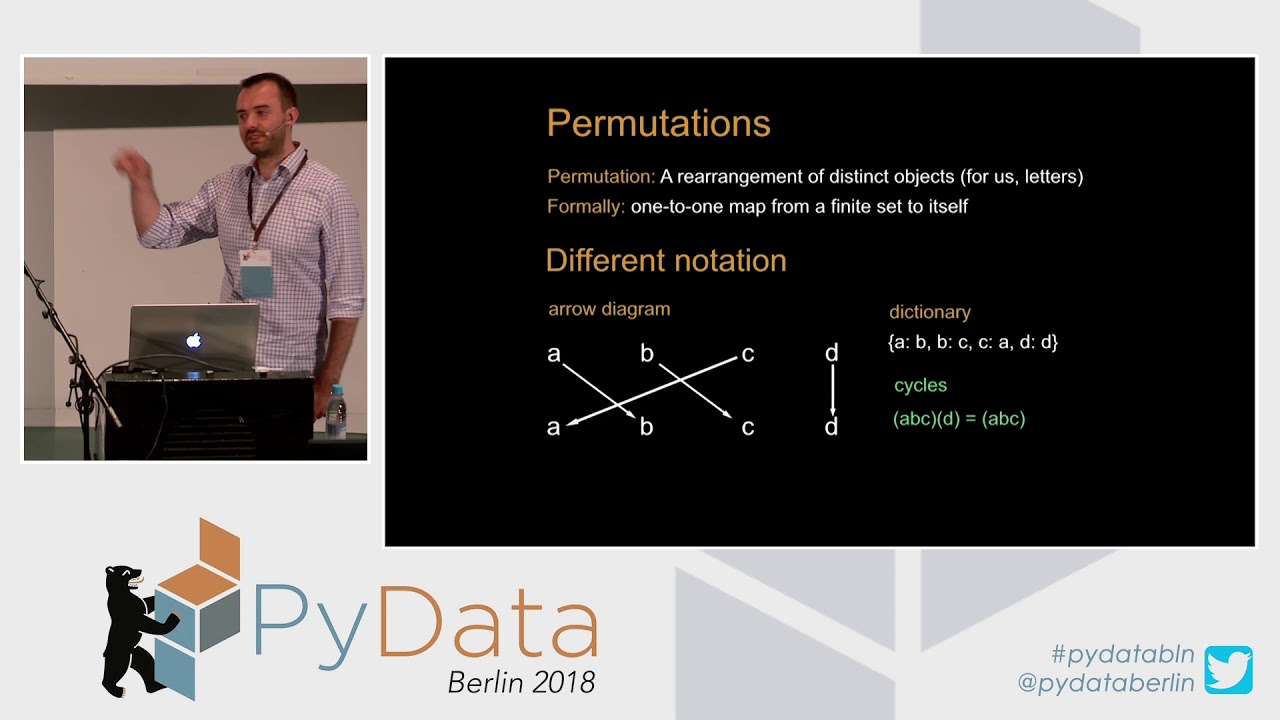
Discover how to systematically solve basic substitution ciphers with algorithms, unlocking historical texts that are now unreadable due to lost languages or scripts. Presented by Stephen Enright Ward at PyData Berlin 2018.
PyData
3.4K views • Aug 1, 2018
About this video
PyData Berlin 2018
A historical text may now be unreadable, because its language is unknown, or its script forgotten (or both), or because it was deliberately enciphered. Deciphering needs two steps: Identify the language, then map the unknown script to a familiar one. I’ll present an algorithm to solve a cartoon version of this problem, where the language is known, and the cipher is alphabet rearrangement.
Slides: https://www.slideshare.net/PyData/solving-very-simple-substitution-ciphers-algorithmically-stephen-enrightward
---
www.pydata.org
PyData is an educational program of NumFOCUS, a 501(c)3 non-profit organization in the United States. PyData provides a forum for the international community of users and developers of data analysis tools to share ideas and learn from each other. The global PyData network promotes discussion of best practices, new approaches, and emerging technologies for data management, processing, analytics, and visualization. PyData communities approach data science using many languages, including (but not limited to) Python, Julia, and R.
PyData conferences aim to be accessible and community-driven, with novice to advanced level presentations. PyData tutorials and talks bring attendees the latest project features along with cutting-edge use cases. 00:00 Welcome!
00:10 Help us add time stamps or captions to this video! See the description for details.
Want to help add timestamps to our YouTube videos to help with discoverability? Find out more here: https://github.com/numfocus/YouTubeVideoTimestamps
A historical text may now be unreadable, because its language is unknown, or its script forgotten (or both), or because it was deliberately enciphered. Deciphering needs two steps: Identify the language, then map the unknown script to a familiar one. I’ll present an algorithm to solve a cartoon version of this problem, where the language is known, and the cipher is alphabet rearrangement.
Slides: https://www.slideshare.net/PyData/solving-very-simple-substitution-ciphers-algorithmically-stephen-enrightward
---
www.pydata.org
PyData is an educational program of NumFOCUS, a 501(c)3 non-profit organization in the United States. PyData provides a forum for the international community of users and developers of data analysis tools to share ideas and learn from each other. The global PyData network promotes discussion of best practices, new approaches, and emerging technologies for data management, processing, analytics, and visualization. PyData communities approach data science using many languages, including (but not limited to) Python, Julia, and R.
PyData conferences aim to be accessible and community-driven, with novice to advanced level presentations. PyData tutorials and talks bring attendees the latest project features along with cutting-edge use cases. 00:00 Welcome!
00:10 Help us add time stamps or captions to this video! See the description for details.
Want to help add timestamps to our YouTube videos to help with discoverability? Find out more here: https://github.com/numfocus/YouTubeVideoTimestamps
Video Information
Views
3.4K
Likes
27
Duration
41:05
Published
Aug 1, 2018
User Reviews
4.1
(3) Related Trending Topics
LIVE TRENDSRelated trending topics. Click any trend to explore more videos.
No specific trending topics match this video yet.
Explore All Trends