Cryptography Part 1: Origins & Basics 📜
Explore the history of cryptography from 2000 BC hieroglyphics to fundamental concepts in this introductory video.

Information Security - SunilTeaches
32 views • Aug 31, 2023
About this video
Cryptography Video Summary
History
Begins in 2000 BC with pyramids using hieroglyphics to store data about the life story of a king.
Basic Concepts
The term "Security" and cryptic words like "hvxfitbg" and "xrhnyk" by Sunil are introduced.
Types of ciphers: Substitution, Monoalphabetic, and Polyalphabetic.
Ancient Methods
Hebrew Cryptography: Simple letter substitution.
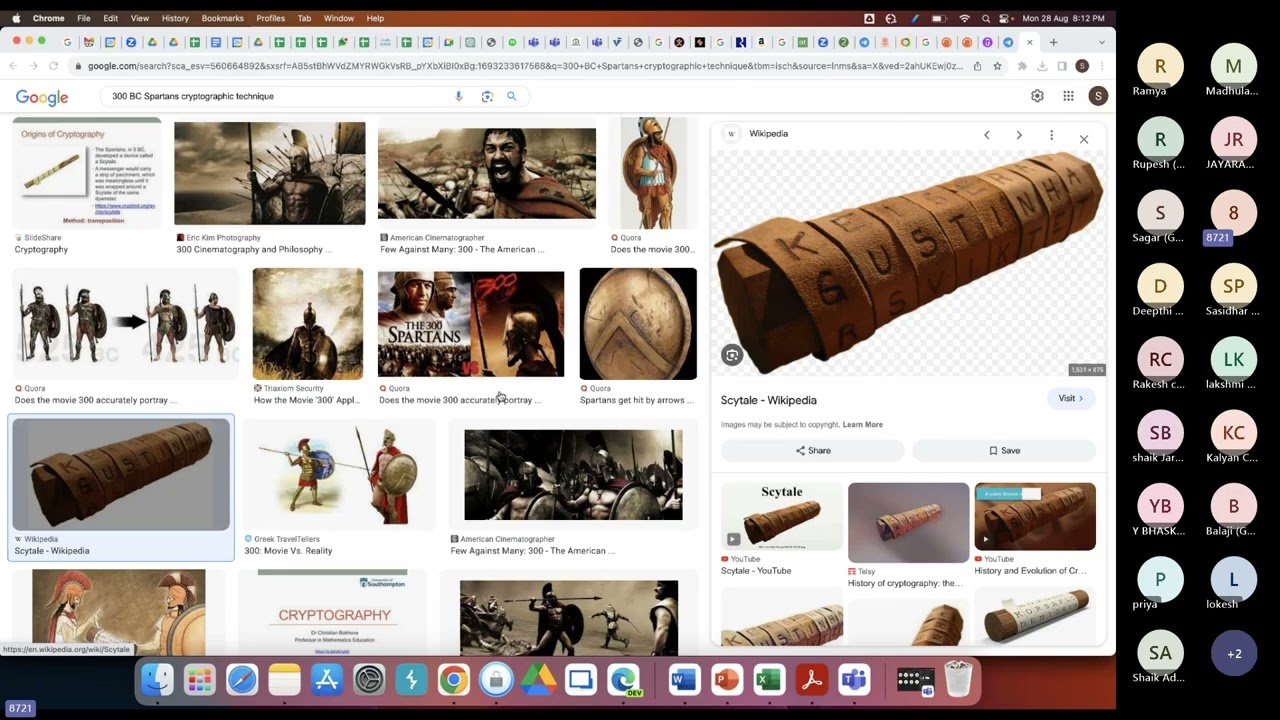
Spartans: Scytale cipher.
Romans: Caesar cipher shifted by three positions.
Examples
"I need cash" encrypted to "l Q…".
"Sunil is on the go" encrypted using varied shift techniques.
Modern Usage
WW1 and WW2: Cryptography played a crucial role.
16th-century France: Henry V and Blaise developed Polyalphabetic Caesar cipher.
Types of Encryption
Symmetric (Private Key) and Asymmetric (Public Key).
Examples of key lengths: PINs, mobile patterns, and file passwords.
Technical Specs
Bit rates: 128, 256, 512, 1024 bits.
Algorithm and Key: Defined as a set of rules and a sign of code or value for encryption.
Advanced Concepts
Blockchain and Bitcoin: Use cryptographic algorithms.
KeySpaces: Different binary values used for encryption.
Security Features
Confidentiality, Integrity, Authentication, Authorization, and Non-Repudiation are the five pillars of a secure system.
Special Cases
One-time PAD and XOR functions.
Applications
Steganography: Security through obscurity.
Hashing, Ciphering, and Salting techniques.
File Encryption
Example: For symmetric encryption with 8 people, you would generate a separate key for each pair, leading to 28 private keys.
The video concludes by emphasizing the significance of cryptography in securing data and facilitating secure transactions.
History
Begins in 2000 BC with pyramids using hieroglyphics to store data about the life story of a king.
Basic Concepts
The term "Security" and cryptic words like "hvxfitbg" and "xrhnyk" by Sunil are introduced.
Types of ciphers: Substitution, Monoalphabetic, and Polyalphabetic.
Ancient Methods
Hebrew Cryptography: Simple letter substitution.
Spartans: Scytale cipher.
Romans: Caesar cipher shifted by three positions.
Examples
"I need cash" encrypted to "l Q…".
"Sunil is on the go" encrypted using varied shift techniques.
Modern Usage
WW1 and WW2: Cryptography played a crucial role.
16th-century France: Henry V and Blaise developed Polyalphabetic Caesar cipher.
Types of Encryption
Symmetric (Private Key) and Asymmetric (Public Key).
Examples of key lengths: PINs, mobile patterns, and file passwords.
Technical Specs
Bit rates: 128, 256, 512, 1024 bits.
Algorithm and Key: Defined as a set of rules and a sign of code or value for encryption.
Advanced Concepts
Blockchain and Bitcoin: Use cryptographic algorithms.
KeySpaces: Different binary values used for encryption.
Security Features
Confidentiality, Integrity, Authentication, Authorization, and Non-Repudiation are the five pillars of a secure system.
Special Cases
One-time PAD and XOR functions.
Applications
Steganography: Security through obscurity.
Hashing, Ciphering, and Salting techniques.
File Encryption
Example: For symmetric encryption with 8 people, you would generate a separate key for each pair, leading to 28 private keys.
The video concludes by emphasizing the significance of cryptography in securing data and facilitating secure transactions.
Video Information
Views
32
Likes
1
Duration
01:19:23
Published
Aug 31, 2023
Related Trending Topics
LIVE TRENDSRelated trending topics. Click any trend to explore more videos.
Trending Now